If you’re reading this, you’ve probably tried Jeeva AI or at least seen it pop up in every “best AI SDR” list out there. And look, Jeeva does some solid things. The lead discovery is decent, the autonomous workflows sound impressive on paper, and the whole “agentic AI sales co-pilot” positioning makes sense. But here’s the thing I learned after watching dozens of founders try these tools: most of them hit a wall pretty fast.
That wall? The conversation part. Jeeva finds leads, enriches them, sends messages. Great. But when someone actually replies? You’re back to manual mode. And that’s where the real work lives.
So I put together this list of Jeeva AI alternatives that actually solve different problems depending on what you need. Some handle full conversations. Some give you better data. Some let you build custom workflows without needing a PhD in automation. Let me walk you through the 10 best options I’ve found in 2026.
1. SBL.so: The One That Actually Talks Back
I’m putting this first because it solves the problem most people complain about with AI sales tools. SBL.so doesn’t just send sequences and stop there. It handles the entire back-and-forth conversation with your prospects.
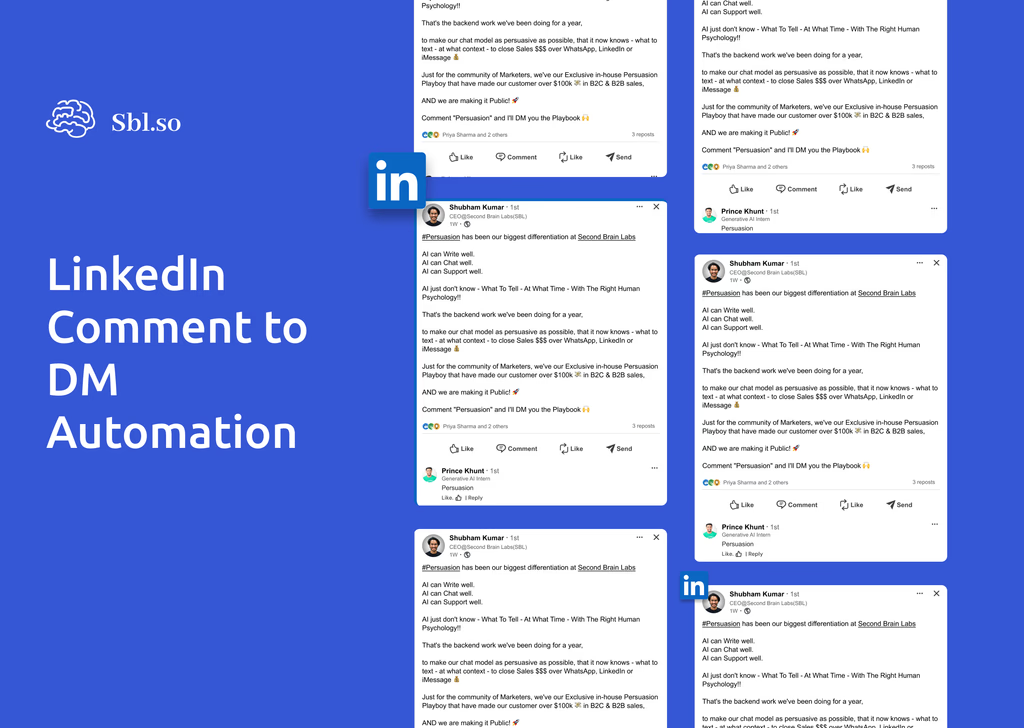
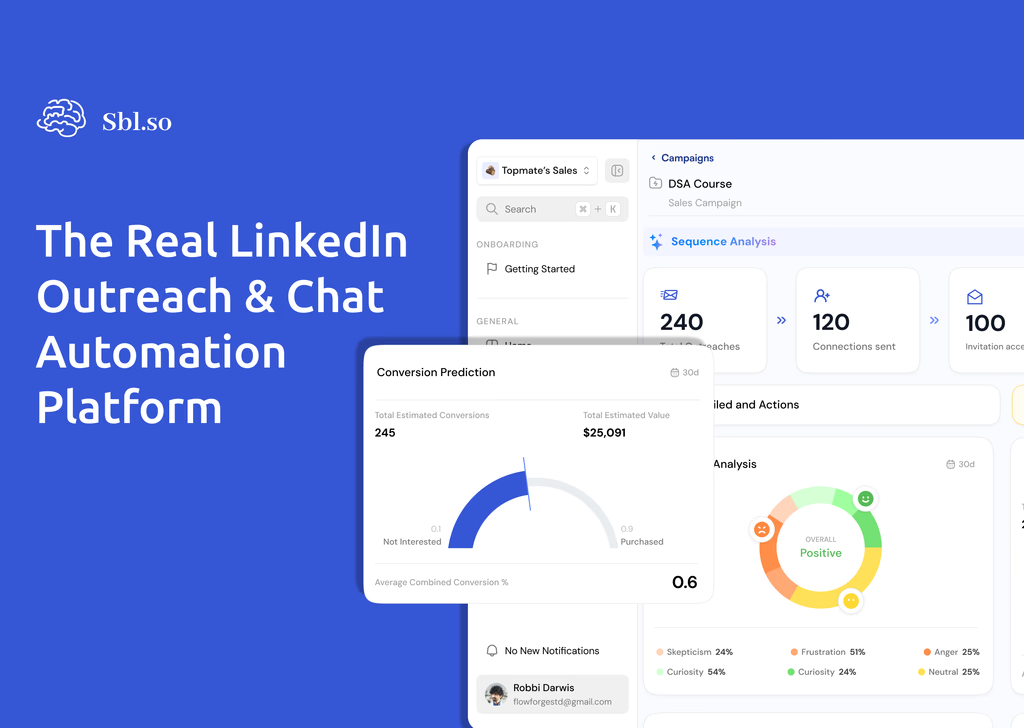
Here’s what I mean. You set up a campaign, SBL finds your leads, sends the initial outreach, and then when someone replies, the AI takes over the chat. It handles objections, asks qualifying questions, and pushes toward booking a call. You can monitor everything from a unified inbox, jump in whenever you want, or let it run fully autonomous.
The system also sends PDFs, images, and even voice notes that sound like you. You upload a 30-second sample and it clones your voice for personalized audio messages at scale. Kind of wild when you think about it.
What makes it different from Jeeva is simple: Jeeva focuses on top-of-funnel automation. SBL focuses on the conversation layer that actually converts. If you’re tired of tools that stop working the moment a prospect shows interest, AI sales automation that handles qualification is what you should look at.
Best for: Founders and agencies who want AI to handle full LinkedIn and WhatsApp conversations, not just message blasting.
2. Apollo.io: When You Need a Massive Database First
Apollo has been around for years and they’ve built one of the largest B2B contact databases out there. Millions of records, solid filters for titles and industries, and decent intent signals.
The thing is, Apollo is data-first. You’re still building sequences manually, still writing templates, still deciding the if-then logic. It’s not an AI agent in the Jeeva sense. It’s a powerful prospecting platform with automation features bolted on.
If your main problem is finding leads and you have humans or other tools handling the actual conversations, Apollo works great. But if you want something that thinks for itself? You’ll hit the same ceiling.
Best for: Teams with SDRs who need high-quality data and are comfortable managing their own outreach sequences.
3. Clay: Build Your Own Workflows
Clay is for the tinkerers. If you love building custom automations and want maximum flexibility, Clay gives you a table-based interface where you can pull data from multiple APIs, enrich it however you want, and generate personalized outreach.
I’ve seen some really creative setups with Clay. People combining LinkedIn data with company news, recent hires, tech stack info, all piped into AI prompts that generate hyper-specific messages. It’s powerful stuff.
The tradeoff? You’re essentially building your own AI sales agent from scratch. There’s no pre-built “agent” that just works out of the box like Jeeva or SBL. You need to configure everything yourself.
Best for: Growth teams and ops people who want to design custom workflows and don’t mind spending time on setup.
4. Cognism: GDPR-Compliant Data for European Markets
If you’re selling into EMEA, Cognism should probably be somewhere in your stack. They’ve built their whole business around clean, compliant B2B data with phone-verified mobile numbers.
The compliance angle matters more than ever in 2026. GDPR fines keep climbing, and using sketchy data sources can blow up in your face. Cognism solves that specific problem really well.
They’re not trying to be an AI agent though. Think of Cognism as the data layer that feeds into whatever automation you’re running. Pair it with an actual conversation tool and you’ve got a solid foundation.
Best for: Companies selling heavily into Europe who need verified, compliant contact data.
5. ZoomInfo: Enterprise-Grade Go-To-Market Platform
ZoomInfo is the big enterprise player. Deep B2B data, intent signals, buying committee mapping, integrations with basically every CRM and marketing tool out there.
Price reflects that positioning. This isn’t a tool for a 3-person startup trying to book their first 10 calls. It’s for revenue teams at scale who need serious data infrastructure.
Like Apollo and Cognism, ZoomInfo is primarily a data platform. They’ve added automation and orchestration features over the years, but the core value is still the database.
Best for: Larger teams with budget who need comprehensive B2B data and tight CRM integrations.
6. lemlist: Personalization-Heavy Cold Email
lemlist has carved out a nice position in the cold email space. Their thing is personalization. Dynamic images, custom content, multichannel sequences that feel less templated than most tools.
They’ve added LinkedIn integration too, so you can mix email and social touches in the same campaign. The deliverability features are solid, which matters when you’re sending at scale.
It’s still sequence-based though. You’re building the workflows, writing the messages, deciding the timing. The AI helps with content suggestions but you’re driving the strategy.
If you’re looking for something more autonomous that handles automated LinkedIn messaging, lemlist might feel limited. But for teams who want control over every detail? It’s a strong option.
Best for: Teams who prioritize email deliverability and want heavy personalization with manual control.
7. HubSpot AI: All-in-One CRM With AI Features
HubSpot has been layering AI features across their platform. Sales Hub, Marketing Hub, Service Hub. All of them now have AI-powered tools for content generation, task automation, and workflow building.
The advantage is obvious. Everything lives in one system. Contacts, deals, emails, reports. The AI features enhance what you’re already doing in HubSpot rather than adding another tool to your stack.
The limitation is that HubSpot’s AI is broad, not deep. It’s not designed specifically for autonomous sales outreach like Jeeva or SBL. It’s more like AI assistance sprinkled throughout a CRM platform.
Best for: Businesses already on HubSpot who want AI features without adding more tools.
8. UpLead: Verified B2B Contacts With Real-Time Validation
UpLead focuses on one thing and does it well: verified B2B contact data. They claim 160M+ profiles with real-time email verification to reduce bounces.
If you’re running cold email campaigns and getting destroyed by bounces, UpLead can fix that pretty quickly. The verification happens before you download, not after you’ve already sent to bad addresses.
Like other data providers on this list, UpLead is a source of truth that feeds into your outreach stack. Not an autonomous agent itself.
Best for: Teams struggling with email deliverability who need clean, verified lists.
9. 11x: AI Outbound Automation
11x is one of the newer AI outbound platforms that’s been getting attention in 2026. They’re positioning themselves in the same agentic AI space as Jeeva, promising autonomous outreach and follow-ups.
I haven’t seen as much detailed breakdown on their conversation handling capabilities, which is the thing I always look for. The top-of-funnel automation seems solid from what I’ve gathered, but whether it actually manages replies well? Harder to tell without hands-on testing.
Worth exploring if you’re evaluating multiple options. The AI sales agent market is crowded now and new players keep appearing.
Best for: Teams who want to evaluate newer AI outbound options beyond the established names.
10. Aircover: AI During Live Sales Calls
This one’s different. Aircover operates later in the funnel. Instead of automating outreach, it provides real-time AI assistance during actual sales calls.
Think contextual guidance, objection handling prompts, note-taking. It’s like having a coach in your ear while you’re on a call with a prospect.
If your problem isn’t finding and reaching prospects but rather converting them on calls, Aircover solves a different problem than Jeeva entirely. Some teams combine it with top-of-funnel tools for full coverage.
Best for: Sales teams who want AI support during live conversations, not just automated outreach.
How to Pick the Right Jeeva AI Alternative
Here’s how I’d think about choosing from this list:
- Need full conversation handling? SBL.so is built for that. It doesn’t stop at sending messages.
- Need a massive B2B database? Apollo or ZoomInfo depending on your budget.
- Need GDPR-compliant data for Europe? Cognism.
- Want to build custom workflows? Clay gives you maximum flexibility.
- Prioritize email personalization? lemlist.
- Already on HubSpot? Just use their AI features.
- Need verified email lists? UpLead.
- Want AI help during calls? Aircover.
Most teams in 2026 are building stacks, not picking one tool. Data provider plus AI agent plus CRM. The question is which combination works for your specific motion.
What Makes Jeeva AI Different From These Alternatives?
To be fair to Jeeva, here’s what they do well. The Prospector Agent finds leads based on intent, firmographics, and technographics. The Scoring Agent ranks leads using behavioral data. The autonomous workflows handle campaigns with minimal human input.
The setup is straightforward too. Connect Google Workspace or M365, describe your target in a prompt, let it generate leads, enroll them in campaigns, configure timing, activate. The analytics help you optimize over time.
Where Jeeva falls short, in my view, is the conversation layer. It automates the top of funnel really well. But when a prospect actually engages? You’re often back to managing replies yourself.
That’s why tools like SBL exist. They pick up where the typical AI SDR stops. If you’re scaling outreach through LinkedIn automation for B2B sales, the conversation handling becomes the bottleneck fast.
Common Questions About AI Sales Tools in 2026
Can AI sales agents actually replace SDRs?
Partially. They handle the repetitive stuff like finding leads, sending initial outreach, and basic follow-ups. But complex conversations, relationship building, and edge cases still benefit from humans. Most teams use AI agents alongside reps, not as complete replacements.
Which tools automate conversations, not just sequences?
SBL.so is the clearest example I’ve found. Most tools, including Jeeva, focus on the outbound messaging and stop there. Actually managing back-and-forth replies with AI is still uncommon.
How do these tools integrate with my CRM?
Most connect to HubSpot, Salesforce, and common CRMs through native integrations or APIs. The pattern is usually: AI agent syncs leads and activities to your CRM automatically. Check specific integrations before committing.
What about compliance and data privacy?
This matters more every year. Cognism built their business on GDPR compliance. Others vary. Always check where they source data and how they handle consent.
The Real Problem With Most AI Sales Tools
Let me tell you what I’ve noticed after watching teams use these tools. The problem isn’t finding leads. Every tool on this list can do that. The problem is what happens after.
Someone replies. They have questions. They push back. They want to know pricing. They’re not ready yet but might be later. How does your AI handle that?
Most tools just… don’t. They send the sequence. They wait for you to take over. And suddenly you’re back to managing dozens of conversations manually.
The teams that actually scale outreach in 2026 solve this conversation problem. Whether that’s through tools that handle replies autonomously or through fractional SDR setups where you rent LinkedIn profiles and build dedicated systems.
That’s the lens I’d use when evaluating any Jeeva AI alternative. Not just “can it send messages?” but “what happens when someone writes back?”
Final Thoughts
Jeeva AI works for what it does. Autonomous top-of-funnel, lead discovery, enrichment, campaign automation. Solid tool.
But if you want something that handles the actual conversation, looks at these alternatives with that specific question in mind. SBL.so is the one I keep coming back to for that use case. The others solve different problems depending on your needs.
The best AI SDR tools in 2026 aren’t the ones with the flashiest dashboards. They’re the ones that actually get you meetings without requiring you to manage every reply yourself. Choose accordingly.