Let me be honest with you. Most of what you see labeled as AI sales automation is just glorified scheduling. And a dashboard that makes you feel productive.
But you’re still doing all the work. Writing. Testing. Managing. Qualifying leads manually.
That’s not AI. That’s just automation with a fancy UI.
And yet, this is what most teams are still calling AI sales automation today.
Real AI sales automation in 2026 looks completely different. It prospects for you. It qualifies leads autonomously. It chats, nurtures, and books meetings while you sleep.
And if you’re not using it yet, you’re already behind.
What AI Sales Automation Actually Means in 2026
Here’s the shift. AI is no longer just a feature. It’s the foundation. That distinction matters more than most teams realize.
In 2025, generative AI agents started handling most repetitive sales tasks. Lead prospecting. Initial outreach. Qualification. Follow-ups.
Now in mid-2026? We’re seeing agentic workflows managing significant portions of sales funnels end-to-end. These systems detect intent from multimodal data, including voice, text, video, and social signals, in real-time.
Think about that. An AI that doesn’t just send messages. It understands intent. It scores leads in real-time. It decides who’s worth your time.
That’s the difference between old-school automation and real AI sales funnel automation.
The old way: You set up sequences. You write templates. You hope they work.
The new way: You tell the AI your goal. It builds everything. It runs. It optimizes. It delivers qualified leads to your inbox.
That’s the difference between automation and autonomy.
The Real Problem With Lead Prospecting Today
Most sales teams are drowning in leads. But starving for quality.
You pull a list of 10,000 contacts. You blast them with outreach. Maybe 2% respond. And half of those responses are “not interested.”
That’s not prospecting. That’s spam with extra steps.
And most teams know it. They’ve just accepted it.
Real AI-driven prospecting in 2026 works differently. It analyzes multimodal data: voice, text, video, social signals. It finds people who actually show buying intent.
Not just job titles that match your ICP. Actual signals that someone is ready to buy, like job changes, funding announcements, and search behavior patterns.
The best B2B data enrichment tools now integrate with AI to surface these signals automatically. You’re not guessing anymore. You’re targeting.
From Manual Qualification to AI-Driven Lead Scoring
Here’s where most sales teams waste the most time. Qualification.
Your SDR talks to a lead for 15 minutes. Asks the same questions every time. Decides if they’re qualified. Maybe logs it in the CRM. Maybe forgets.
That’s not scalable. And it’s inconsistent. This is where most sales teams lose the most time without realizing it.
AI qualification in 2026 uses conversational intelligence. It listens. It asks the right questions. It scores leads based on real buying signals, not gut feelings.
Understanding the difference between MQLs and SQLs becomes automated. The AI knows when someone is just browsing versus ready to buy.
Modern AI qualification combines firmographic data, technographic data, website activity, email engagement, conversation content, CRM history, intent signals, and job changes into a dynamic score that updates as new activity occurs.
Your sales team’s time is better spent on leads that will actually convert.
How AI Sales Automation Boosts Productivity
Let me give you some context. Because this matters.
Sales teams using real AI automation report significant productivity increases. Here’s why. Your reps aren’t wasting time on:
- Researching prospects manually
- Writing personalized messages from scratch
- Following up with cold leads repeatedly
- Qualifying uninterested buyers
- Logging activities in the CRM
The AI handles all of it. Your reps only talk to pre-qualified, pre-nurtured leads who are ready to buy.
That’s not just productivity. That’s leverage.
For smaller teams, sales automation tools and tactics become even more critical. You don’t have 50 SDRs. You need each rep to perform like 5.
The LinkedIn Automation Reality Check
LinkedIn has become ground zero for B2B prospecting. But most “automation” tools are stuck in 2022.
They send connection requests. They follow up with templates. They call it AI.
It’s not.
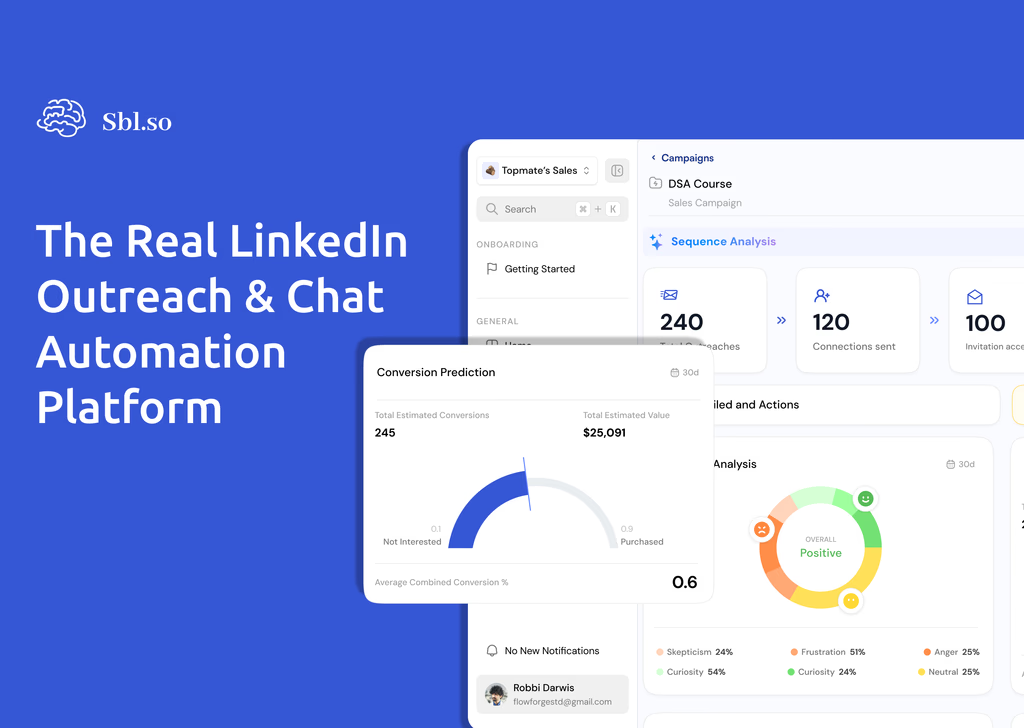
Real LinkedIn outreach chat automation does more. It connects. It chats. It persuades. It books meetings.
Sbl.so built something different. Their LinkedIn tool doesn’t just send messages. It handles the entire conversation.
When someone replies? The AI takes over. It understands objections. It knows when to push. It knows when to back off. It guides prospects toward booking a call.
You’re not managing an inbox anymore. You’re managing a calendar full of qualified meetings.
Important note on LinkedIn compliance: LinkedIn’s policies prohibit third-party software that automates actions like connection requests, messages, and scraping without direct human control. Before using any automation tool, verify current LinkedIn terms and understand the risks. Cloud-based tools with proper pacing and human oversight can reduce risk, but no tool should be considered completely “ban-proof.” Check out how to automate LinkedIn outreach safely for best practices.
And with support for LinkedIn messaging automation at scale, you can reach significantly more prospects monthly when done responsibly.
WhatsApp as a Sales Automation Channel
Here’s what most people miss. WhatsApp isn’t just for support. It’s a sales machine.
Especially with Click-to-WhatsApp ads from Meta.
Think about it. Someone clicks your ad. They land directly in a WhatsApp chat. No landing page. No form fills. No friction.
But here’s where it gets powerful. Connect that to an AI that qualifies in real-time.
Sbl.so’s WhatsApp tool does exactly this. It connects to your Meta Click-to-WhatsApp ads. When someone messages, the AI qualifies them instantly. Asks the right questions. Scores the lead. Sends qualified prospects directly to your CRM.
Your sales team never sees unqualified leads. They only talk to people who are ready to buy.
That’s not lead generation. That’s lead qualification at scale.
The best WhatsApp automation tools in 2026 combine this with nurturing. The AI doesn’t just qualify. It educates. It handles objections. It warms leads before your team ever gets involved.
A reality check: A WhatsApp message or ad click isn’t automatically a sales-qualified lead. Conversion rates depend on opt-in quality, ad targeting, your offer, market, qualification criteria, response speed, and follow-up quality. WhatsApp reduces friction and enables immediate conversations, but qualification still requires explicit criteria and evidence from the conversation itself.
The Omnichannel Approach That Actually Works
Single-channel outreach is dead. Your prospects are everywhere. Your automation should be too.
LinkedIn. WhatsApp. Email. SMS. The best AI sales automation platforms connect all of these.
Same lead. Same conversation. Different channels. Zero context lost.
This is where tools like Sbl.so shine. They’re building omnichannel from the ground up. LinkedIn today. WhatsApp today. Email coming.
Your prospect doesn’t respond on LinkedIn? The AI follows up on WhatsApp. Still nothing? Email catches them.
Each message builds on the last. The AI remembers everything. It never starts from scratch.
A word of caution: Omnichannel doesn’t mean unlimited cross-channel messaging. A responsible workflow must include channel-specific consent, suppression synchronization, frequency limits, clear sender identity, cross-channel opt-out handling, and human escalation. Don’t automatically blast prospects across every channel just because they didn’t respond on one.
Most Commonly Asked Questions on AI Sales Automation
How does AI change lead prospecting from keyword to conversational search?
Old prospecting: You search for keywords. “Marketing Manager” + “SaaS” + “500 employees.”
New prospecting: AI understands intent through conversation. It reads signals across platforms. It finds people actively researching solutions like yours.
Google’s AI Overviews. ChatGPT recommendations. These are qualifying leads before you even reach out. Your content needs to be structured for AI to recommend you.
This is called GEO (Generative Engine Optimization). Make your content entity-rich. Answer specific questions. The AI will do the rest.
What privacy strategies work with first-party data for qualification?
Third-party data is dying. Cookie tracking is basically gone. First-party data is your lifeline.
The play in 2026: Build your own data moat. Every form fill. Every chat conversation. Every email reply. That’s gold.
AI qualification models trained on your first-party data outperform generic ones. Because they understand your specific buyers.
Use conversational AI to capture qualification data naturally. Don’t ask 10 form questions. Let the AI uncover needs through dialogue.
Can AI agents fully automate sales funnels without humans?
Yes and no. Here’s the honest answer.
AI can handle a significant portion of the funnel autonomously. Prospecting. Initial outreach. Qualification. Nurturing. Even handling basic objections.
But you still need humans for complex deals. Enterprise negotiations. Relationship building. Strategic decisions. Sensitive objections. Pricing exceptions. Legal and procurement discussions.
The winning model? Human-AI hybrid. Let AI do the volume work. Let humans do the high-value work.
Your SDRs and BDRs become closers, not cold callers. That’s the shift.
How safe is LinkedIn AI automation in 2026?
There’s no general basis for promising that third-party LinkedIn automation is safe or “ban-proof.” LinkedIn’s policies prohibit software and extensions that automate actions like messaging, connection requests, scraping, or profile actions without direct human control.
The safest approach: Use cloud-based tools with proper pacing, respect platform limits, maintain human oversight, and distinguish authorized LinkedIn integrations from prohibited automation. Sbl.so uses safety measures, but always verify current LinkedIn terms before scaling any automation.
How to optimize content for GEO in sales automation?
GEO is the new SEO for AI-driven discovery. Here’s what works:
- Structure content with clear entities (people, products, problems)
- Answer specific questions directly (like this FAQ section)
- Use schema markup so AI can parse your content
- Build topic clusters, not random blog posts
- Focus on E-E-A-T (Experience, Expertise, Authority, Trust)
When someone asks ChatGPT “what’s the best AI sales automation tool?”, you want to be the answer. That requires structured, authoritative content.
What’s the ROI of video commerce for lead gen?
Video is exploding. A significant majority of advertisers now use GenAI for video-based prospecting content.
But here’s the key. Personalization at scale.
Tools now let you create thousands of personalized video messages without recording each one. AI clones your voice. Customizes the message. Delivers it at scale.
Video outreach in 2026 isn’t about filming more. It’s about letting AI do the filming for you.
How to measure productivity in zero-click AI sales environments?
Traditional metrics are breaking. Click-through rates mean less when AI answers questions directly.
New metrics for AI sales automation:
- Brand mentions in AI responses: Are you being recommended?
- Qualified pipeline velocity: How fast do leads move through?
- AI-qualified win rate: Percentage of AI-qualified leads that close
- Rep productivity per hour: Output, not activity
- Cost per qualified lead: Not cost per lead, qualified lead
- Meeting show rate: Do booked meetings actually happen?
- Sales-accepted lead rate: Do reps accept AI-routed leads?
Stop measuring vanity metrics. Measure what matters: qualified conversations and closed deals.
Which SaaS tools best integrate AI for omnichannel prospecting?
The landscape is crowded. Here’s what actually works in 2026:
For LinkedIn and WhatsApp automation with real AI chat: Sbl.so leads here. It’s not just sending messages. It’s handling conversations, qualifying leads, booking meetings autonomously.
For CRM with AI: Salesforce Einstein and HubSpot Breeze offer solid predictive prospecting.
For intent data: ZoomInfo and 6sense capture buying signals.
For AI SDR teams: Apollo.io offers 275M contacts with AI personalization. Outreach.io provides Kaia AI for prospecting and qualification.
The sweet spot? Combine specialized tools. Use Sbl.so for LinkedIn and WhatsApp automation. Connect to your CRM. Let the AI sync everything in real-time.
The Unified Pipeline Advantage
Here’s what separates good teams from great teams. Pipeline visibility.
Most sales teams have leads scattered everywhere. LinkedIn inbox. WhatsApp. Email. CRM. Spreadsheets.
AI sales automation in 2026 demands unified data. One place to see every lead. Every conversation. Every qualification status.
Sbl.so built this with their unified inbox. Connect multiple LinkedIn accounts. All chats in one place. Every lead scored. Every conversation tracked.
Same with WhatsApp. Leads from Click-to-WhatsApp ads flow directly into your CRM. Real-time. No manual entry. Integrates with HubSpot and Salesforce out of the box.
Your sales team sees only what matters: qualified leads ready for conversation.
The Real Cost of Not Automating
Let me paint a picture. Your competitor uses AI sales automation. You don’t.
They reach significantly more prospects monthly. You reach a fraction of that.
They qualify leads with AI precision. You spend 15 minutes per call with inconsistent results.
They talk only to ready buyers. You talk to everyone.
In 6 months, their pipeline dwarfs yours. Same team size. Same market. Different tools.
That’s the cost of waiting. It’s not just efficiency. It’s competitive survival.
Building Your AI Sales Automation Stack
Ready to actually implement this? Here’s the framework:
Layer 1: Lead Generation
Use AI-powered prospecting tools that find intent signals, not just demographics. Integrate with LinkedIn Sales Navigator. Pull leads directly into campaigns. Tools like ZoomInfo, Apollo, and Clay surface buying signals automatically.
Layer 2: Outreach Automation
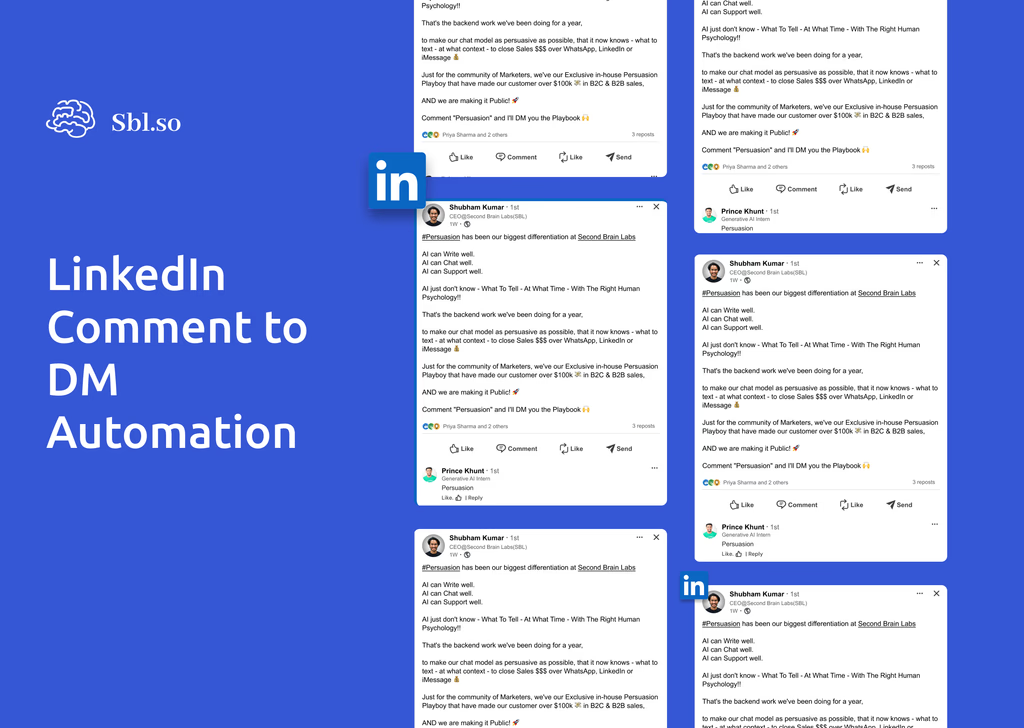
Deploy real AI chat automation. Not templates. Actual conversational AI that handles replies, objections, and follow-ups. Comment-to-DM automation captures engaged prospects from content.
Layer 3: Qualification Engine
Let AI score and qualify leads based on conversation signals. Use BANT, pain, and budget criteria as frameworks, but don’t reduce qualification to a rigid checklist. Integrate with your CRM so your team sees only qualified opportunities.
Layer 4: Multi-Channel Nurturing
Connect LinkedIn, WhatsApp, and email. Let AI maintain conversations across channels without losing context. Set up fallback sequences with appropriate frequency limits and consent handling.
Layer 5: Analytics and Optimization
Track what converts. A/B test messaging. Let AI optimize based on real performance data. Focus on cost per qualified opportunity, pipeline velocity, win rates, and show rates, not vanity metrics.
This isn’t complicated. But it requires the right tools.
Top AI Sales Automation Tools in 2026
Here’s a quick reference of the tools worth considering:
- Sbl.so: AI for LinkedIn and WhatsApp with autonomous chat handling. Unified inbox for multiple accounts. SDR profiles at $59-65/month per profile.
- Outreach.io: Kaia AI for prospecting and sequences. 50+ CRM integrations.
- Apollo.io: 275M contacts with AI email and LinkedIn. Lead scoring built in.
- Salesforce Einstein / Agentforce: Enterprise CRM-native AI and automation.
- HubSpot Breeze: Free tier AI prospecting. Scales to enterprise.
- Gong.io: Conversation intelligence, post-call AI scoring and real-time coaching.
- ZoomInfo: Intent data plus AI enrichment for sales intelligence.
- 6sense: ABM AI for account-based prospecting and qualification.
- Clay: Data enrichment and orchestration for list building.
- Regie.ai: Multichannel outbound prospecting with AI-assisted workflows.
For a deeper comparison, check out our guide on AI sales agents.
The Human-AI Hybrid Model
Here’s where things get real. The strongest practical model isn’t full automation. It’s human-AI collaboration.
AI handles:
- Prospect research and account identification
- ICP matching and prioritization
- Outbound sequence initiation
- Initial qualification
- Meeting scheduling
- CRM activity logging
- Follow-up automation
- Conversation summaries
Humans handle:
- Complex discovery
- Enterprise negotiations
- Sensitive objections
- High-value relationship building
- Pricing and commercial exceptions
- Legal, security, and procurement discussions
- Escalations and ambiguous situations
Your sales team becomes architects, not operators. They design the AI systems. They handle complex relationships. Everything else is automated.
The teams that win will be small, focused, and AI-augmented. Fewer people doing more meaningful work.
Data Quality: The Foundation Nobody Talks About
Before deploying autonomous workflows, here’s what most teams miss: data quality matters more than model sophistication.
A sophisticated AI model can’t reliably qualify leads when:
- The CRM contains duplicates
- Contacts have changed jobs
- Lead stages are inconsistently defined
- Historical opportunities were poorly recorded
- Marketing and sales use different definitions of “qualified”
- Intent signals are stale
- Consent and suppression data are incomplete
Before you scale AI sales automation, you need clear field ownership, validation rules, deduplication, and audit procedures. The AI is only as good as the data it works with.
Making the Shift Today
You don’t need to overhaul everything at once. Start with one channel.
If you’re B2B, start with LinkedIn. Get real AI automation running. See qualified meetings appear on your calendar without manual work. Check out how to automate LinkedIn outreach safely.
If you’re running Meta ads, add Click-to-WhatsApp with AI qualification. Watch your cost per qualified lead drop significantly.
Then expand. Add channels. Connect systems. Build your AI sales machine piece by piece.
The technology exists today. Sbl.so is doing it. Real AI chat. Qualified leads delivered.
The only question is whether you’ll use it before your competitors do.
Final Thoughts on AI Sales Automation
We’ve covered a lot. Let me simplify.
AI sales automation in 2026 isn’t about sending more messages. It’s about having better conversations at scale. It’s about qualifying leads dynamically. It’s about your team talking only to buyers who are ready.
The tools exist. The frameworks are proven. Teams report significant productivity gains, lower cost per qualified lead, and better response rates with omnichannel approaches.
You can keep doing things the old way. Manual prospecting. Template outreach. Slow qualification.
Or you can let AI do what AI does best. The volume work. The repetitive work. The qualification work.
Your best salespeople become closers, not cold callers. Your pipeline fills with qualified opportunities. Your conversion rates climb.
That’s not the future. That’s right now.
The only question: Are you building it?