Boost sales productivity in 2027. Discover top sales automation tools for small teams plus lean strategies you can implement today.

Sales Automation for Small Teams: Best Tools and Proven Tactics for 2027
Falling behind on lead follow-ups while your competitors race ahead? If you’re part of a small sales team, chances are you’re losing a significant chunk of your time on manual tasks that smart, affordable automation tools could eliminate in minutes.
In this guide, we break down the best sales automation tools for small businesses, plus proven strategies that help small teams boost productivity without hiring or burning out.
Why Sales Automation is Critical for Small Teams
Small businesses and startups face unique challenges that make sales automation for small teams not just beneficial but essential for survival. With limited resources and lean budgets, efficient sales workflows become the difference between thriving and merely surviving.
Sales reps typically spend just about 2 hours per day or roughly 30-35% of their time actually selling, with the rest consumed by administrative tasks. Teams that use sales automation see meaningful productivity gains, particularly through automating data entry and follow-up tasks.
The 2027 landscape has shifted significantly. AI-native sales tools have moved from “nice-to-have” to baseline. Most new platforms for SMBs now ship with embedded generative AI for email drafting, call summaries, forecasting, lead scoring, and autonomous conversation handling rather than AI being a paid add-on or separate product. Sales automation has evolved beyond simple CRM reminders and email sequences toward AI-assisted prospecting, multi-channel outreach, lead qualification, and meeting booking.
How Small Businesses Benefit from Sales Automation
Resource Optimisation: When your team has just 2-3 salespeople, losing qualified leads due to manual processes directly impacts revenue. Companies implementing CRM systems report significant improvements: CRM users see a 17% increase in lead conversions, a 16% boost in customer retention, and a 21% rise in agent productivity.
Consistent Follow-up: Research shows 80% of sales require 5 follow-ups, but 44% of small business reps give up after one attempt. Lightweight sales automation tools ensure no prospect slips through the cracks.
Scalability Without Overhead: Startup-friendly sales tools allow teams to handle significantly more leads without hiring additional staff. B2B marketers who use marketing automation techniques increase sales opportunities by 20% on average.
Multi-Channel Reach: Modern sales automation workflows for small teams now routinely include email plus LinkedIn touches, embedded call steps, SMS/WhatsApp in certain geographies, and in-app triggers for PLG SaaS. This channel mix broadening is a major shift from email-only approaches of previous years.
The biggest mistake small teams make is thinking automation is only for enterprises. 2027’s affordable sales automation tools are specifically designed for SMBs and can be implemented in hours, not months.

Best Sales Automation Tools for Small Businesses in 2027
After evaluating 30+ platforms, these tools consistently deliver the best results for cost-effective sales automation solutions. The market is rapidly evolving, with 65% of businesses having already adopted CRM systems with generative AI, making AI-powered features increasingly accessible to small teams.
1. Sbl.so – AI SDR for LinkedIn and WhatsApp Outreach
Best For: Small sales teams seeking AI-powered prospecting, automated conversations, and meeting booking
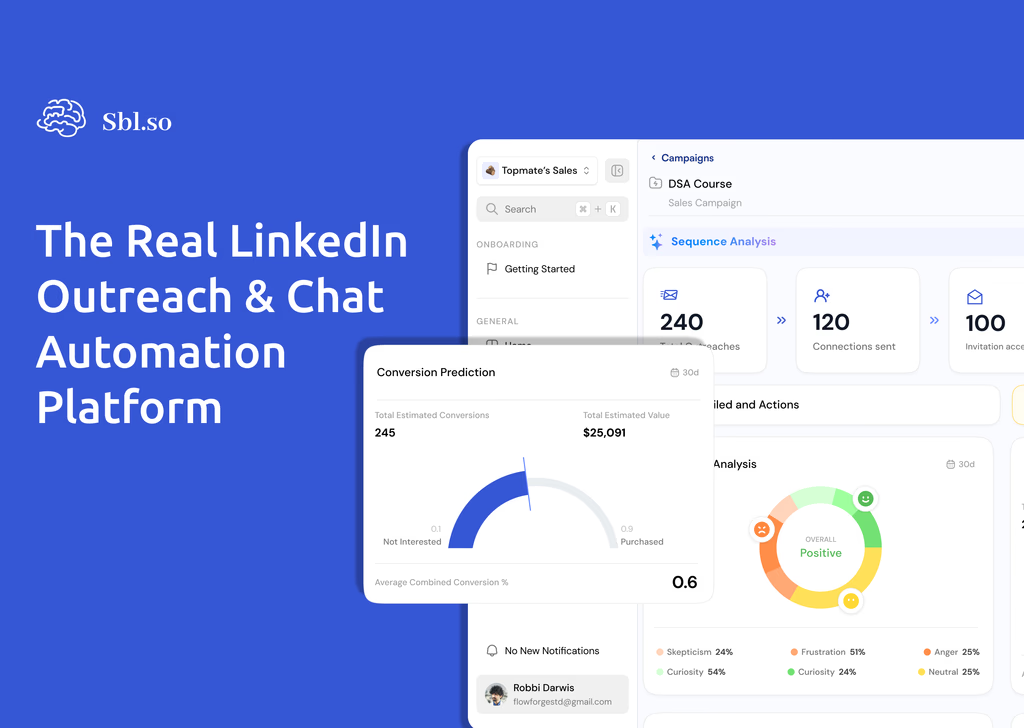
Sbl.so stands out as the premier choice for small businesses wanting comprehensive sales automation focused on LinkedIn and WhatsApp channels. The platform functions as an AI SDR that handles prospecting, personalised outreach, automated conversations, objection handling, lead qualification, and meeting booking.
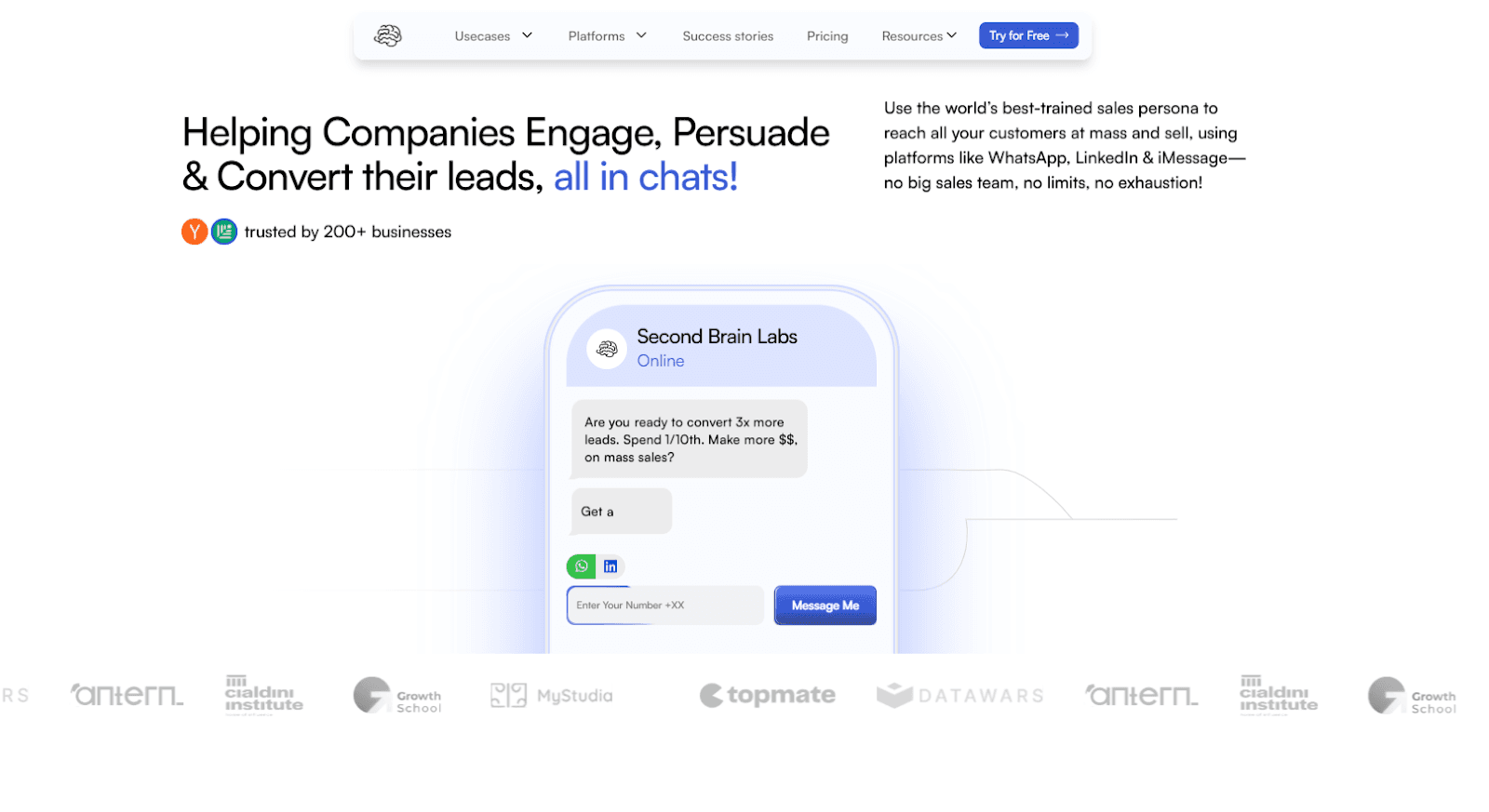
Why It’s Perfect for Small Teams:
- AI-powered lead discovery matching your ideal customer profile
- Personalised outreach from existing LinkedIn profiles
- Automated follow-ups with AI-handled replies and objections
- Meeting booking directly from conversations
- Built-in CRM with HubSpot two-way synchronisation
- Multi-channel automation across LinkedIn, WhatsApp, and email using pre-warmed mailboxes
Key Features:
- AI-powered lead scoring and prioritisation
- Sales Navigator extraction
- Automated email sequences with dynamic personalisation
- Public API, MCP server, and webhook support
- Mobile-first design for field sales teams
- Multiple SDR profiles for scaling outreach
Pricing: Starting at $99/month (Starter plan with 2 outreach seats). SDR profiles are available at $59-65 per profile per month depending on volume. 7-day free trial available.
For small sales teams with limited bandwidth, Sbl.so offers AI SDR capabilities that handle the full cycle from prospect discovery through meeting scheduling. You can also explore their AI sales automation capabilities for prospecting and qualification.
2. HubSpot Sales Hub – Comprehensive SMB Solution
Best For: Small teams wanting all-in-one sales automation platforms for startups
HubSpot Sales Hub combines CRM functionality with marketing automation, making it one of the top sales automation tools for small teams seeking integrated solutions.
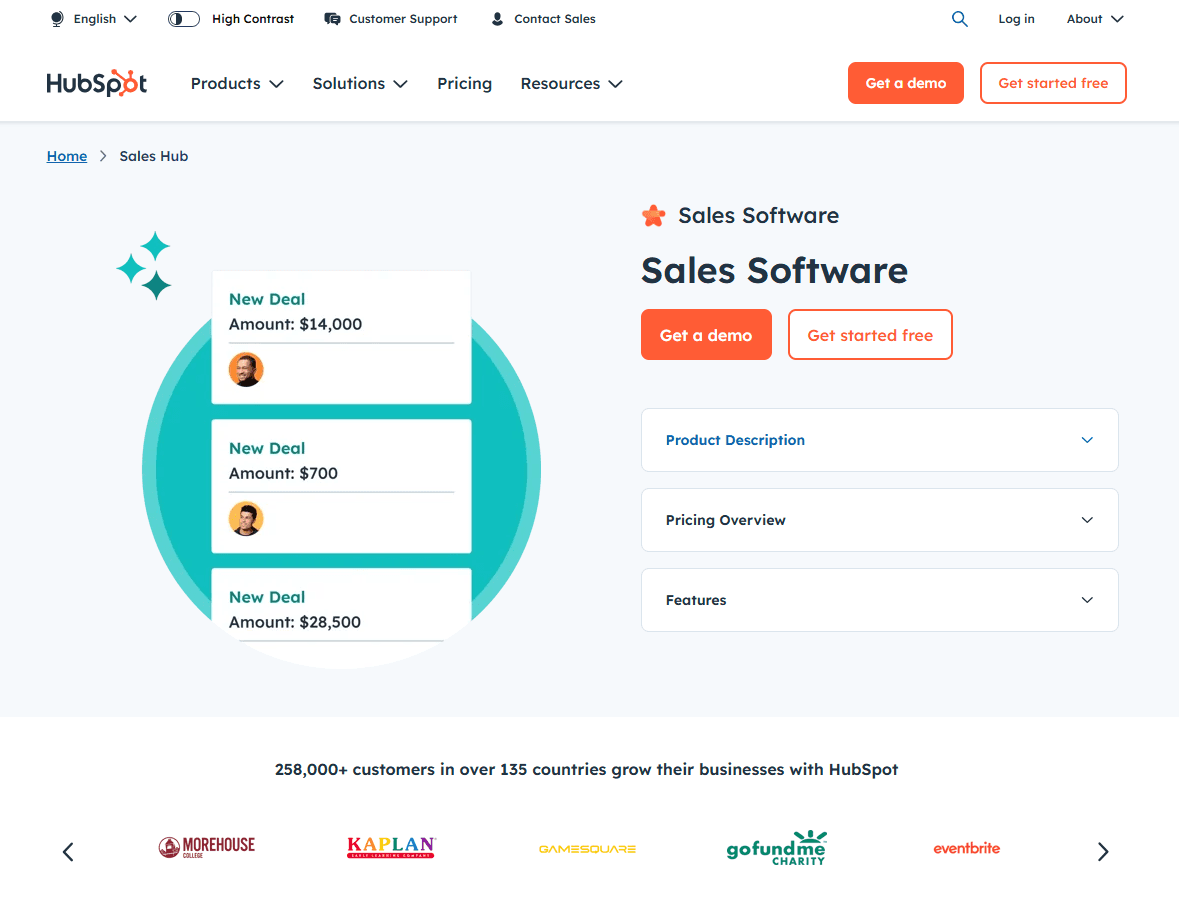
Key Features:
- Contact and deal management
- Email tracking and automated sequences
- Meeting scheduler integration
- Sales pipeline automation
- Comprehensive reporting suite
- AI assistant for email, content, and reporting
Pricing: Free plan available; paid plans vary by tier and features
Small Business Advantage: The free tier makes it accessible for very small teams, while paid plans offer advanced automation capabilities as you scale. Native integration with HubSpot Marketing Hub creates a single system for inbound leads, nurture sequences, and sales pipelines.
3. Pipedrive – Visual Pipeline Management
Best For: Teams preferring visual sales process automation with strong mobile capabilities
Pipedrive excels as one of the most intuitive sales automation platforms for startups, offering visual pipeline management that simplifies complex sales processes.
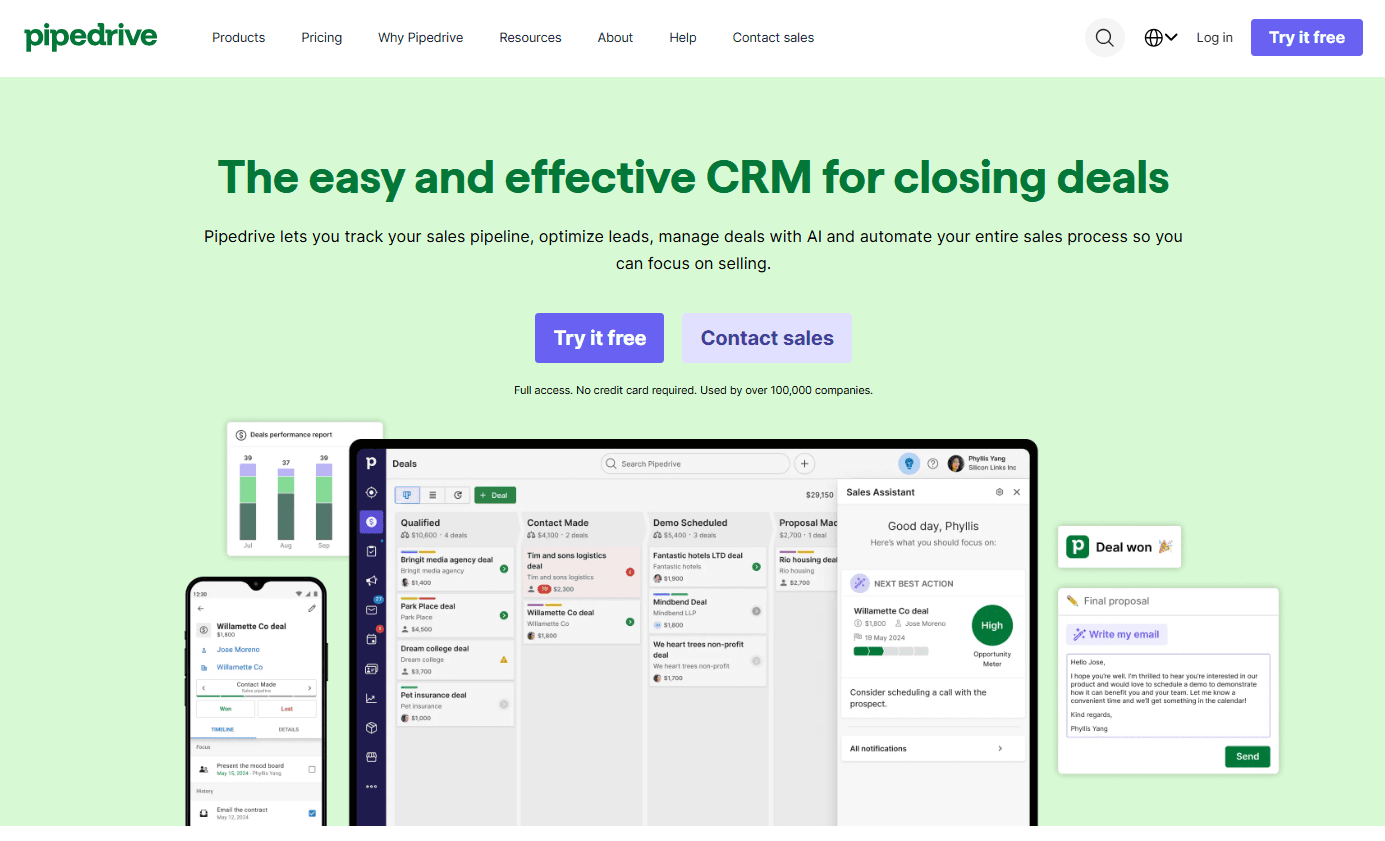
Key Features:
- Kanban-style drag-and-drop visual sales pipeline
- Activity reminders and workflow automation
- Mobile app optimised for field sales
- Customisable reporting dashboards
- AI-powered Sales Assistant for suggestions and performance insights
Pricing: Plans start at $24/month per user
Why Small Teams Love It: The visual interface reduces training time and increases adoption rates among small sales teams. Strong fit when your main pain is pipeline visibility and consistent follow-up.
4. ActiveCampaign – Marketing-Sales Integration
Best For: Small businesses needing powerful email marketing integrated with sales automation
ActiveCampaign bridges marketing and sales automation, making it ideal for lean sales automation strategies that require both functions to work in harmony. This integrated approach is particularly valuable given that marketing automation gives an ROI of $5.44 on every $1 spent over the first 3 years.
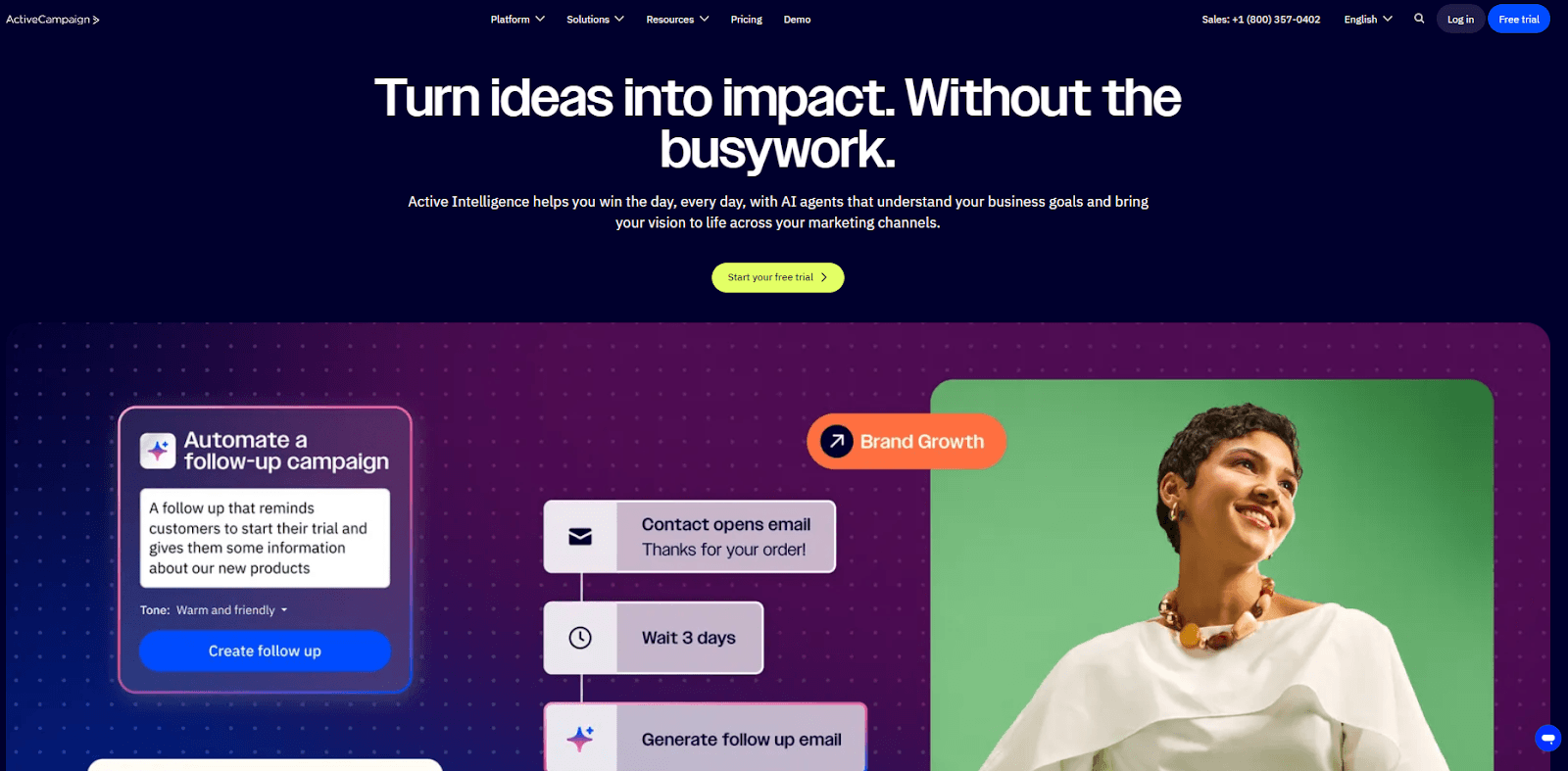
Key Features:
- Advanced visual automation builder for email and CRM tasks
- Behavioural tracking and triggers
- CRM with sales pipeline management
- Multi-channel automation workflows
- A/B testing capabilities
- Lead scoring based on behavior and attributes
Pricing: Plans start at $15/month
Small Business Benefit: Combines two essential functions (marketing and sales) in one affordable platform. Ideal when marketing and sales are tightly linked and email is central to your strategy.
5. Freshsales – AI-Powered Simplicity
Best For: Startups wanting enterprise-level features in startup-friendly sales tools
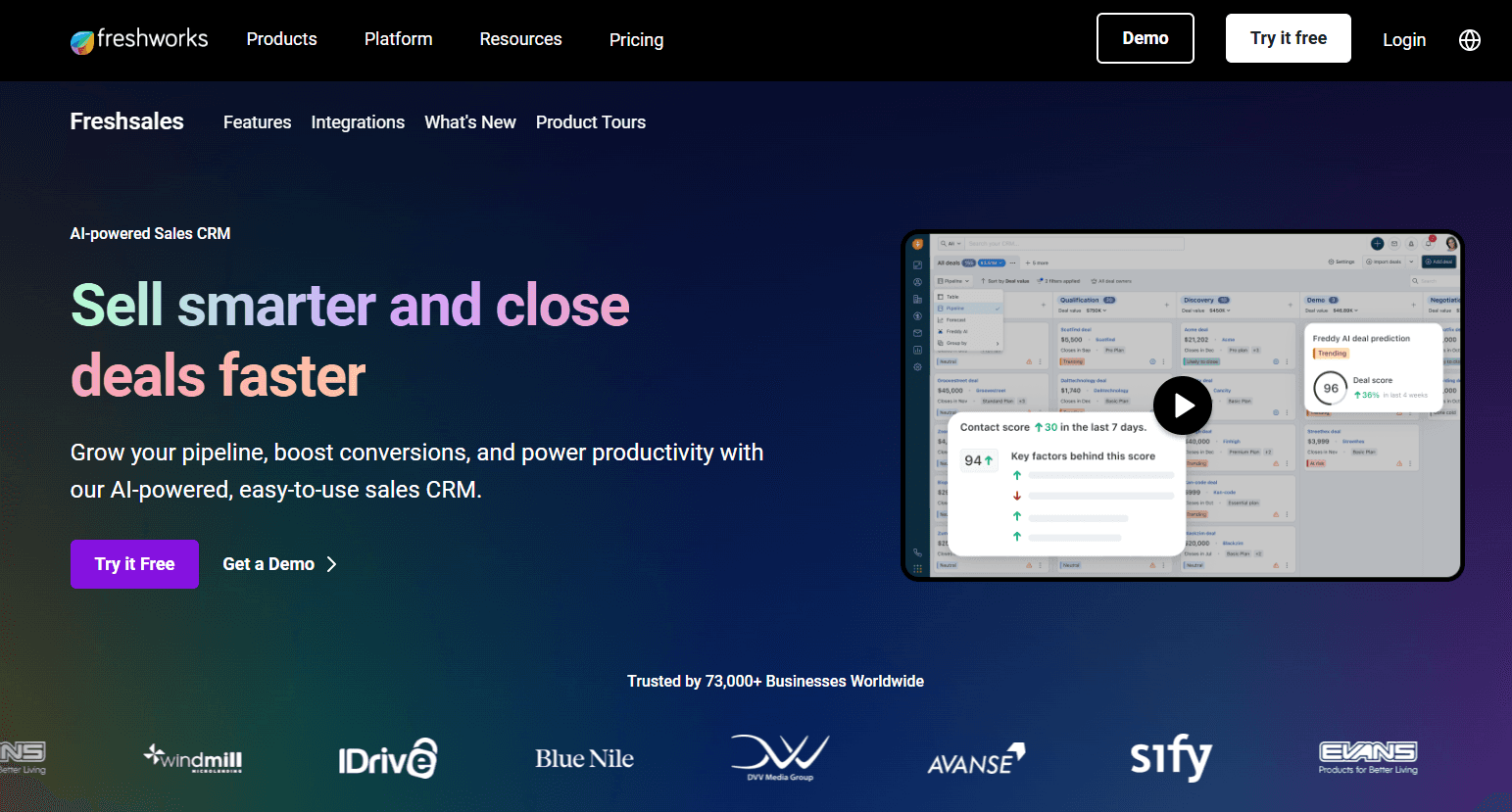
Freshsales provides AI-powered insights and automation capabilities without the complexity of enterprise platforms.
Key Features:
- Freddy AI for lead scoring, deal insights, and forecasting
- Built-in phone, email, and chat integration
- Workflow automation
- Territory management
- Mobile CRM application
Pricing: Plans start at $11/month per user
Startup Advantage: Offers enterprise-level capabilities at startup-friendly pricing. Good if you want AI help plus phone integration without enterprise complexity.
6. Zoho CRM – Budget-Friendly Powerhouse
Best For: Extremely budget-conscious small teams needing extensive customisation
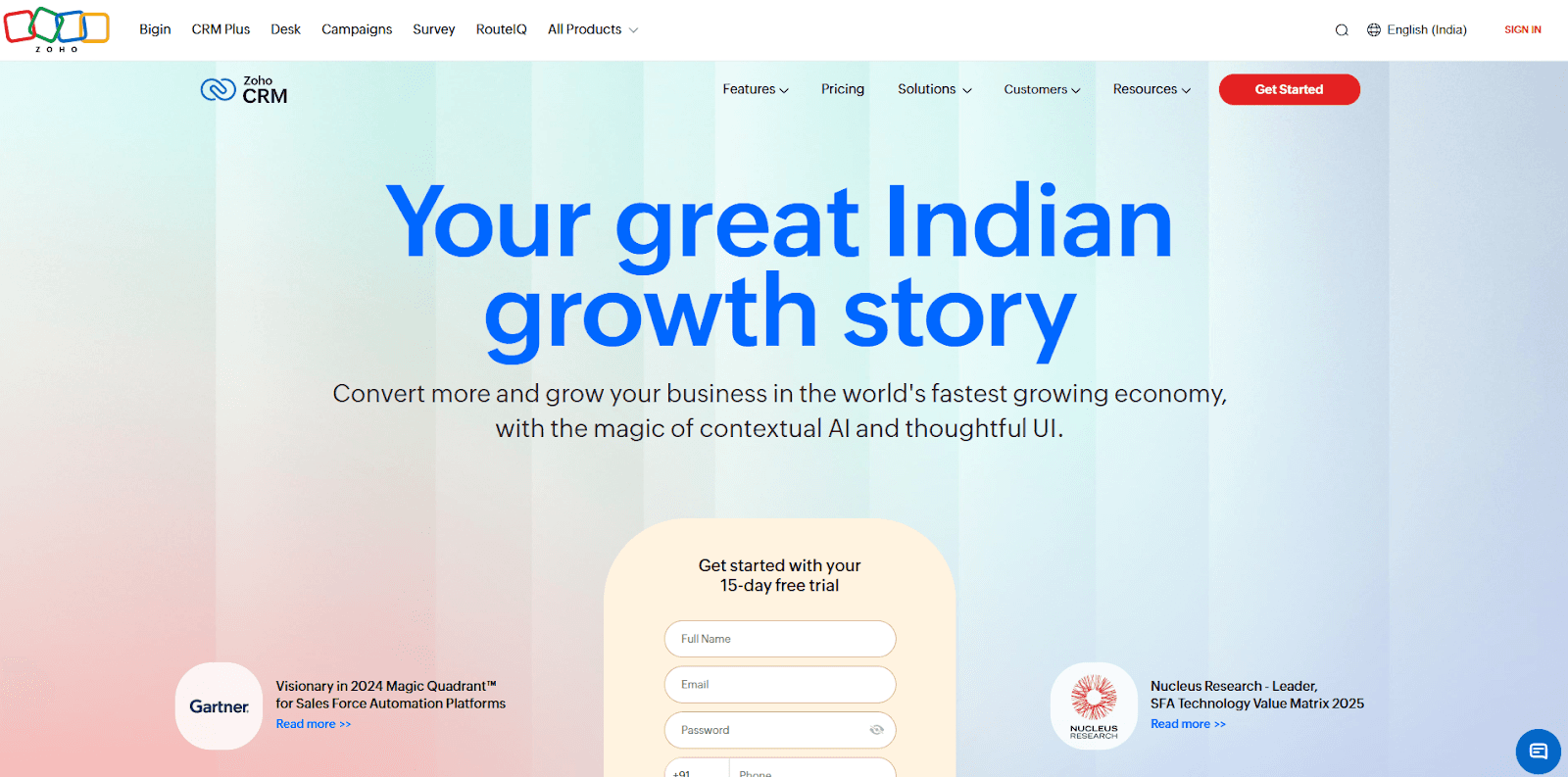
Zoho CRM offers exceptional value among affordable CRM solutions for small businesses, with AI assistant capabilities and extensive integration options.
Key Features:
- Zia AI for predictions, anomaly detection, and recommendations
- Workflow automation
- Omnichannel: email, phone, social, live chat
- Extensive customisation options
- Social media integration
Pricing: Free plan available; paid plans start at $20/month per user
Cost-Effective Advantage: Provides the most features per dollar spent, ideal for cash-strapped startups. Best when budget is tight but you need deep customisation.
7. Close – Inside Sales CRM
Best For: Inside sales teams doing high-volume calling and emailing
Close is built for calling and emailing at volume, frequently recommended for small remote sales teams who want CRM plus dialer in one interface.
Key Features:
- Built-in VoIP calling, SMS, and email in one interface
- Power dialer and predictive dialing on higher plans
- Sequences combining email and call tasks
- Pipeline views and basic automations
- Call recording and search
Pricing: Plans start at $49/month per user
Small Team Advantage: Strong fit for AE/SDR teams doing high-volume outbound and wanting CRM plus dialer in one rather than stitching tools together.
8. Apollo.io – Prospecting and Engagement
Best For: Teams whose biggest constraint is finding and reaching new leads
Apollo.io combines prospecting data with engagement sequences, used by many small teams to power outbound with data plus sequences.
Key Features:
- Contact and company database with filters for industry, job title, technographics
- Email sequences with steps, conditions, and A/B tests
- Basic dialer and task management
- Enrichment and contact discovery for existing records
Pricing: Free plan available; paid plans start at $49/month
Small Team Advantage: Excellent when your biggest constraint is finding and reaching new leads rather than managing complex pipelines. Great for teams focused on B2B lead generation using LinkedIn and AI.
Transform Your Sales Process Today
Discover which sales automation tools will deliver the biggest impact for your specific team size and budget.
How Small Teams Can Implement Sales Automation Effectively
Successful implementation of sales automation for small teams requires a strategic approach that balances efficiency with personalisation. Here’s how to implement sales automation effectively without overwhelming your team or budget.
Start with High-Impact, Low-Effort Activities
Lead Capture Automation: Begin by automating lead capture from your website, social media, and email campaigns. This foundational step ensures no prospect enters your system without proper tracking.
Email Follow-up Sequences: Implement basic automated email sequences for new leads. This single automation can meaningfully increase conversion rates while freeing up hours weekly. Automated lead nurturing can result in a 10% or more increase in sales pipeline contribution.
Pipeline Progression Alerts: Set up automated alerts when deals haven’t moved in your pipeline for specific timeframes.
Phase 1: Foundation Building (Weeks 1-4)
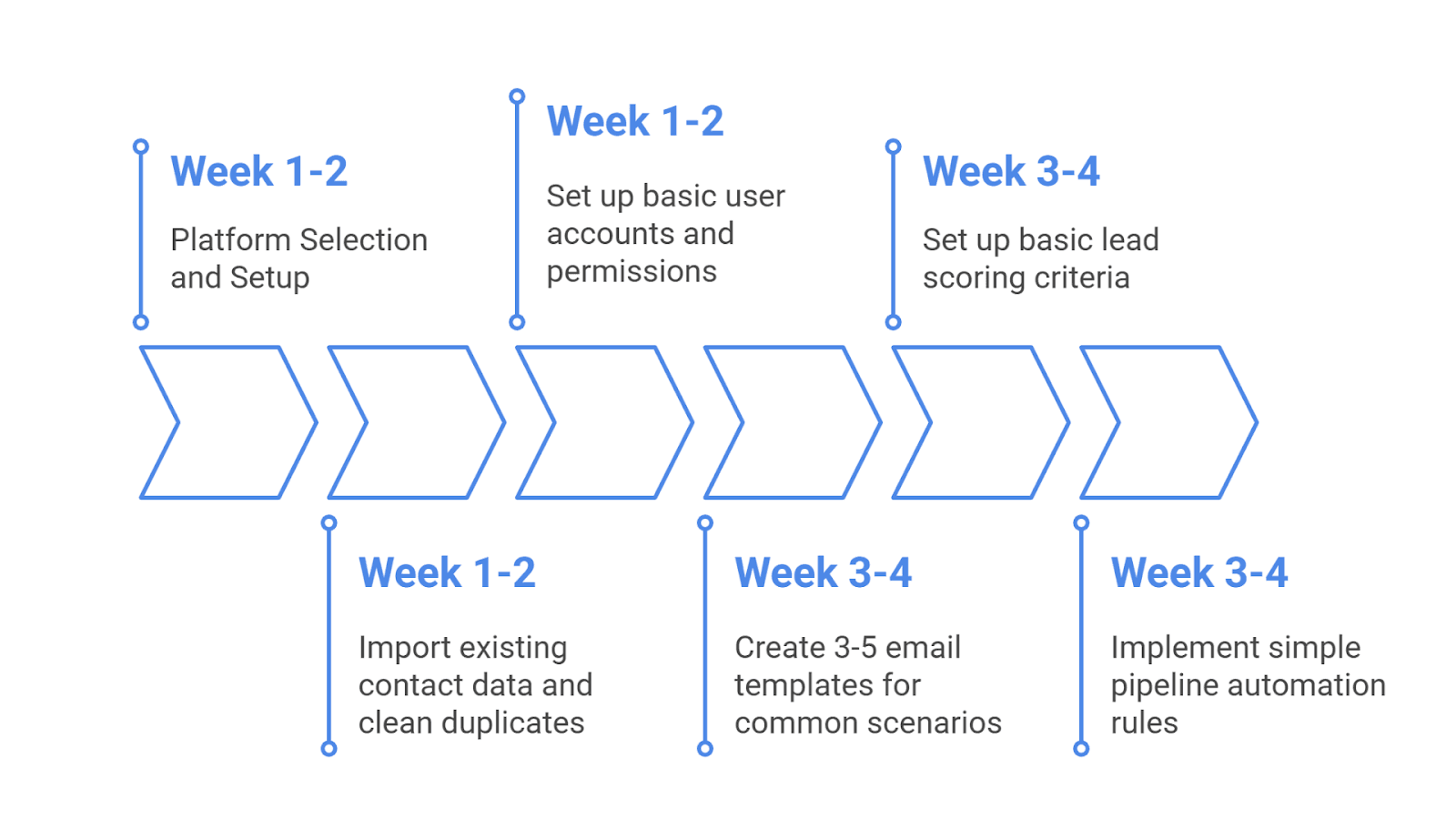
Centralise data and define one pipeline:
- Choose one primary system of record for leads, contacts, and deals
- Standardise pipeline stages and definitions (Lead, Qualified, Discovery, Proposal, Contract Sent, Closed Won/Lost)
- Connect major sources: forms, landing pages, calendars so all leads land automatically
Automate lead capture and qualification:
- Auto-create leads from website forms, chatbots, marketing sign-ups, and product signups
- Implement lead enrichment and basic lead scoring based on fit and behavior
- Use automations to assign leads based on territory, segment, or round-robin
- Trigger welcome emails and internal notifications within minutes
Phase 2: Optimisation (Weeks 5-8)
Advanced Segmentation: Create targeted lists based on industry, company size, and behaviour patterns to deliver more personalised automation.
Standardise and automate outreach sequences: For each core scenario (inbound demo request, content download, outbound prospecting, trial signup), define a short, multi-touch sequence with email plus call plus LinkedIn, spaced across 7-14 days. Use personalised openers with templated structure.
Multi-Channel Integration: Connect your automation platform with email, phone, and social media channels for comprehensive prospect engagement. This approach is increasingly important as 58% of marketing decision makers have automated email, 49% social media, and 33% content management. Learn more about LinkedIn automation and multi-channel outreach tactics.
Analytics Setup: Configure dashboards to track key metrics like conversion rates, response times, and pipeline velocity.
Phase 3: AI Integration (Weeks 9-12)
Common safe, high-ROI AI uses in 2027 include:
- Drafting personalised email variations based on prospect profile and prior engagement (with human review)
- Summarising call recordings into notes, next steps, and objections
- Suggesting next best actions or deals at risk, based on pipeline and activity data
- Identifying patterns in won vs. lost deals that a small team might miss manually
- Handling routine replies and objections autonomously
- Qualifying leads and booking meetings directly from conversations
These capabilities are now embedded in many tools and don’t require custom models or advanced technical work. For deeper insights on AI in sales, check out our guide on the best AI SDR tools in 2027.
Cost-Effective Sales Automation Solutions for Startups
Budget constraints don’t have to limit your automation capabilities. Here are proven cost-effective sales automation solutions that deliver maximum ROI. The investment is worthwhile: 76% of companies that use automation generate positive ROI within the first year.
Free and Low-Cost Tool Combinations
The Minimal Viable Stack (Under $50/month):
- CRM: HubSpot Free or Zoho CRM Free
- Email Automation: Mailchimp Free (up to 500 contacts) or Brevo Free
- Scheduling: Calendly Free
- Analytics: Google Analytics (free)
The Growth Stack ($100-200/month):
- Primary Platform: Sbl.so Starter ($99/month) or Pipedrive
- Email Enhancement: ActiveCampaign
- Lead Intelligence: Apollo (basic plan)
The Scale Stack ($200-400/month for 3-10 reps):
- Core CRM with automation (Pipedrive, Zoho Professional, HubSpot Starter, Close)
- Either built-in sequences or dedicated engagement tool (Apollo, Lemlist)
- Automation layer (Sbl.so) to connect ops flows without engineering
Maximising ROI with a Limited Budget
Focus on High-Value Activities: Prioritise automating tasks that directly impact revenue generation rather than nice-to-have features.
Gradual Implementation: Start with one or two key processes and expand gradually as you see results and revenue growth.
Leverage Free Trials: Most platforms offer 7-30-day free trials. Use this time to test multiple solutions and identify the best fit.
Cost-Saving Tip: Many affordable sales automation tools offer significant discounts for annual payments. Paying yearly can save 20-30% compared to monthly subscriptions. Vendors often offer “startup” or “early-stage” discounts if you ask their sales teams directly.
Lean Sales Automation Strategies That Work
Small teams need lean sales automation strategies that maximise impact while minimising complexity. These proven approaches help you achieve more with less. The adoption rate is accelerating: roughly 34% of all business-related tasks use some form of automation to improve workflows.
The 80/20 Rule Applied to Sales Automation
80% of results come from 20% of activities. Focus your automation efforts on these high-impact areas:
- Lead qualification and scoring (highest ROI)
- Follow-up email sequences (most time-saving)
- Pipeline management alerts (prevent lost deals)
- Basic reporting and analytics (enables optimisation)
Efficient Sales Workflows for Small Teams
The 3-Touch Automation Sequence:

Smart Lead Routing: Automatically assign leads based on:
- Geographic territory
- Industry expertise
- Current workload
- Lead score/priority
Automated Pipeline Hygiene:
- Automatic task creation when a deal sits in one stage longer than defined SLA
- Notifications when a prospect opens key collateral multiple times
- Alerts when a trial account hits specific product milestones
- Slack/Teams notifications when high-value leads sign up or re-engage
SMB Sales Process Automation Best Practices
Keep It Simple: Complex workflows create confusion and reduce adoption. Start with basic automation and add complexity gradually.
Maintain Personal Touch: Automate routine tasks but preserve human interaction for relationship-building moments. The best hybrid approach: AI suggests, human approves.
Regular Review and Optimisation: Schedule monthly reviews to analyse performance and adjust strategies based on data. Keep automations documented so changes are transparent and avoid “unknown automations” affecting data quality.
Tips for Implementing Sales Automation in Small Teams
Successful implementation requires careful planning and execution. Follow these proven tips for implementing sales automation effectively:
Pre-Implementation Planning
Document Current Processes: Map out your existing sales process before implementing automation. This helps identify the best automation opportunities.
Set Clear Goals: Define specific, measurable objectives like “reduce lead response time by 50%” or “increase email open rates by 25%.”
Get Team Buy-In: Involve your sales team in the selection process to ensure adoption and identify potential resistance points.
Implementation Best Practices
Start Small and Scale: Begin with one or two key processes rather than trying to automate everything at once. The business impact is significant: 43% of businesses observe an increase in speed with automation, and 43% find greater levels of productivity across experience levels.
Provide Comprehensive Training: Invest time in training your team on both the tools and the strategy behind automation.
Create Standard Operating Procedures: Document your automated processes so team members can execute consistently.
Test Before Full Deployment: Run pilot programs with a subset of leads to identify and fix issues before full implementation.
Overcoming Common Challenges

Measuring Success with Startup-Friendly Sales Tools
Tracking the right metrics ensures your sales automation investment delivers measurable results. Focus on these key performance indicators.
Essential Metrics for Small Teams
Lead Response Time: Average time from lead capture to first contact
- Target: Under 5 minutes for hot leads
- Automation can dramatically reduce response time compared to manual processes
Email Engagement Rates:
- Open Rate: Track against your own baseline
- Click-Through Rate: Monitor for improvement
- Reply Rate: Key indicator of message relevance
Conversion Rates by Stage:
- Lead to Opportunity
- Opportunity to Qualified
- Qualified to Close
Sales Cycle Length: Track time from initial contact to closed deal and measure improvement over time
Rep Capacity: Number of active opportunities managed without burnout
ROI Calculation Framework
Direct Revenue Impact:
- Additional deals closed due to better follow-up
- Faster deal progression
- Higher conversion rates
Cost Savings:
- Time saved on manual tasks
- Reduced need for additional staff
- Improved data accuracy
ROI Formula: (Revenue Gains + Cost Savings – Tool Costs) / Tool Costs × 100
Common Pitfalls in SMB Sales Process Automation
Avoid these frequent mistakes that can derail your automation efforts:
Over-Automation and Loss of Personal Touch
The Problem: Automating too much of the sales process creates impersonal interactions that repel prospects.
The Solution: Use the “Human + Automation” approach:
- Automate routine tasks and data management
- Preserve human interaction for relationship building
- Personalise automated messages with relevant details
Poor Data Quality and Management
The Problem: Automation amplifies bad data, leading to embarrassing mistakes and lost opportunities. Automations built on inconsistent or incomplete data frequently mis-fire and waste scarce small-team time.
The Solution: Implement data hygiene practices:
- Regular data cleaning and validation
- Standardised data entry procedures
- Duplicate detection and removal
- Data source verification
Inadequate Training and Change Management
The Problem: Teams resist new tools or use them incorrectly, limiting effectiveness.
The Solution: Comprehensive change management:
- Involve the team in the selection process
- Provide thorough training on tools and strategy
- Create documentation and reference materials
- Offer ongoing support and troubleshooting
Lack of Regular Optimisation
The Problem: Set-and-forget mentality leads to declining performance over time.
The Solution: Continuous improvement process:
- Monthly performance reviews
- A/B testing of email sequences
- Regular strategy adjustments based on data
- Feedback collection from the team and prospects
Building Overly Complex Workflows
The Problem: Creating workflows that no one understands after a few months.
The Solution:
- Keep clear documentation of automations so you can migrate or adjust as the team scales
- Avoid over-customisation that locks you into one vendor
- Assign clear ownership for maintaining automations
Future-Proofing Your Sales Automation Strategy
Stay ahead of the curve by preparing for emerging trends in sales automation.
Artificial Intelligence and Machine Learning
Current State: AI features like lead scoring, email optimisation, conversation intelligence, and call transcription are now offered at SMB price points.
Future Trend: Advanced AI will provide:
- Real-time optimisation of sales strategies
- Predictive analytics for deal outcomes
- Automated content generation with human review
- Next-best-action recommendations based on pipeline and activity data
- Autonomous conversation handling for routine interactions
Preparation Strategy: Choose platforms with strong AI roadmaps and API capabilities for future integrations.
Multi-Channel Automation Expansion
Current State: Modern SMB tools routinely include email, LinkedIn, calls, SMS/WhatsApp, and in-app triggers.
Future Trend: Integrated automation across:
- Social media platforms
- Messaging apps
- Video communication tools
- Direct mail and physical touchpoints
Preparation Strategy: Select platforms that offer or plan multi-channel capabilities. Consider exploring WhatsApp automation tools for your channel mix.
Advanced Integration and Connectivity
Current State: Basic integrations between major platforms are common.
Future Trend: Seamless data flow between all business tools:
- Marketing automation platforms
- Customer support systems
- Accounting and billing software
- Business intelligence tools
Preparation Strategy: Prioritise platforms with robust API capabilities and integration marketplaces. Choose tools with open APIs and active integration ecosystems.
Privacy and Compliance Evolution
Current State: Basic GDPR and privacy compliance features are standard. Modern tools provide unsubscribe links, consent tracking, data export/deletion, email sending limits, and domain reputation monitoring.
Future Trend: Enhanced privacy controls and compliance automation:
- Automated consent management
- Data retention and deletion controls
- Compliance reporting and auditing
- Deeper inbox rotation, warmup, bounce control to stay within evolving email rules
Preparation Strategy: Choose platforms with strong privacy and security track records. Responsibility still lies with the business to configure consent properly and follow local regulations.
Conclusion
Sales automation for small teams has evolved from a luxury to a necessity in 2027. The best sales automation tools for small businesses now offer enterprise-level capabilities at startup-friendly prices, making it easier than ever to implement cost-effective sales automation solutions.
The key to success lies in choosing affordable sales automation tools that align with your team’s specific needs and implementing lean sales automation strategies that maximise impact while minimising complexity. Whether you’re a startup looking for lightweight sales automation tools or an established SMB seeking to optimise your sales process, the platforms and strategies outlined in this guide provide a roadmap to success.
Sbl.so stands out as our top recommendation for small teams seeking AI SDR capabilities focused on LinkedIn and WhatsApp outreach. The platform handles prospecting, personalised conversations, objection handling, qualification, and meeting booking without requiring technical expertise.
The goal isn’t to replace human interaction but to enhance your team’s capabilities through efficient sales workflows. The most successful small teams use SMB sales automation strategies to handle routine tasks while focusing human energy on building relationships and closing deals.
Start with one key automation area, measure results carefully, and gradually expand your capabilities. With the right approach, sales automation can turn your small team into a highly efficient, competitive force in your market.
Take Action Today
Ready to implement sales automation that drives real results? Begin with these immediate steps:
- Try Sbl.so with their 7-day free trial to experience AI SDR capabilities firsthand
- Audit your current sales process to identify automation opportunities
- Start with basic email automation for new leads
- Implement lead scoring to prioritise your efforts
- Track key metrics to measure success and optimise
Get Started with Sbl.so Today
Take advantage of Sbl.so’s 7-day free trial to see how their AI SDR platform can transform your sales process. No technical expertise required, no long-term commitment needed.
Q&A
1. Why do small businesses struggle with sales follow-ups?
Small businesses often lack the time and manpower to manage consistent follow-ups, leading to lost leads and revenue. 44% of sales reps give up after one follow-up, despite research showing that 80% of sales require at least five touches. Sales automation tools help small teams stay consistent without extra effort.
2. How can automation improve lead qualification for small teams?
Sales automation platforms like Sbl.so use AI to score and prioritise leads based on behaviour, source, and fit. This ensures your team focuses on high-quality leads and spends less time on cold or unqualified prospects, improving close rates and pipeline velocity. For more on this topic, see our guide on MQL vs SQL alignment.
3. What sales processes should be automated first?
For small teams, start by automating these high-impact tasks:
- Lead capture forms and CRM entry
- Welcome and follow-up email sequences
- Lead scoring and segmentation
- Deal stage updates and reminders
These tasks deliver the most time savings and sales impact with minimal setup.
4. Is sales automation difficult to set up for non-technical teams?
No, modern platforms like Sbl.so are built with non-technical users in mind. Their interfaces and pre-built workflows make it easy for anyone to launch automations without needing IT support.
5. How does sales automation affect customer experience?
When used correctly, sales automation actually improves customer experience. It ensures fast responses, consistent communication, and timely follow-ups without making the interaction feel robotic. Personalisation tools within automation platforms allow your team to stay human while being more efficient.
6. Can small teams scale sales without hiring by using automation?
Yes. Sales automation tools let lean teams handle significantly more leads without hiring additional staff. By automating manual work, small businesses can close more deals, manage bigger pipelines, and compete with larger teams while keeping costs low.
7. How do AI features in sales tools actually help small teams day to day?
Practical use cases include drafting first versions of emails and follow-ups, summarising calls and flagging key risks, recommending which prospects to prioritise today, identifying patterns in won vs. lost deals that a small team might miss manually, handling routine replies and objections, and booking meetings directly from conversations.
8. What are the biggest risks when small teams adopt sales automation?
Common pitfalls include over-automation (spamming or depersonalising outreach), poor data hygiene causing incorrect triggers, lack of clear ownership for maintaining automations, and building overly complex workflows that no one understands after a few months.
9. How long does it take a small team to see results from sales automation?
Small teams often see noticeable improvements in response times and activity levels within a few weeks, and more reliable improvements in conversion and revenue over one to three quarters, depending on sales cycle length.
10. Does sales automation interact with privacy and compliance (GDPR, CAN-SPAM)?
Modern tools typically provide unsubscribe links and consent tracking, basic GDPR tools (data export/deletion), email sending limits, and domain reputation monitoring. Responsibility still lies with the business to configure consent properly, respect unsubscribe, maintain compliant lists, and follow local telemarketing and messaging regulations.
11. What is the best sales automation tool for a small team in 2027?
There’s no universally best tool. The correct choice depends on whether the primary need is CRM management, prospecting, LinkedIn or WhatsApp outreach, email sequencing, calling, marketing automation, or workflow integration. Sbl.so is particularly well-suited for teams seeking AI-assisted LinkedIn and WhatsApp prospecting, conversation handling, qualification, and meeting booking.
12. Can AI replace a sales representative?
AI can automate parts of prospecting, communication, qualification, scheduling, research, and administrative work. It doesn’t reliably replace the judgment required for complex discovery, negotiation, relationship management, sensitive conversations, or strategic account decisions. The best approach combines AI assistance with human oversight for high-value interactions.
Rashi Umapathi
–
Marketer
Rashi Umapathi is an expert content marketer with a focus on SaaS and product-led brands. She turns complex concepts into clear, engaging narratives that help teams grow traffic, build trust, and drive signups without the fluff.