Let me tell you something that took me way too long to figure out. Back in 2024, I thought AI sales agents were just glorified email schedulers with a fancy dashboard. I was spending 4 hours a day managing outreach sequences, writing follow-ups, and manually booking demos. Then I actually tested 47 different AI sales agents over 8 months, broke 3 LinkedIn accounts, and finally understood what separates the real deal from the pretenders.
Here’s what I mean. Most tools calling themselves AI sales agents are really just if-else automation with some GPT sprinkled on top. You still do all the work. You write the messages. You create the sequences. You handle the replies. That’s not AI.
But in 2026, we’ve finally hit a turning point. Real AI sales automation exists now. Tools that actually talk to your leads, handle objections, and book demos while you sleep. So I put together this massive list of 31 AI sales agents across LinkedIn, email, and WhatsApp to help you pick the right one for your outbound game.
What Makes a Real AI Sales Agent in 2026?
Before we get into the tools, let me be clear about what actually qualifies as an AI sales agent versus just another automation tool. A real AI sales agent should:
- Handle two-way conversations, not just send templated messages
- Understand context and respond intelligently to objections
- Actually book demos or meetings without human intervention
- Learn from interactions and improve over time
- Work across multiple channels without losing conversation context
If a tool only sends messages and stops there, that’s not an AI sales agent. Real conversations happen after someone replies. That’s where most tools completely fall apart.
The 2026 landscape has split clearly into two camps: true AI agents that run autonomous conversations and scheduling, and AI-assisted engagement platforms that handle sequencing and analytics with AI for scoring, insights, or writing. The tools below span both categories, and I’ll call out which is which.
Best AI Sales Agents for LinkedIn in 2026
LinkedIn remains the gold standard for B2B outbound and these AI sales agents are changing the game for founders and sales teams.
1. Sbl.so
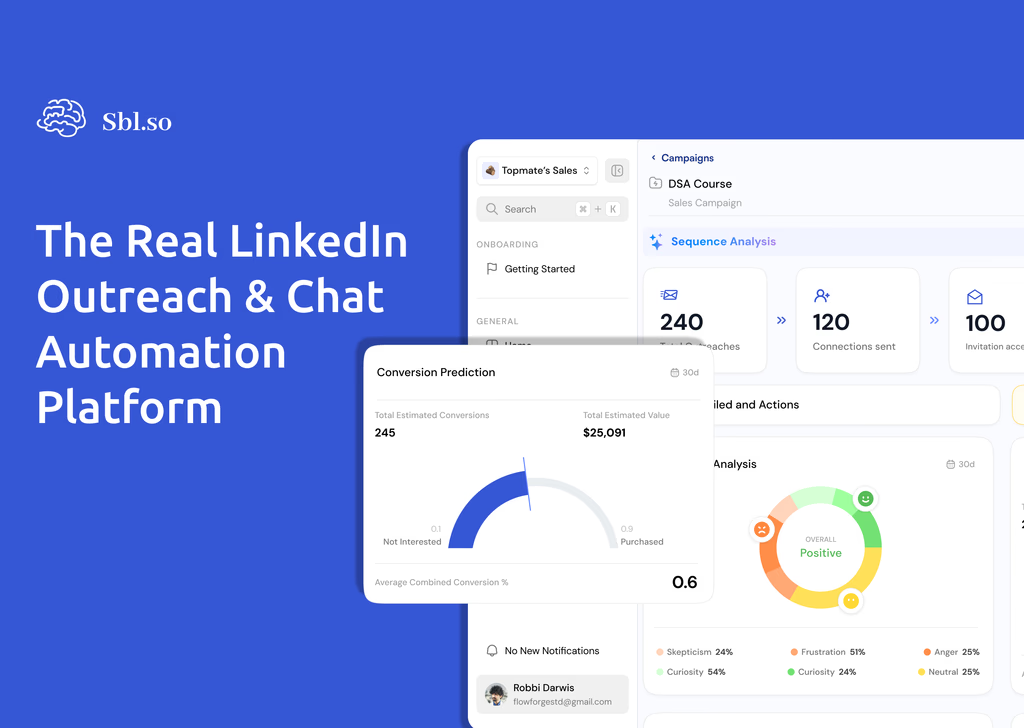
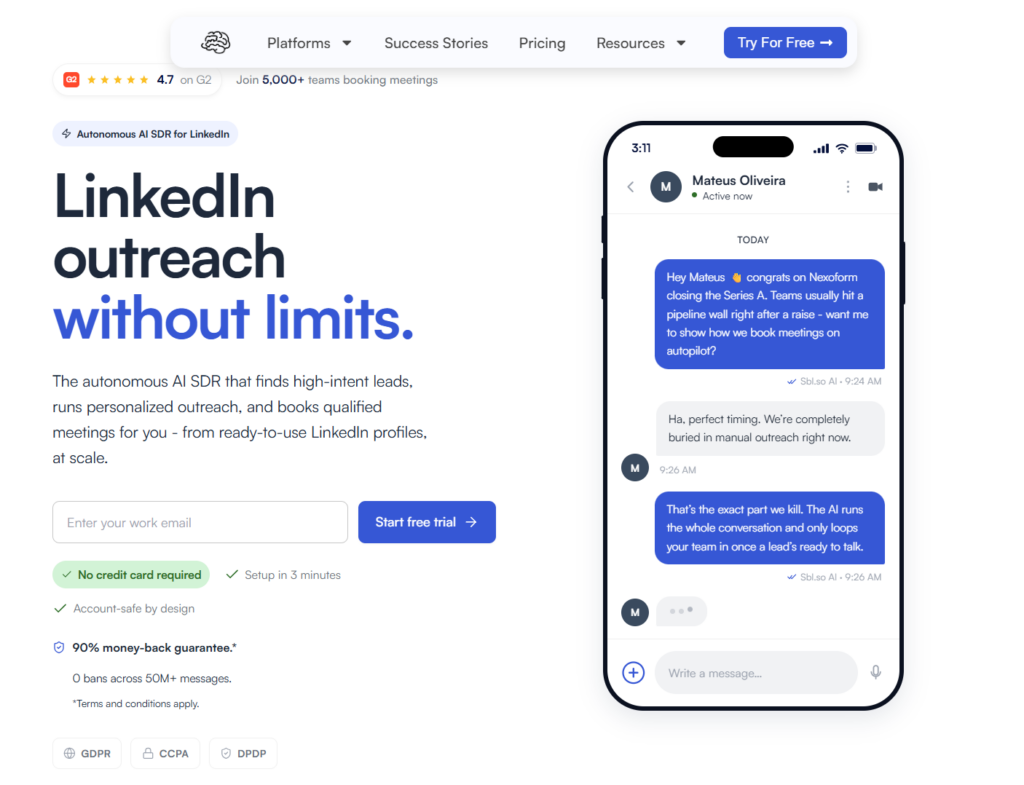
Features: Sbl.so is hands down the most advanced LinkedIn AI sales agent I’ve tested. Unlike traditional outreach tools that stop at sending templates, Sbl.so actually takes over conversations after prospects reply. The system uses a persuasion chat model trained on real B2B sales conversations to handle objections, ask qualifying questions, and push toward demo bookings. You can send PDFs, images, and even clone your voice for personalized voice notes. The lead generation agent finds high-quality prospects automatically. Their unified inbox lets you manage unlimited LinkedIn accounts from one dashboard, and their fractional SDR profile network means you can scale to 40,000+ outreach messages per month. The deep campaign analytics show you real qualitative insights from every chat. Human-in-the-loop alerts trigger when the AI is unsure and needs backup.
Pros:
- True AI chat automation that handles replies, not just sends messages
- Voice cloning for personalized audio outreach at scale
- Unified inbox for unlimited LinkedIn accounts
- Built-in lead generation agent
- WhatsApp integration for multi-channel outreach
- Human intervention alerts when AI needs backup
- Fractional SDR network for scaling without hiring
Cons:
- Learning curve for maximizing AI chat features
- Premium features require paid plans
- Best results need proper AI training on your specific use case
Pricing: Free to start, paid plans from $99/month
2. LinkedIn Sales Navigator AI
Features: LinkedIn’s native AI agent has evolved significantly in 2026. The AI Mode now enables conversational queries for finding leads (you can type “CFOs at Series B fintech companies in Germany” and get results), auto-outreach suggestions, and smart reply recommendations based on prospect behavior. It integrates directly with your CRM and provides demo scheduling through Microsoft ecosystem. The account-based prospecting helps you target entire buying committees at once. Recent updates include better intent signals, relationship mapping across organizations, and prompts to focus on people changing jobs or showing buying signals.
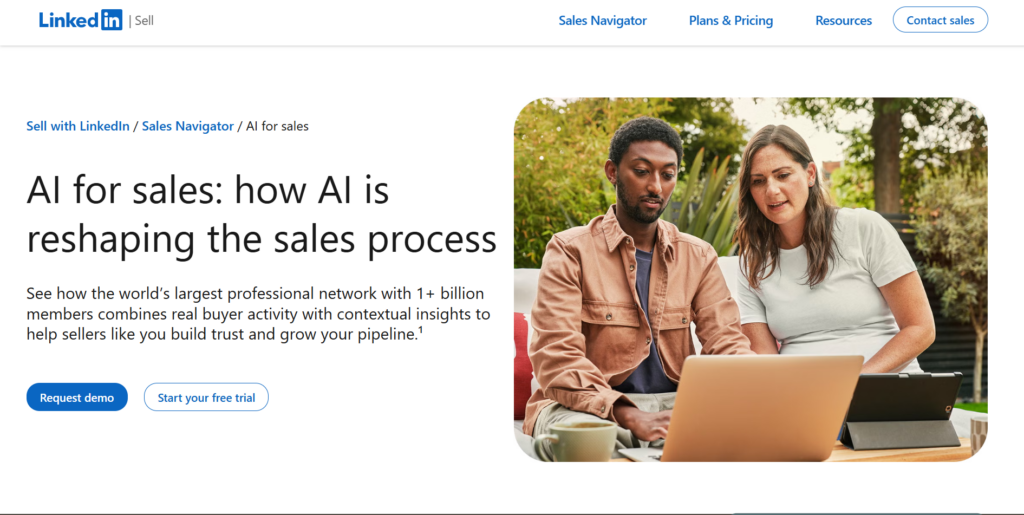
Most people aren’t really aware that LinkedIn has its own AI Sales Agent. You may read more about LinkedIn’s own Sales Assistant Agent.
Pros:
- Native LinkedIn integration means zero compliance risk
- Deep CRM connectivity with Salesforce and HubSpot
- Advanced search filters and lead recommendations
- Relationship intelligence across your network
Cons:
- No autonomous chat handling after first message
- Limited personalization compared to specialized tools
- Expensive for individual users
- Still requires significant manual follow-up
Pricing: Starting at $99/month for core features.
3. Expandi
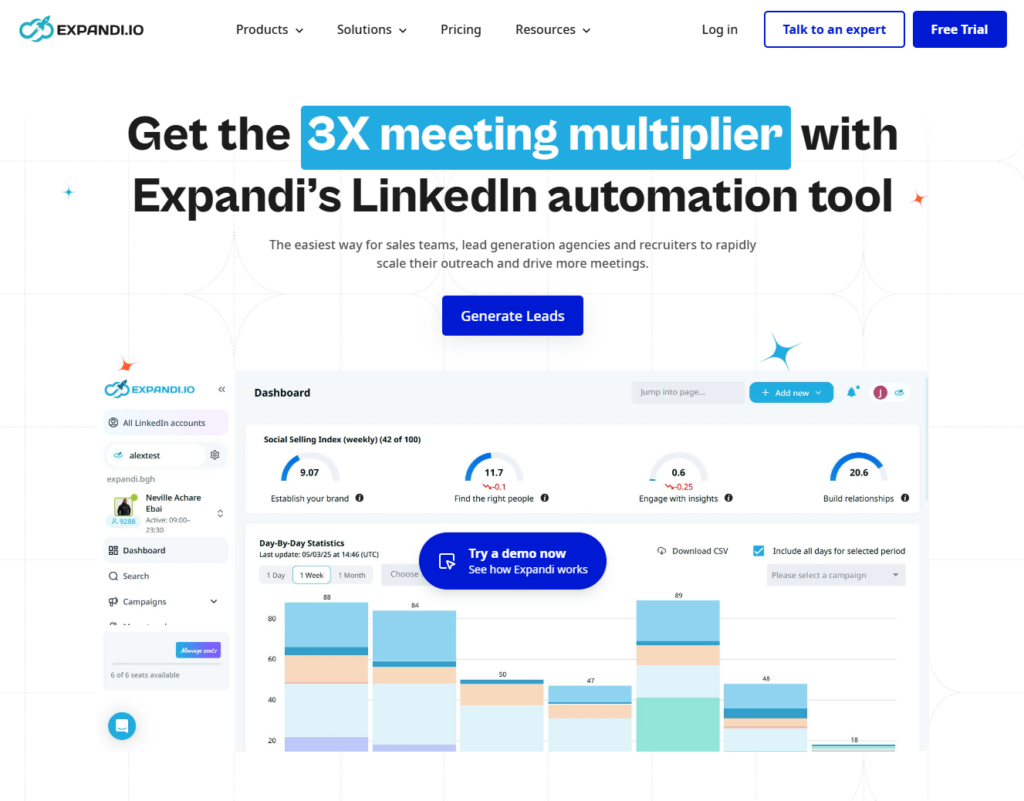
Features: Expandi provides cloud-based LinkedIn automation with smart sequences for connection requests, messages, and InMail campaigns. Features include dedicated IP addresses, random delays to mimic human behavior, and A/B testing for messages. The platform supports multi-account management and offers image personalization. Their 2026 updates include better webhooks, improved analytics dashboards, and stronger API integrations for connecting to CRMs and enrichment tools.
Pros:
- Solid safety features with dedicated IPs
- Good sequence building capabilities
- Reliable uptime and support
- Image personalization in messages
Cons:
- No real AI conversation handling
- Still template-based at its core
- Manual reply management required
- Gets expensive with multiple accounts
Pricing: From $99/seat/month.
4. Dripify
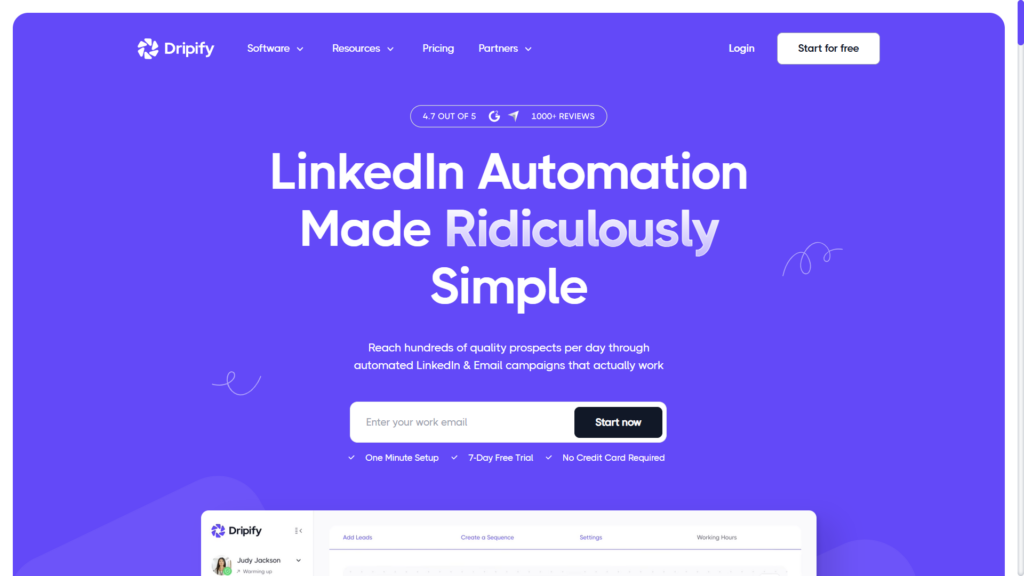
Features: Dripify offers LinkedIn automation with visual sequence builders, team management features, and advanced analytics. You can create multi-step campaigns including profile visits, endorsements, connection requests, and follow-up messages. The platform handles delays and working hours automatically. Recent features include better export options and improved team collaboration tools. Check out our detailed Dripify vs Sbl.so comparison for more insights.
Pros:
- Intuitive visual campaign builder
- Strong team features for agencies
- Good safety limits built in
- Reasonable pricing for teams
Cons:
- Basic automation, not true AI
- Reply handling is completely manual
- Limited personalization options
- Struggles with complex sequences
Pricing: Starting at $59/month.
5. Waalaxy
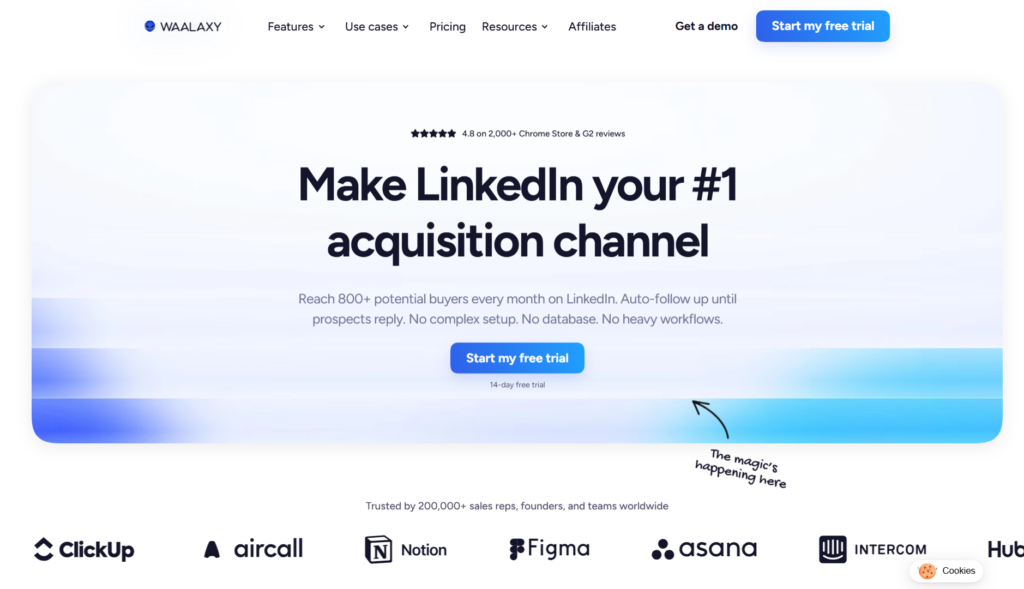
Features: Waalaxy combines LinkedIn and email outreach in one platform with pre-built campaign templates. Features include CRM sync, lead scoring, and automated follow-ups across both channels. The AI writing assistant helps craft messages, and the platform handles bounce management for email. Their 2026 update improved the unified inbox experience. For a deeper look, see our Waalaxy vs Sbl.so breakdown.
Pros:
- Good multi-channel basics
- Easy to use templates
- Affordable entry pricing
- Chrome extension works well
Cons:
- AI is surface-level only
- Conversations still require manual handling
- Email features feel bolted on
- Limited advanced customization
Pricing: Free tier available, paid from $56/month.
6. HeyReach
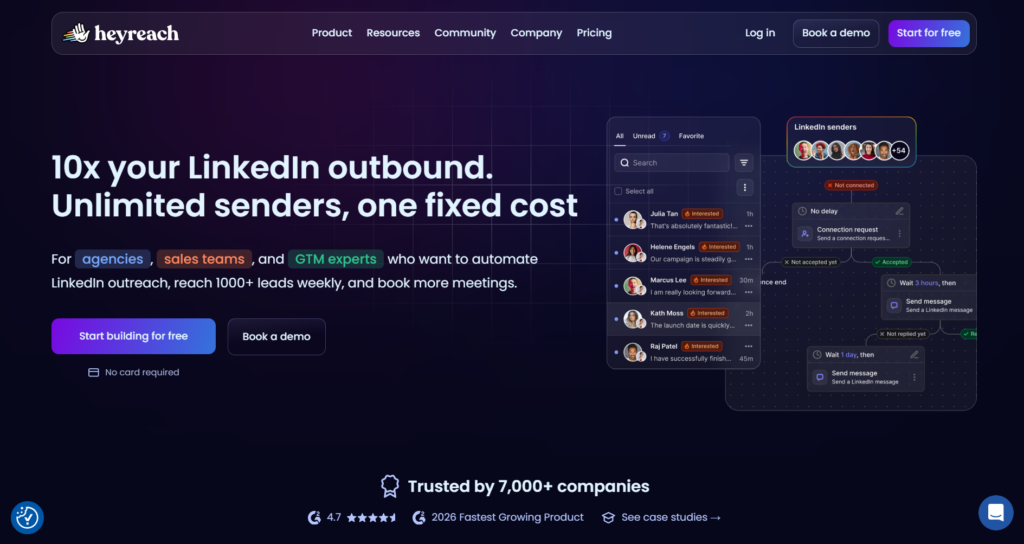
Features: HeyReach focuses on agency-scale LinkedIn outreach with unlimited sender accounts, centralized campaign management, and white-label options. Features include smart sequences, automatic account rotation, and detailed reporting per client. The platform supports bulk actions and has improved safety features in 2026.
We’ve written an in-depth Sbl.so vs HeyReach comparison if you want the full picture.
Pros:
- Built for agencies managing multiple clients
- Unlimited accounts on higher tiers
- Good white-label capabilities
- Solid customer support
Cons:
- No AI conversation handling
- Basic automation despite the pricing
- Steep learning curve
- Reply management is manual
Pricing: From $79/month.
7. PhantomBuster
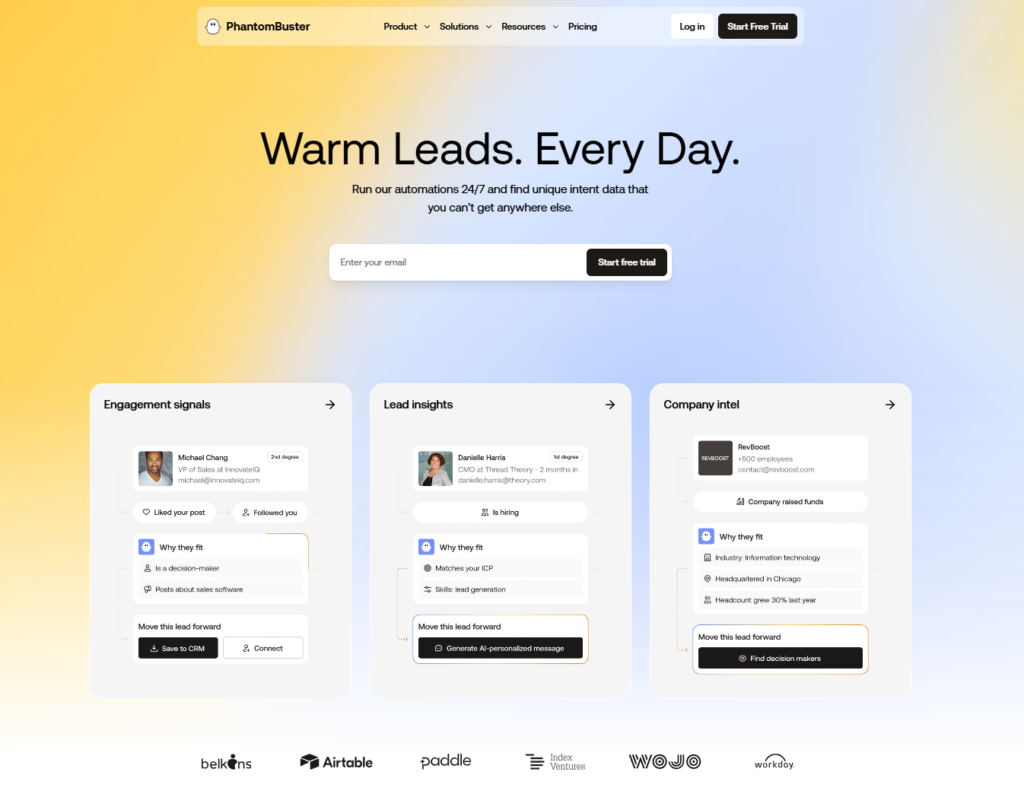
Features: PhantomBuster offers LinkedIn data extraction and automation through “Phantoms” which are pre-built automations for various tasks. You can scrape profiles, extract company data, automate connection requests, and chain multiple actions together. Recent updates include better API integrations and improved scheduling.
Our PhantomBuster vs Sbl.so analysis covers the key differences.
Pros:
- Extremely flexible data extraction
- Can automate almost anything on LinkedIn
- Great for technical users
- Strong API and webhook support
Cons:
- Definitely not AI, just automation
- Complex setup for non-technical users
- Easy to exceed LinkedIn limits
- No conversation handling whatsoever
Pricing: From $56/month.
8. MeetAlfred
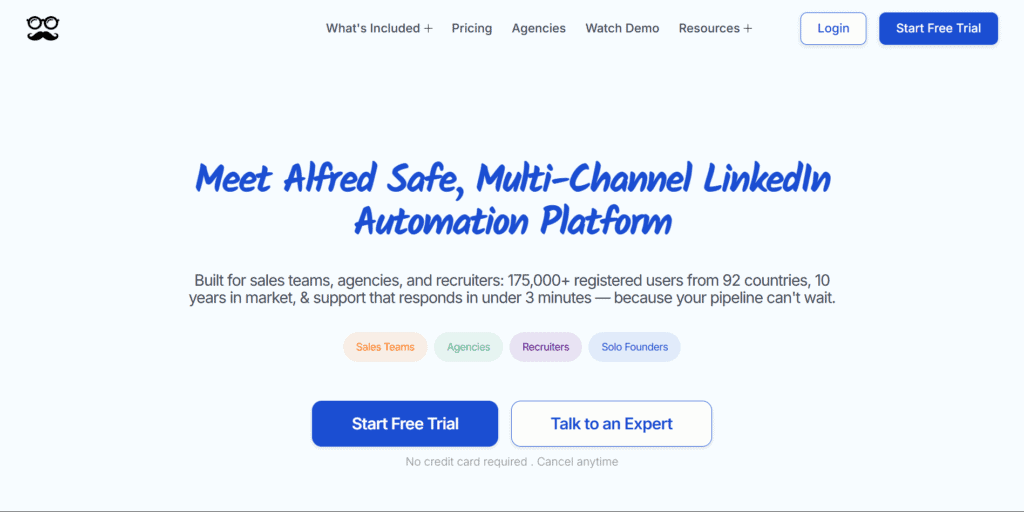
Features: MeetAlfred provides LinkedIn, email, and Twitter automation from one dashboard. Features include campaign templates, CRM integration, built-in inbox, and team management. The platform offers sequence builders with conditional logic and personalization tags. Their 2026 updates focused on improved deliverability and better analytics.
Pros:
- Multi-platform in one place
- Good campaign templates to start
- Built-in CRM functionality
- Reasonable for small teams
Cons:
- Clunky user interface
- No AI conversation capabilities
- Twitter features feel neglected
- Support can be slow
Pricing: From $59/month.
9. Lemlist
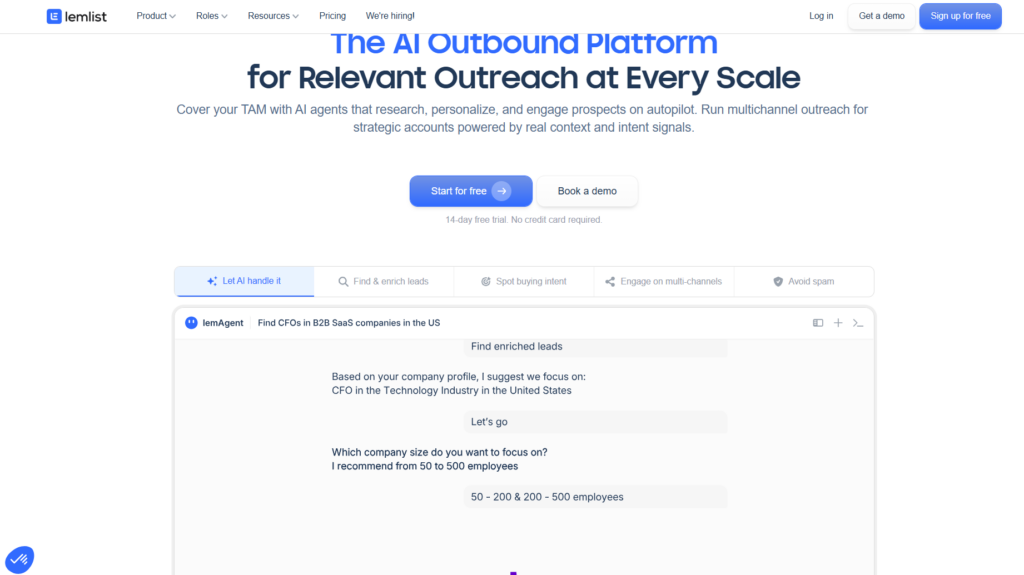
Features: Lemlist combines email and LinkedIn outreach with strong personalization features including custom images and landing pages. The AI helps write copy and suggests optimizations based on campaign performance. Features include deliverability tools, A/B testing, and multichannel sequences. Their 2026 updates added video personalization and improved LinkedIn integration.
Pros:
- Excellent email personalization
- Creative custom image features
- Strong deliverability focus
- Good for cold outreach sequences
Cons:
- LinkedIn features feel secondary
- AI is really just copywriting help
- Manual reply handling required
- Can get pricey at scale
Pricing: From $59/month.
10. Clay + Claygent
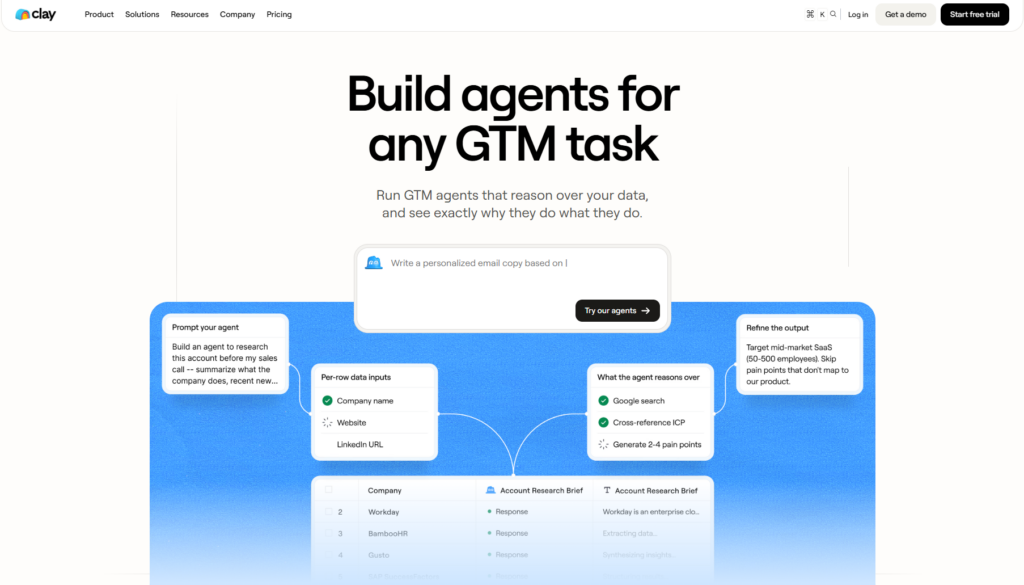
Features: Clay is a data enrichment and outreach platform that pulls information from 50+ sources to personalize your LinkedIn messages. Features include AI-powered research, waterfall enrichment, and dynamic personalization based on prospect data. The 2026 updates added better AI writing through Claygent, their AI agent that can summarize prospects, write tailored angles, and gather custom insights for each lead. Great for teams serious about B2B data enrichment.
Pros:
- Incredible data enrichment capabilities
- Highly personalized outreach potential
- Claygent researches prospects automatically
- Powerful for technical teams
Cons:
- Not an outreach tool itself, more infrastructure
- Steep learning curve
- Expensive for small teams
- Still requires other tools for actual sending
Pricing: From $149/month.
Best AI Sales Agents for Email in 2026
Email remains crucial for outbound, especially when combined with LinkedIn for multi-channel outreach strategies. These AI sales agents focus primarily on email but often include other channels.
11. Apollo.io AI Agent
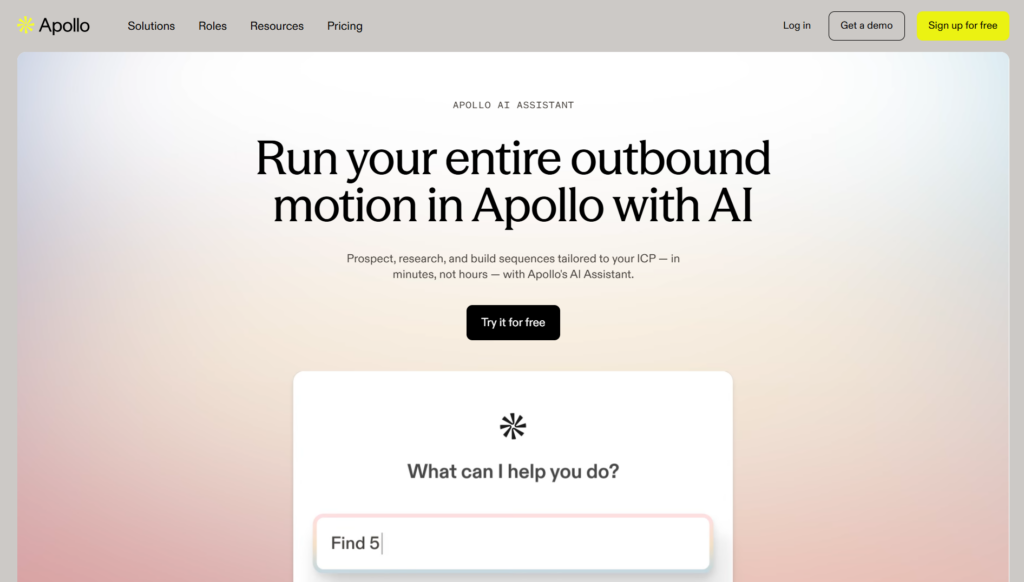
Features: Apollo combines a massive B2B database with AI-powered outreach sequences. Features include intent data, buying signals, automatic lead scoring using engagement signals and fit models, and AI message optimization. The 2026 updates include better email drafting tuned to persona and intent. Their email deliverability tools are among the best in the market.
Pros:
- Huge contact database included
- Strong intent signals and buying data
- Good AI-assisted writing
- All-in-one prospecting and outreach
Cons:
- Data quality varies by industry
- AI is still primarily for writing, not conversations
- Can feel overwhelming with features
- LinkedIn integration is basic
Pricing: Free tier available, paid from $49/month.
12. Outreach.io
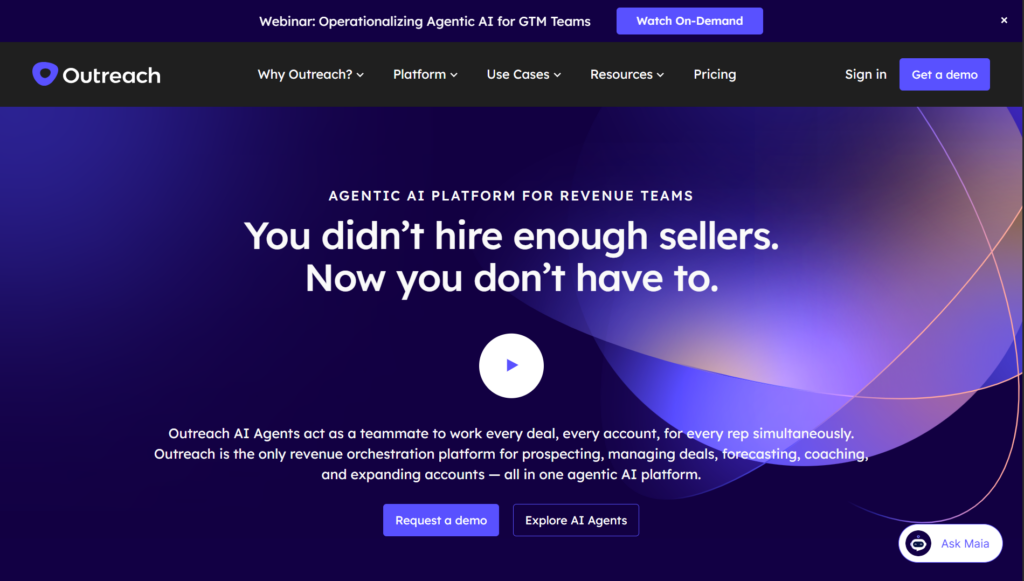
Features: Outreach is an enterprise sales engagement platform with AI-powered sequence optimization, predictive analytics, and conversation intelligence. Features include multi-channel sequences, dynamic content, deal insights, and coaching tools. The AI tests and recommends better steps based on results, and conversation intelligence analyzes calls and emails for topics, objections, and sentiments.
Pros:
- Enterprise-grade features
- Excellent analytics and reporting
- Strong conversation intelligence
- Good for large sales teams
Cons:
- Very expensive for smaller teams
- Complex implementation required
- Overkill for simple use cases
- Long contract commitments
Pricing: From $100/user/month with annual contracts.
13. Reply.io
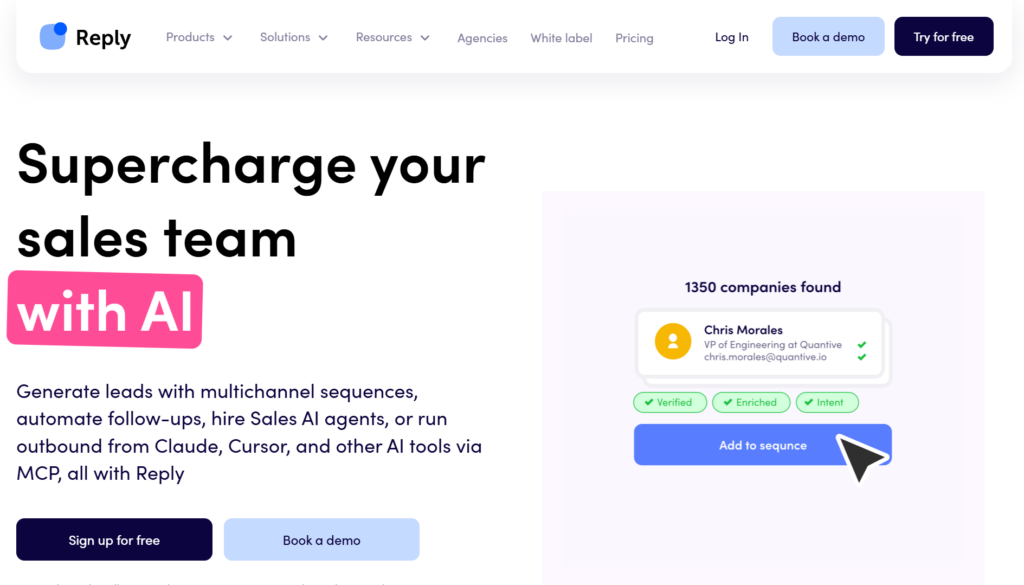
Features: Reply.io offers multi-channel sales engagement across email, LinkedIn, WhatsApp, and calls. Features include AI message generation, smart sequences, unified inbox, and task automation. The 2026 updates focused on improved WhatsApp capabilities and better AI sequence step suggestions. Good middle-ground between simple and enterprise tools.
Pros:
- True multi-channel in one platform
- AI writing assistance built in
- Good balance of features and usability
- Reasonable pricing
Cons:
- AI doesn’t handle actual conversations
- WhatsApp features still maturing
- Can get complex at scale
- Support response times vary
Pricing: From $49/month.
14. Instantly.ai
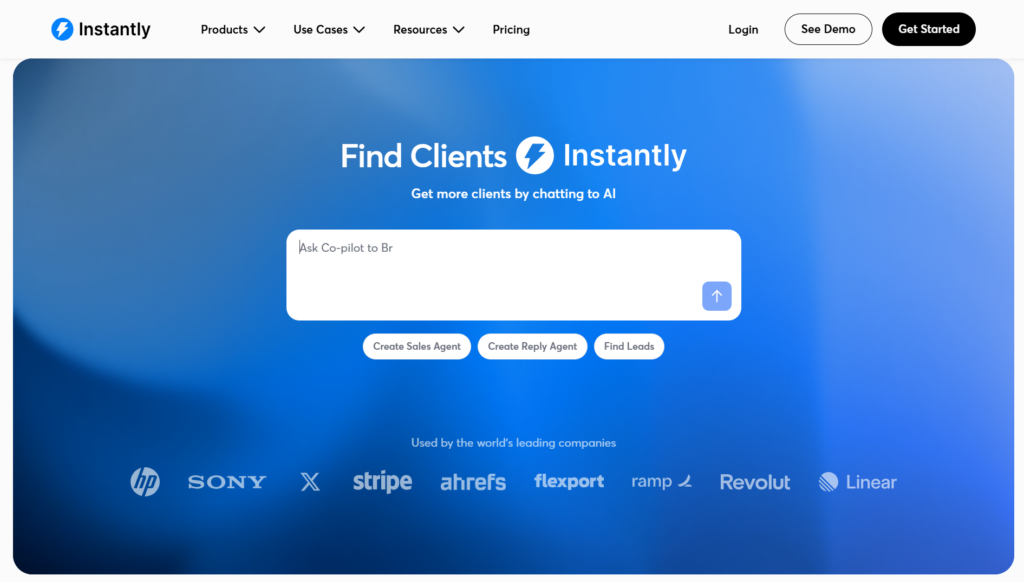
Features: Instantly focuses on cold email at scale with unlimited email accounts, warmup tools, and AI optimization. Features include inbox rotation, smart scheduling, reply detection, and campaign analytics. The platform handles deliverability automatically and the 2026 updates improved AI writing and A/B testing. Essential reading if you’re wondering about cold email outreach viability in 2026.
Pros:
- Unlimited accounts and warmup
- Excellent deliverability focus
- Simple and effective for email
- Affordable for volume senders
Cons:
- Email only, no other channels
- AI is basic writing help
- No conversation automation
- Limited CRM integrations
Pricing: From $37/month.
15. Smartlead
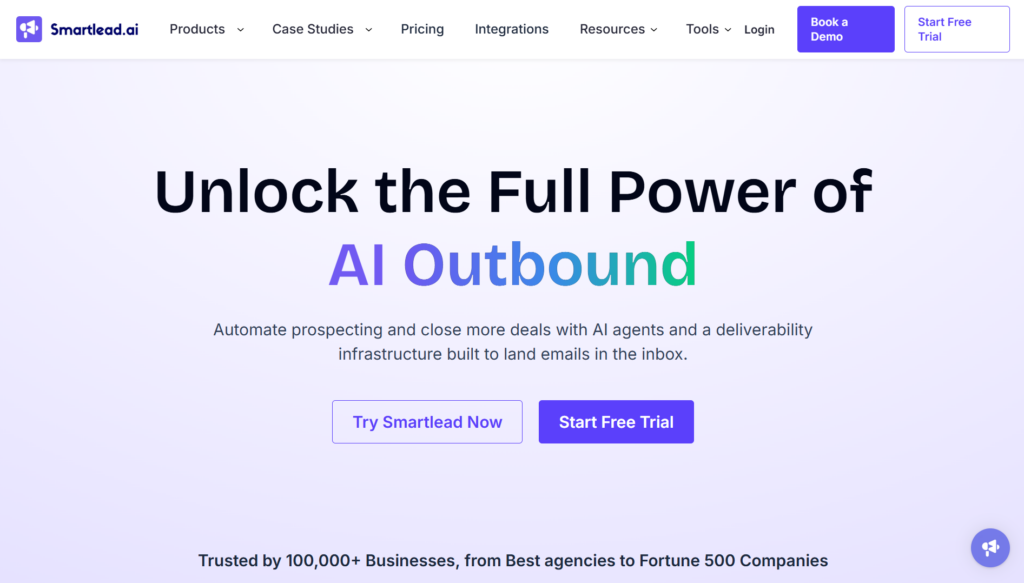
Features: Smartlead provides cold email infrastructure with unlimited mailboxes, auto-rotation, and AI warmup. Features include subsequences based on intent, custom tracking domains, and centralized inbox. The 2026 updates added better AI personalization for subject lines and improved analytics. Good for agencies running high-volume email campaigns.
Pros:
- Designed for scale from the start
- Strong technical infrastructure
- Good agency features
- Competitive pricing for volume
Cons:
- Email only platform
- No AI conversation handling
- Interface could be better
- Documentation is lacking
Pricing: From $39/month.
16. Lavender.ai
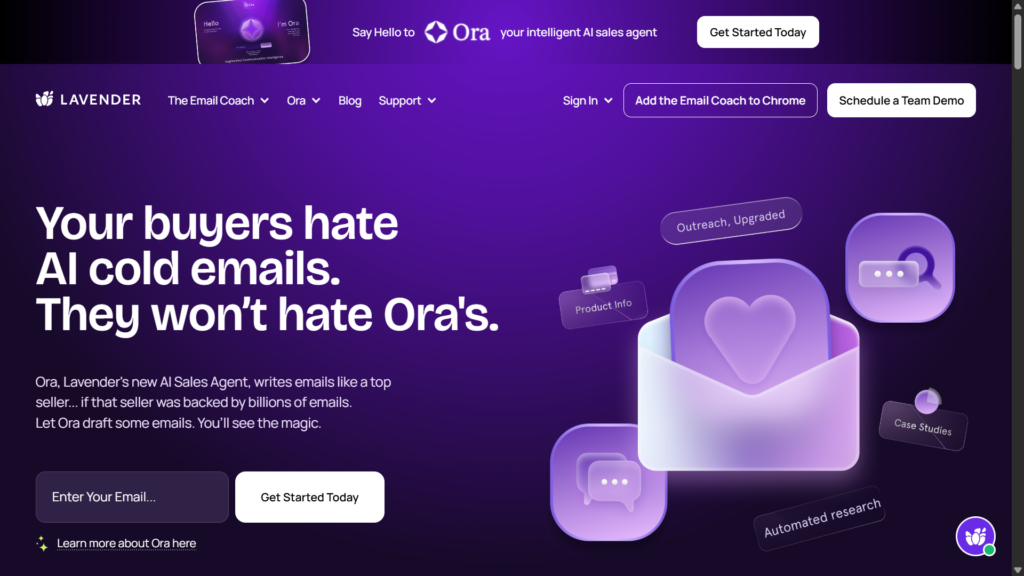
Features: Lavender is an AI email coach that analyzes your emails in real-time and suggests improvements. Features include personality insights on recipients, mobile preview, reply likelihood scoring, and team analytics. The 2026 updates improved ethical data handling and added more coaching features. Works alongside your existing email tools.
Pros:
- Excellent email coaching in real-time
- Improves your actual writing skills
- Works with existing tools
- Data-backed suggestions
Cons:
- Not an outreach platform itself
- Doesn’t send or automate anything
- Value depends on email volume
- Individual tool, not team workflow
Pricing: Free tier, paid from $29/month.
17. Regie.ai
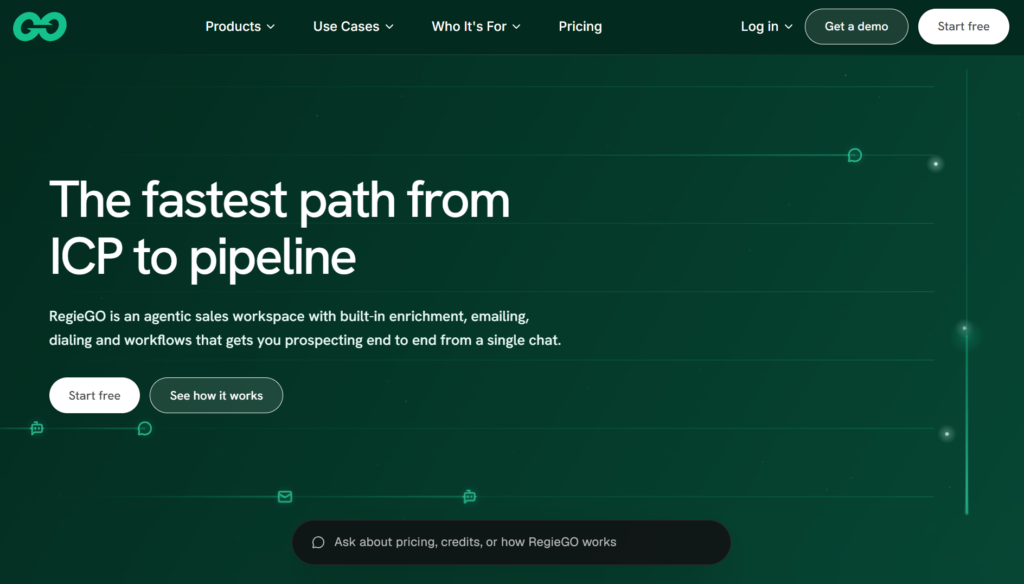
Features: Regie generates sales content including emails, sequences, and call scripts using AI. Features include brand voice training, content performance analytics, and integration with major sales engagement platforms like Outreach, Salesloft, and HubSpot. The 2026 updates improved sequence generation based on industry data and ICP customization.
Pros:
- Good content generation quality
- Brand voice customization
- Integrates with existing stacks
- Helpful for content-heavy teams
Cons:
- Content generation, not automation
- No actual sending capabilities
- Requires other tools to execute
- AI quality varies by use case
Pricing: From $59/month.
18. Salesloft
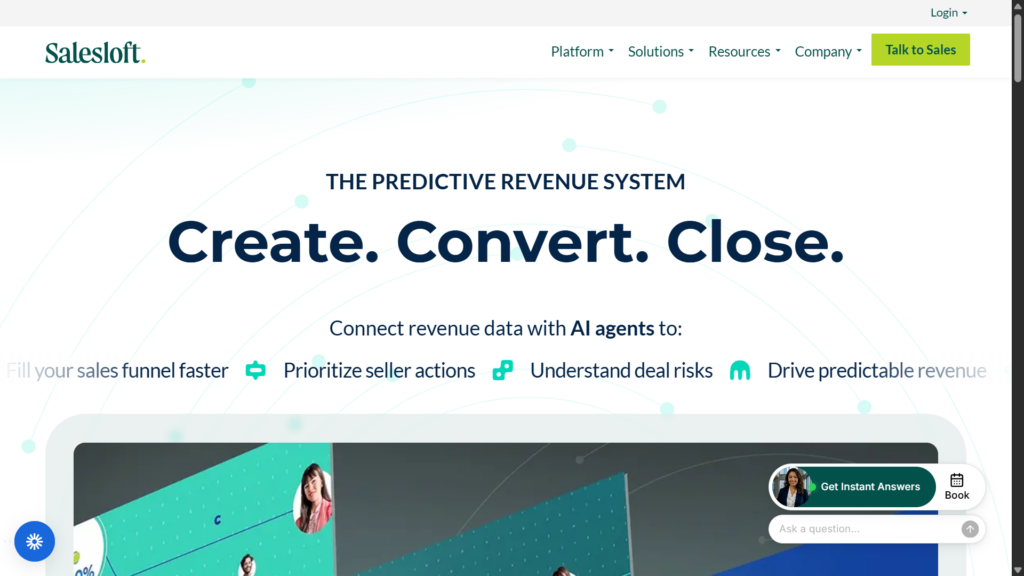
Features: Salesloft is an enterprise revenue platform with AI-driven engagement, forecasting, and conversation intelligence. Features include multi-channel cadences, deal insights, coaching tools, and revenue intelligence. The AI analyzes calls and meetings, indicates deal risk and next actions, and coaches reps on improving.
Pros:
- Enterprise-grade capabilities
- Excellent conversation intelligence
- Strong forecasting features
- Comprehensive sales platform
Cons:
- Expensive and complex
- Long implementation time
- Overkill for SMBs
- Annual contract requirements
Pricing: Custom pricing, typically $125+/user/month.
19. Mailshake
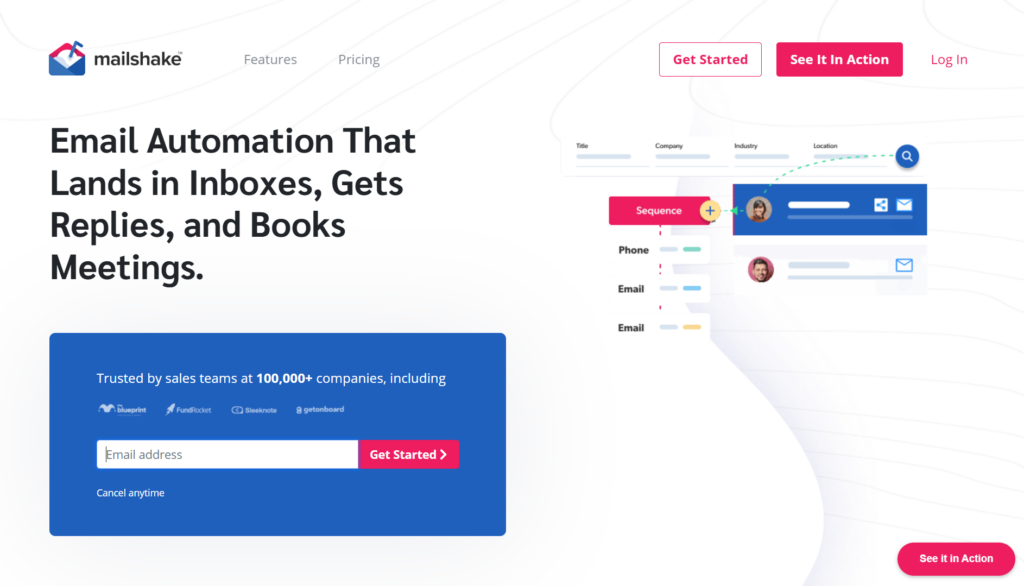
Features: Mailshake offers simple cold email and LinkedIn outreach with AI writing assistance. Features include sequences, follow-ups, personalization, and a built-in dialer. The platform focuses on ease of use and quick setup. Their 2026 updates improved AI suggestions and deliverability monitoring.
Pros:
- Very easy to use
- Quick setup and onboarding
- Good for beginners
- Includes dialer option
Cons:
- Limited advanced features
- AI is basic
- LinkedIn features are minimal
- Not great for high volume
Pricing: From $58/month.
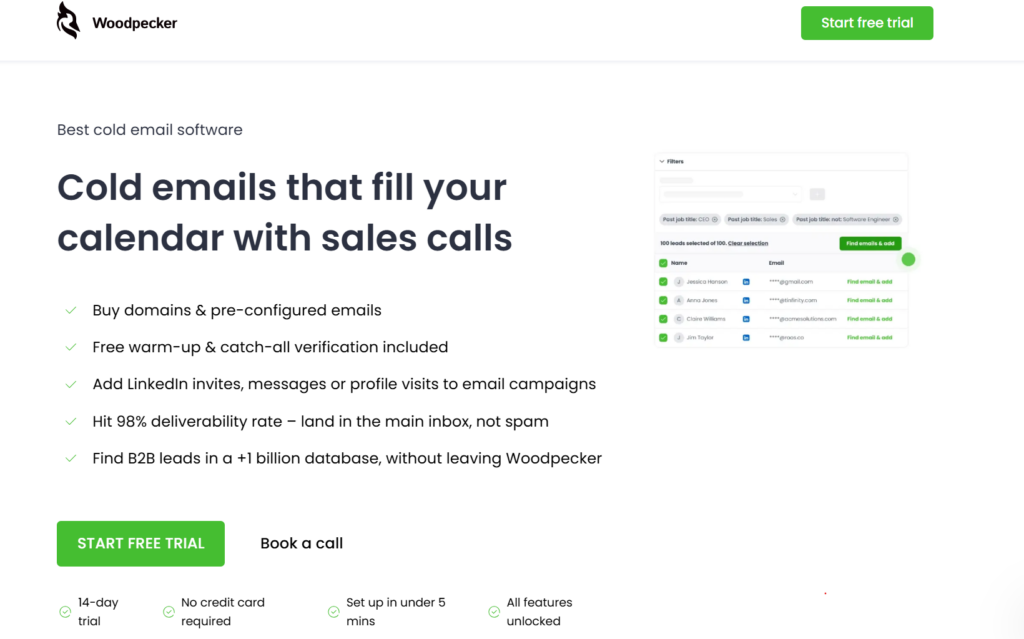
20. Woodpecker
Features: Woodpecker provides cold email automation with strong deliverability features including warmup, bounce shield, and inbox rotation. Features include A/B testing, team collaboration, and CRM integrations. The platform focuses on keeping emails out of spam with adaptive sending.
Pros:
- Excellent deliverability focus
- Good for teams and agencies
- Strong bounce protection
- Reliable and stable
Cons:
- Email only
- Limited AI capabilities
- Interface feels dated
- No conversation automation
Pricing: From $49/month.
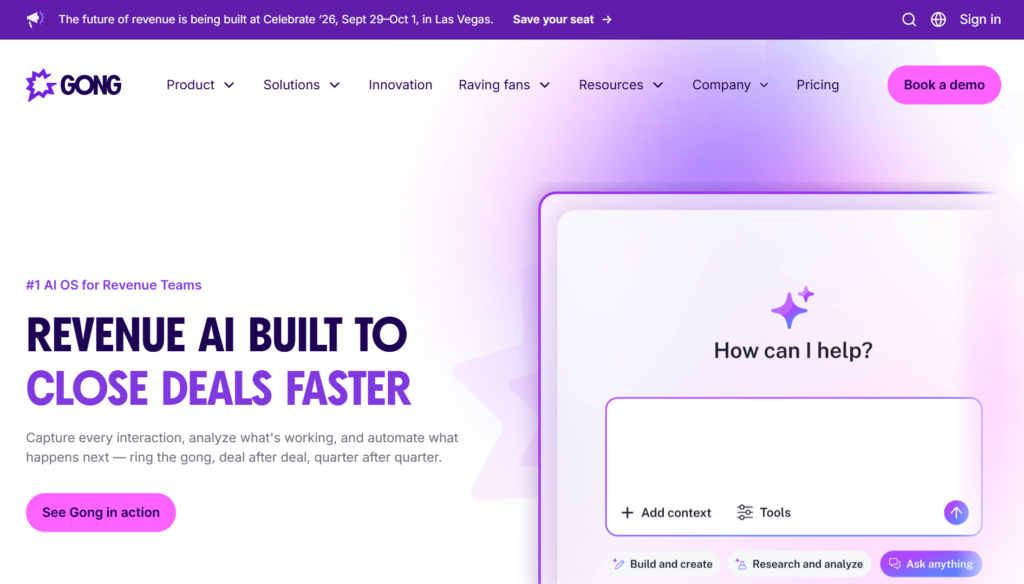
21. Gong Engage
Features: Built on Gong’s conversation intelligence, Gong Engage adds outbound and tasking capabilities. The AI uses call and email intelligence to prioritize accounts and recommend actions, drafting outreach aligned with what has statistically worked in past deals. Best for orgs already using Gong for call analysis.
Pros:
- Deep conversation intelligence integration
- Data-driven outreach recommendations
- Learns from your winning patterns
- Strong analytics
Cons:
- Requires Gong ecosystem
- Enterprise pricing
- More co-pilot than autonomous agent
- Complex for smaller teams
Pricing: Custom enterprise pricing.
Best AI Sales Agents for WhatsApp in 2026
WhatsApp has exploded for B2B and B2C sales, especially in certain markets. These WhatsApp automation tools are leading the charge for AI-powered sales conversations.
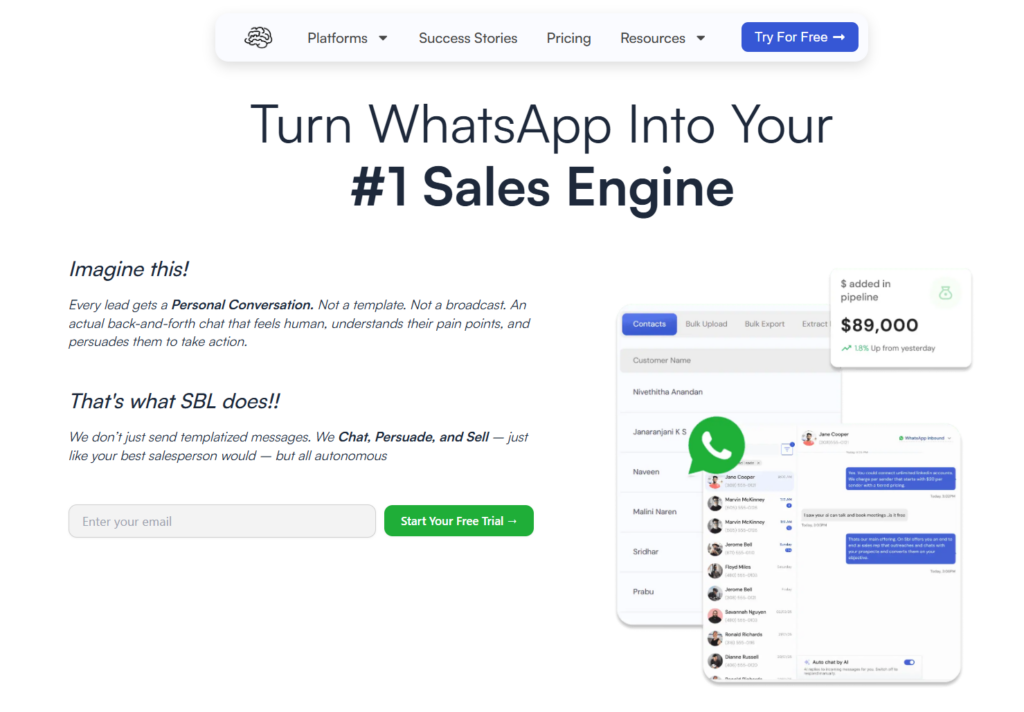
22. Sbl.so (WhatsApp)
Features: Sbl.so’s WhatsApp integration works seamlessly with their LinkedIn automation, allowing you to follow the same lead across channels without losing context. The AI chat model applies the same persuasion framework across both platforms. You can send rich media including PDFs and voice notes through WhatsApp, and the unified inbox shows all conversations in one place. The 2026 update added real-time demo booking directly in WhatsApp conversations.
Pros:
- True multi-channel with LinkedIn sync
- Same AI conversation handling as LinkedIn
- Unified inbox across platforms
- Rich media support in conversations
- Context carries across channels
Cons:
- Requires LinkedIn setup first for best results
- WhatsApp Business API knowledge helpful
- Premium feature on paid plans
Pricing: Included in Sbl.so plans from $99/month.
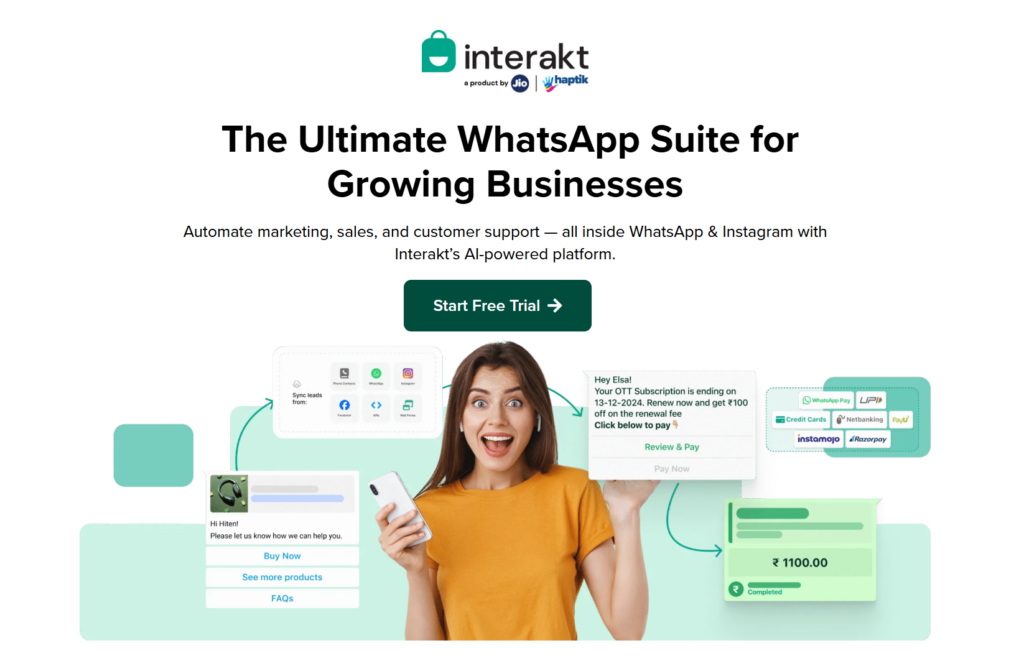
23. Interakt
Features: Interakt offers WhatsApp Business API access with chatbot builders, broadcast messaging, and CRM features. Features include automated responses, cart recovery, order updates, and team inbox. The platform focuses on ecommerce and D2C brands. Good option for B2C WhatsApp marketing.
Pros:
- Official WhatsApp API partner
- Good for ecommerce workflows
- Team collaboration features
- Affordable pricing
Cons:
- Chatbot is rule-based, not AI
- Limited B2B focus
- Basic analytics
- Integration options limited
Pricing: From $15/month plus messaging costs.
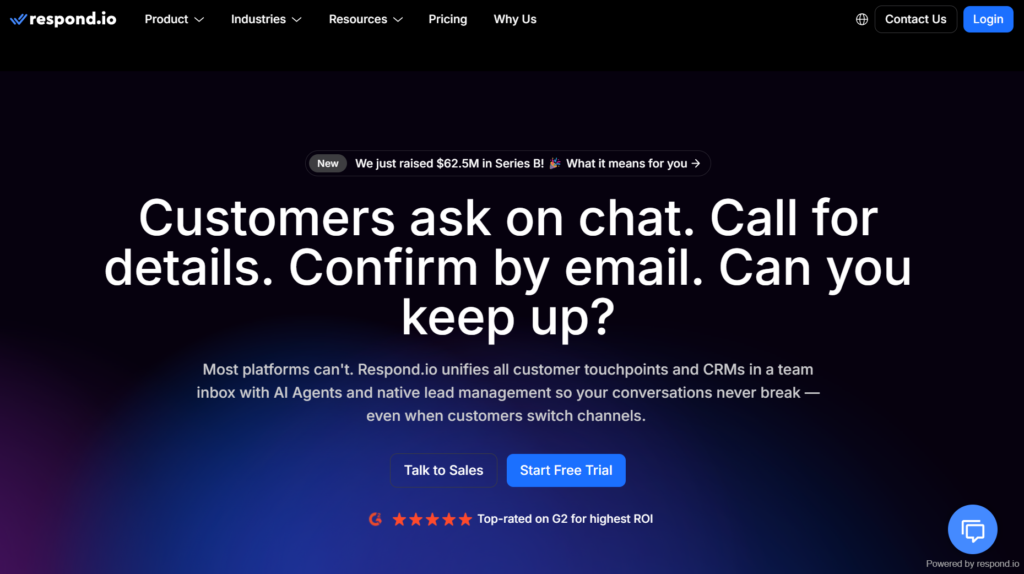
24. Respond.io
Features: Respond.io is an omnichannel inbox supporting WhatsApp, Instagram, Messenger, and more. Features include AI-powered routing, automated workflows, broadcast campaigns, and team management. The platform uses AI for message suggestions and conversation summaries.
Pros:
- True omnichannel support
- Good team collaboration
- AI assistance for replies
- Strong workflow automation
Cons:
- Not specialized for sales
- Can be complex to configure
- Pricing scales with usage
- AI is assistive, not autonomous
Pricing: From $79/month.
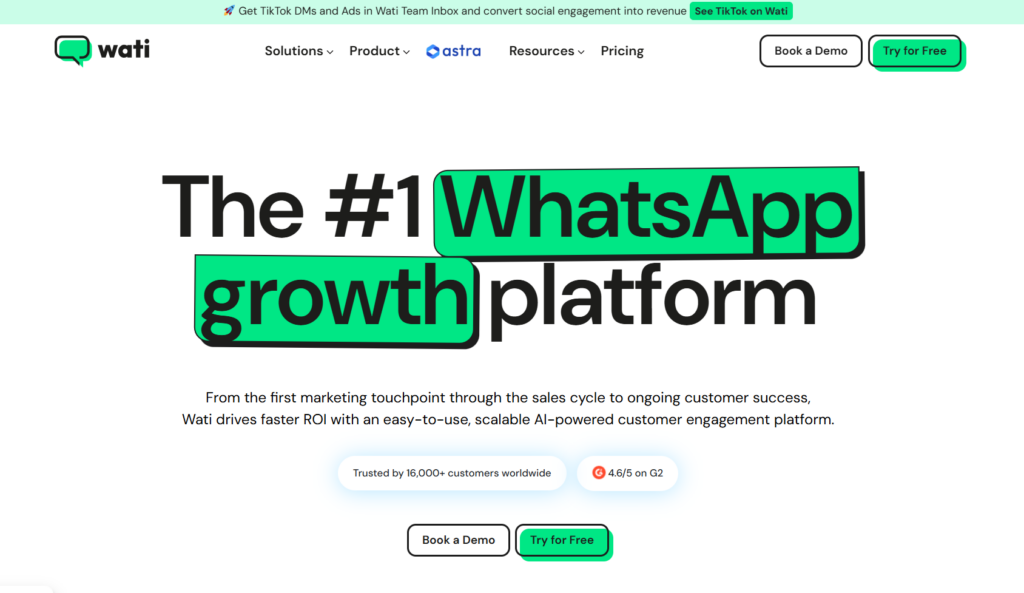
25. WATI
Features: WATI provides WhatsApp Business API with no-code chatbot builders, broadcast messaging, and shared team inbox. Features include flow builders, message templates, and basic analytics. The platform is designed for SMBs wanting official WhatsApp access.
Pros:
- Easy official API access
- No-code bot builder
- Good for getting started
- Reasonable pricing
Cons:
- Chatbots are flow-based, not AI
- Limited advanced features
- Basic reporting
- Not built for complex sales
Pricing: From $49/month.
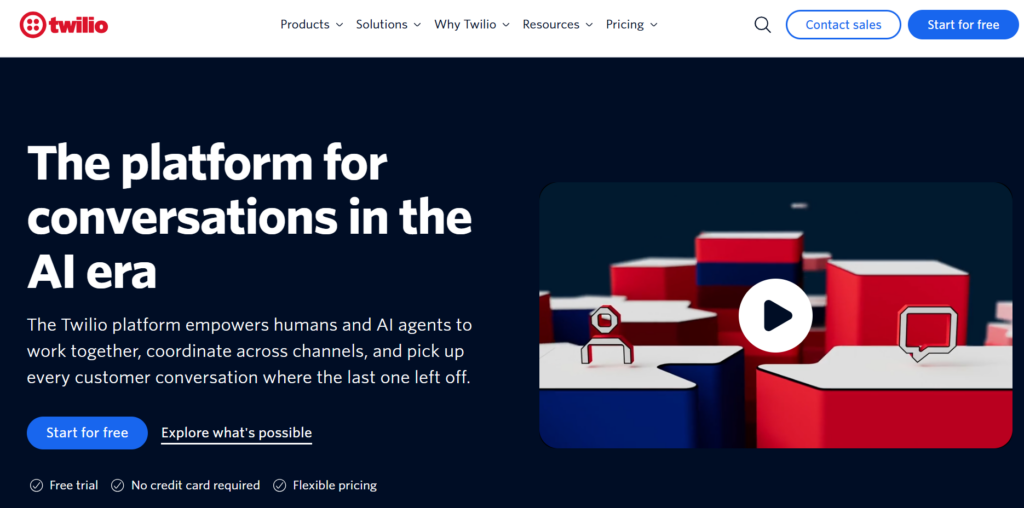
26. Twilio Conversations
Features: Twilio offers programmable WhatsApp APIs for building custom sales workflows. Features include message APIs, conversation APIs, and programmable bots. You can integrate AI services like GPT or other LLMs for conversation handling. Ultimate flexibility for technical teams.
Pros:
- Maximum flexibility and control
- Can build anything custom
- Reliable infrastructure
- Scales infinitely
Cons:
- Requires development resources
- Not a ready-made solution
- Complex pricing model
- Ongoing maintenance needed
Pricing: Pay as you go, varies by usage.
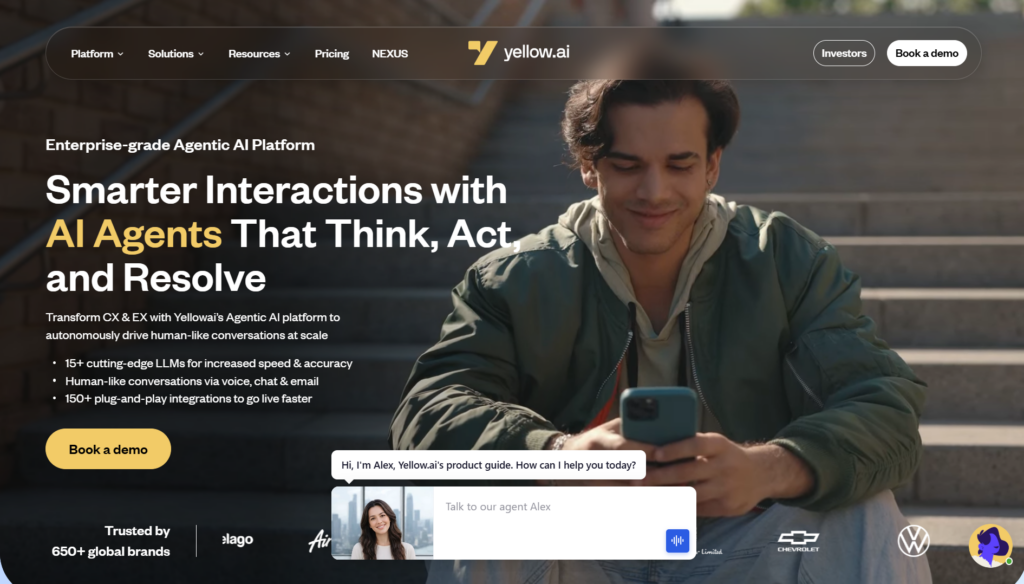
27. Yellow.ai
Features: Yellow.ai is an enterprise conversational AI platform supporting WhatsApp, voice, and chat. Features include NLU-powered bots with sentiment analysis, intent detection, context memory, human handoff, and analytics. The platform handles complex conversations with true AI understanding. Our roundup of WhatsApp chatbots for sales covers more options.
Pros:
- True conversational AI capabilities
- Enterprise-grade security
- Multi-language support
- Good for complex use cases
Cons:
- Enterprise pricing only
- Complex implementation
- Overkill for SMBs
- Long sales cycle
Pricing: Custom enterprise pricing.
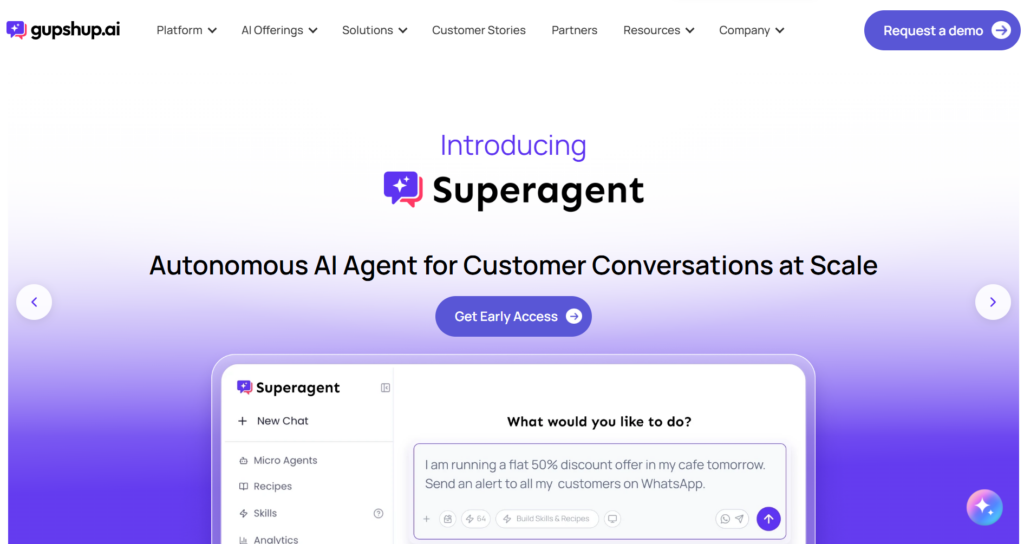
28. Gupshup
Features: Gupshup provides messaging APIs and conversational AI across WhatsApp, SMS, and RCS. Features include bot builders, broadcast tools, and conversational commerce. The platform supports rich messaging and interactive templates, often used with custom LLM integrations.
Pros:
- Strong messaging infrastructure
- Multiple channel support
- Good for high volume
- Commerce features built in
Cons:
- Developer-focused
- Basic AI capabilities
- Pricing can get complex
- Support varies by tier
Pricing: Usage-based, varies by volume.
29. Freshchat
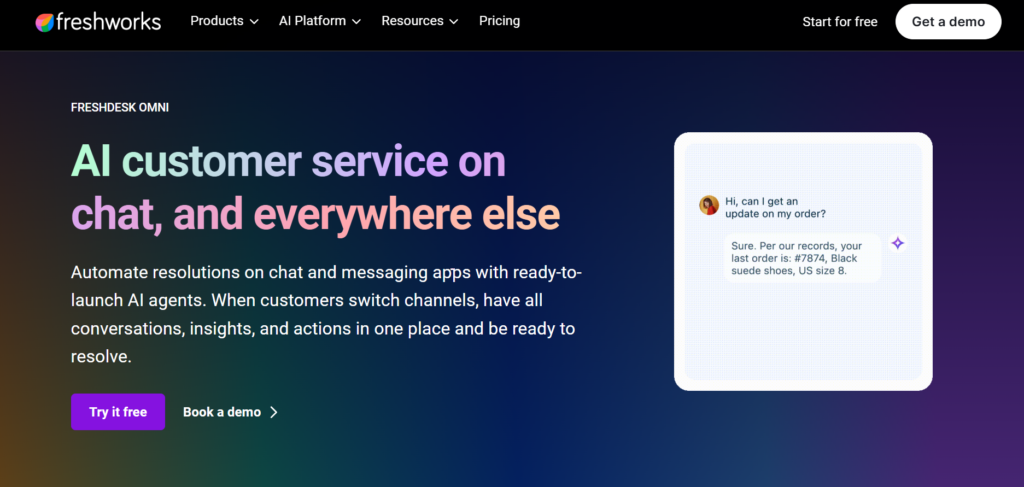
Features: Freshchat offers AI-powered chat including WhatsApp with Freddy AI bots. Features include unified inbox, canned responses, conversation routing, and basic analytics. The platform integrates with Freshsales CRM for lead management.
Pros:
- Good Freshworks ecosystem integration
- AI bots included
- Reasonable pricing
- Easy to use
Cons:
- Best with other Freshworks products
- AI is basic compared to specialists
- Limited customization
- WhatsApp features not the focus
Pricing: Free tier, paid from $15/agent/month.
30. Drift AI
Features: Drift focuses on conversational marketing and sales with AI chatbots on web and WhatsApp. Features include intent recognition, intelligent routing, meeting scheduling, and revenue analytics.
Pros:
- Strong conversational AI
- Good integration with sales processes
- Meeting scheduling built in
- Enterprise capabilities
Cons:
- Very expensive
- Primarily web-focused
- WhatsApp is secondary
- Complex to configure well
Pricing: From $2,500/month.
31. Intercom Fin AI
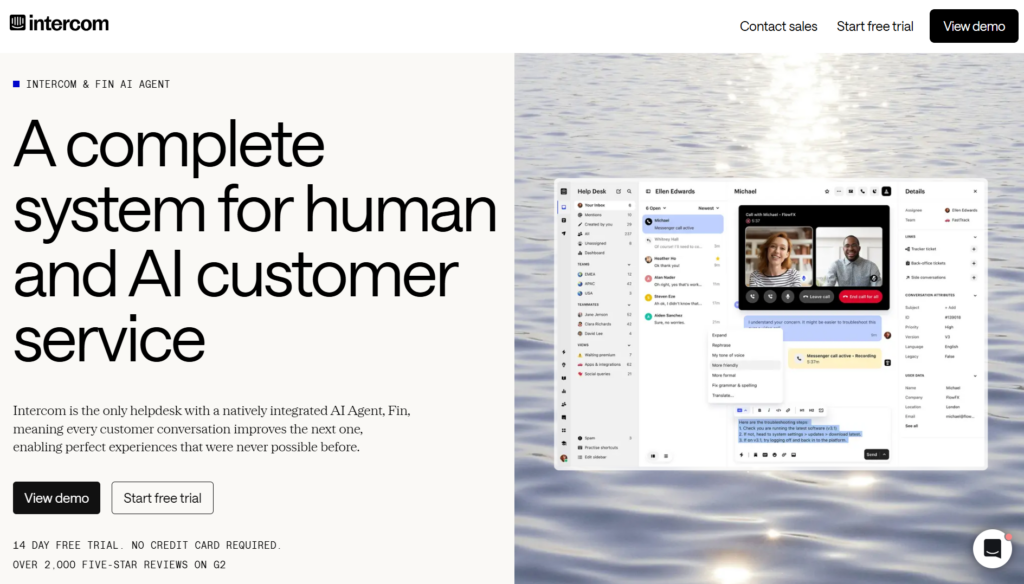
Features: Intercom’s Fin AI agent handles customer conversations with true AI understanding. Features include resolution agents that can answer questions from your knowledge base, conversation routing, multilingual support, and integration with Intercom’s broader platform. Works across web chat and messaging apps.
Pros:
- Genuinely intelligent AI
- Can resolve issues autonomously
- Strong knowledge base integration
- Modern interface
Cons:
- Primarily support focused
- Sales use cases secondary
- Pricing adds up quickly
- Requires Intercom ecosystem
Pricing: From $74/month plus AI usage.
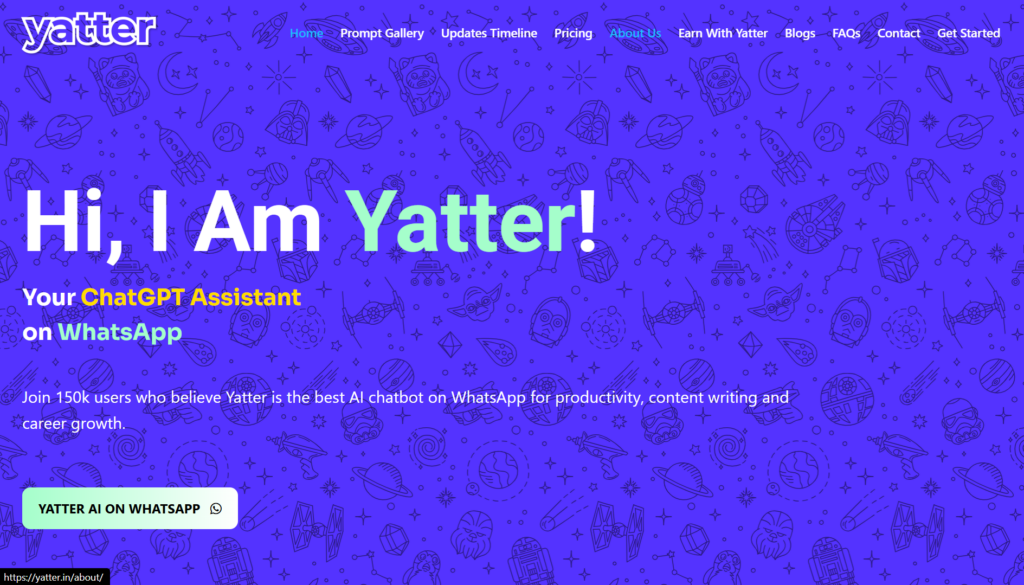
32. Yatter AI
Features: Yatter AI focuses on WhatsApp sales automation with AI-powered conversations. Features include lead qualification, appointment booking, and CRM integration. The platform is built specifically for SMB sales teams wanting WhatsApp automation.
Pros:
- Purpose-built for WhatsApp sales
- AI conversation handling
- Good for SMBs
- Simple setup
Cons:
- Smaller company, newer platform
- Limited multi-channel support
- Feature set still growing
- Less documentation available
Pricing: From $50/month.
How Do AI Sales Agents Actually Book Demos?
This is probably the question I get asked most. How does an AI actually book a meeting? Let me break it down based on what I’ve seen testing these tools.
Most AI sales agents follow this process: They send initial outreach, detect positive replies through sentiment analysis, then either push a calendar link or start a qualification conversation. The best ones, like Sbl.so, can handle objections mid-conversation and still steer toward booking.
The key difference between tools is what happens after someone shows interest. Basic tools just send your Calendly link. Advanced AI sales agents will ask qualifying questions, address concerns, suggest specific times based on timezone, and confirm bookings all within the conversation.
The typical outbound pipeline in 2026 looks like this:
- Prospecting and enrichment: Tools like Apollo, Clay, or LinkedIn Sales Navigator identify and enrich leads
- Sequence launch: Campaigns configured in Sbl.so, Outreach, Reply.io, or similar
- AI-assisted initial messages: First-touch and follow-up copy tailored to persona
- Reply detection: Systems classify positive, neutral, and negative replies plus objection types
- AI conversation handling: True agents maintain multi-turn dialogs, ask questions, handle objections, propose time slots
- Scheduling: Calendar integrations create meetings automatically
- Handoff to AE: Notes and context written back to CRM
Can AI Sales Agents Replace SDRs Completely?
Honestly, maybe in some cases. But not always. Here’s my take after running campaigns with AI for over a year now.
AI sales agents excel at:
- High-volume outreach that would burn out humans
- Initial qualification and objection handling
- Follow-up sequences that never forget
- 24/7 availability across timezones
But you still need humans for:
- Complex enterprise deals with multiple stakeholders
- Situations requiring genuine relationship building
- Custom pricing and legal term negotiations
- Strategic account planning and research
- Multi-stakeholder alignment in large accounts
If you’re comparing SDR vs BDR roles, AI fits better as an SDR replacement for high-volume top-of-funnel work. The nuanced relationship stuff still needs humans, at least for now. Most credible vendors now position their AI agents as augmenting SDRs, not fully replacing them: AI handles volume and routine objections while humans handle complex deals and strategic accounts.
What’s the ROI of AI Sales Agents vs Manual Outreach?
The numbers I’ve seen are pretty compelling. Based on my testing and industry benchmarks from tools like Outreach and Apollo:
- Demo booking rates up 25-40% with AI personalization
- Manual work reduced by 50% or more
- Response rates 15-30% higher with AI-crafted messages
- Cost per meeting drops significantly at scale
- Higher coverage and follow-up consistency
- More meetings per rep when AI handles repetitive work
But here’s what nobody tells you. The ROI depends heavily on your setup quality. A poorly configured AI sales agent performs worse than a decent human SDR. You need to invest time in training the AI on your specific use case, your voice, your objection handling approach. The most effective AI agents are those trained on actual sales transcripts and objection-handling patterns from your specific company or vertical, not generic internet text.
Are LinkedIn AI Sales Agents Safe to Use in 2026?
This comes up constantly, and rightfully so. Nobody wants their account restricted. Here’s the current state of things.
LinkedIn has gotten smarter about detecting automation, but the best tools have adapted. The safe approach in 2026:
- Use tools with human behavior mimicking like random delays
- Stay within reasonable daily limits (75 connections, 200 messages max)
- Avoid tools that use browser automation detectable by LinkedIn
- Choose cloud-based tools with dedicated IPs
- Warm up new accounts gradually
Native LinkedIn Sales Navigator with AI features is the safest choice because it’s first-party. Among third-party tools, safer options are cloud-based with built-in rate limiting and randomization. Browser extensions that over-automate behavior carry higher risk.
If you do get restricted, we’ve written a guide on how to unrestrict your LinkedIn account. But prevention is way better than cure here.
How to Choose the Right AI Sales Agent for Your Use Case
After testing all these tools, here’s how I’d think about choosing:
If LinkedIn is your primary channel: Start with Sbl.so for true AI conversation handling, or LinkedIn Sales Navigator if you need to stay fully within LinkedIn’s ecosystem.
If email is your primary channel: Apollo.io gives you the database plus outreach, or Instantly for pure cold email at volume.
If WhatsApp matters for your market: Sbl.so again for the multi-channel sync, or Respond.io for omnichannel support.
If you’re an agency: HeyReach or Dripify for client management, though they lack real AI conversation handling.
If you’re enterprise: Outreach.io or Salesloft if budget allows and you need the full revenue platform.
If you’re a small founder-led team: Common stack patterns include Sbl.so or a safer automation tool plus Sales Navigator for LinkedIn-centric outreach, Apollo or Instantly plus a basic CRM for email-centric outreach, or Interakt/WATI/Respond.io combined with LinkedIn or email tools for WhatsApp-heavy markets.
The Future of AI Sales Agents
Where is all this heading? Based on what I’m seeing with tools like Sbl.so and the broader AI landscape:
We’re moving toward truly autonomous AI sales agents that handle entire pipelines from prospecting through closed-won. The gap between AI and human sales performance is narrowing fast. In 2024, AI felt like a gimmick. In 2026, it’s a competitive necessity.
A few patterns I’m watching:
- Market convergence: Many tools that started as “email tools” or “LinkedIn tools” are converging into multi-channel platforms. Differentiation is now more about data, AI depth, and workflow fit than channel coverage alone.
- Custom LLM stacks: Larger organizations increasingly build their own AI sales agents on top of general LLMs to ensure full control over data, tone, and compliance.
- Agent governance: A growing pattern is “guardrail + escalation” where AI agents operate inside predefined boundaries and any out-of-scope or high-risk situation gets handed to a human immediately.
- Training data as competitive edge: The winning AI agents are trained on real sales conversations from the specific company or vertical, not generic data.
The teams that figure out how to combine AI efficiency with human relationship building will crush it. The ones waiting for AI to “get good enough” are already behind.
If you’re still manually writing every outreach message and handling every reply yourself, you’re leaving pipeline on the table. The question isn’t whether to use AI sales agents anymore. It’s which ones and how to configure them for your specific motion.
Start testing. Break some stuff. Figure out what works for your ICP. The tools exist. The only question is whether you’ll use them before your competitors do.