Let me tell you something that took me way too long to figure out. Most B2B sales strategies fail not because the product sucks or the market is bad. They fail because founders treat strategy like a checklist instead of a living system that adapts to how buyers actually make decisions in 2026.
I’ve seen teams burn through six figures on outreach tools, hire expensive SDRs, and still wonder why their pipeline looks like a desert. The problem? They skipped the fundamentals. They jumped straight into tactics without building a real B2B sales strategy foundation.
So here’s what we’re going to cover: the frameworks that actually work, how to nail account-based selling without overcomplicating it, and why your buyer personas are probably wrong. Plus some real examples from teams who figured this out the hard way so you don’t have to.
Why Most B2B Sales Strategies Fail in 2026
Here’s the uncomfortable truth. The B2B landscape shifted dramatically over the past two years. Buyers now use AI tools to research solutions before ever talking to a sales rep. In fact, 51% of B2B software buyers now start their vendor research inside an AI chatbot, up from 29% just a year earlier. Across all B2B, 73% report using tools like ChatGPT, Perplexity, or Claude during their purchase research.
By the time prospects hit your inbox, they’ve already formed opinions based on what AI told them about your category. Even more striking: 61% of B2B buyers now prefer a completely rep-free buying experience, and roughly 83% of the buying journey happens away from sales reps entirely.
This means your old playbook of cold emails and generic LinkedIn messages doesn’t cut it anymore. Buyers expect you to know their problems better than they do. They want insights, not pitches.
The teams winning right now have figured out three things:
- Authority-first positioning that AI agents trust and recommend
- Hyper-personalized outreach that feels human in an AI-saturated world
- Multi-channel sequences that meet buyers where they actually spend time
If your strategy doesn’t account for these shifts, you’re essentially bringing a flip phone to a smartphone fight.
The Core B2B Sales Frameworks That Still Work
Not every framework deserves your attention. Some are relics from 2015 that consultants keep recycling. But a few have evolved and remain genuinely useful for building a winning sales motion.
MEDDPICC: The Qualification Framework That Saves Deals
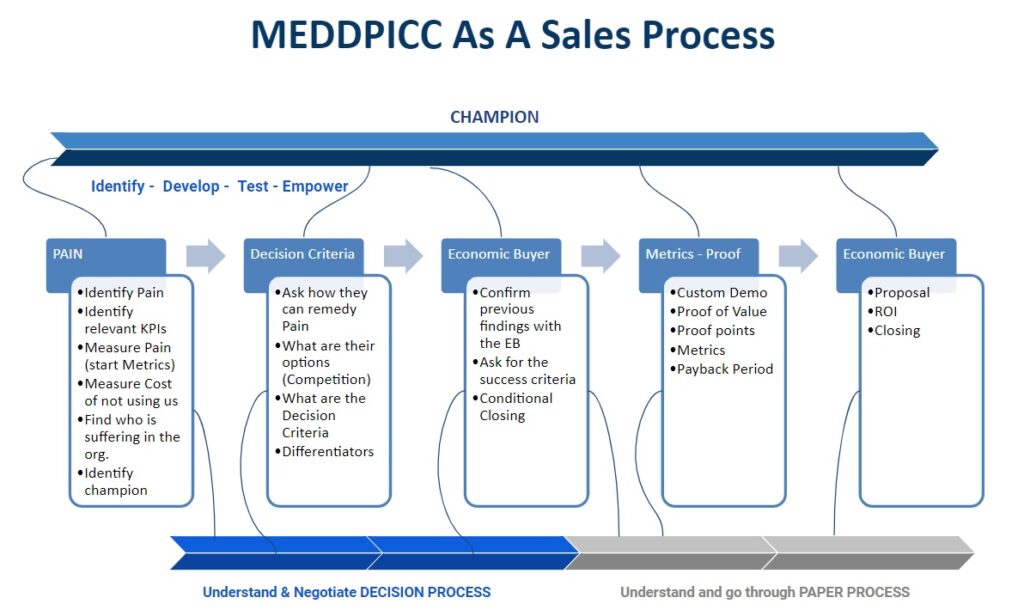
MEDDPICC stands for Metrics, Economic Buyer, Decision Criteria, Decision Process, Identify Pain, Champion, and Competition. It sounds like alphabet soup, but here’s why it matters.
Most reps waste time on deals that were never going to close. MEDDPICC forces you to qualify ruthlessly. Before you invest hours in demos and proposals, you know exactly who makes the decision, what metrics they care about, and who’s championing you internally.
The framework got even more powerful in 2026 with AI scoring tools that predict deal probability based on your qualification data. Teams using MEDDPICC with predictive analytics see 30-40% better forecast accuracy. The key evolution: MEDDPICC now emphasizes systematic buying-group mapping across all stakeholders, not just identifying a single decision-maker. Given that typical B2B purchases involve around 13 internal stakeholders (and AI-related purchases often involve 20+), this mapping is essential.
Best practice: embed MEDDPICC fields directly into your CRM and call intelligence systems rather than keeping it as a separate checklist. AI can then analyze these components across thousands of calls to spot gaps in stakeholder coverage or weak champions.
Challenger Sale: Teaching Over Pitching
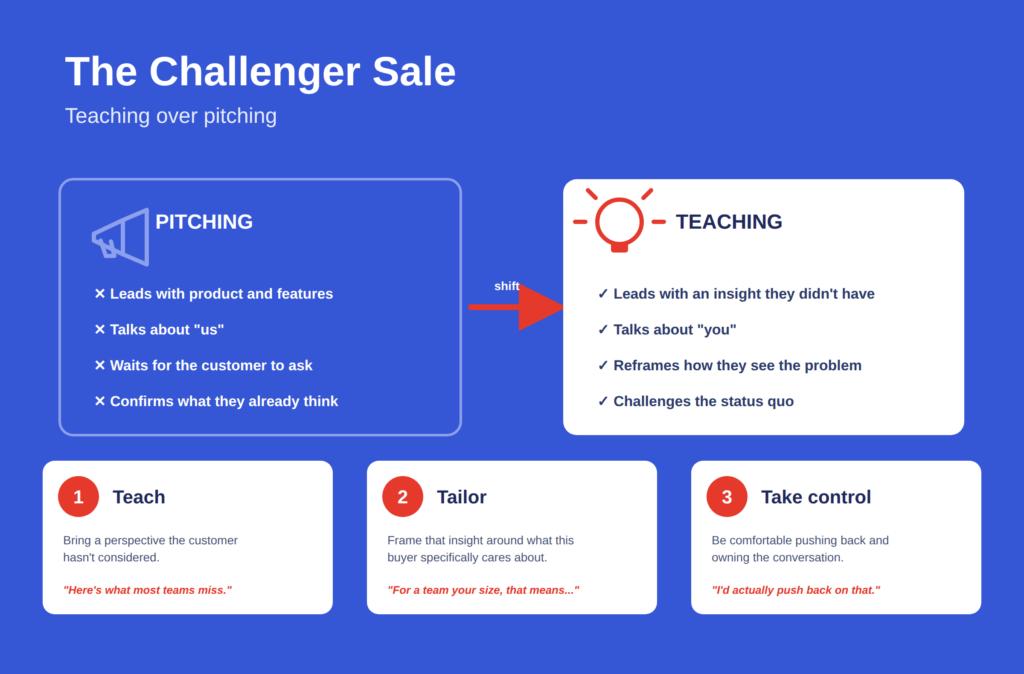
The Challenger methodology flips traditional selling on its head. Instead of discovering needs and pitching solutions, you teach prospects something they didn’t know about their own business.
This works incredibly well for complex B2B deals where buyers face decision paralysis. Your reps become trusted advisors rather than just vendors. The framework is even more relevant in 2026 because buyers often arrive overconfident from their AI research, but their mental models are frequently incomplete or based on outdated information.
The catch? It requires serious preparation and genuine expertise. You can’t fake insight. I’ve seen this framework struggle when companies try to implement it without investing in sales enablement content. Your reps need ammunition like industry research, competitive analysis, and provocative points of view. Without that foundation, Challenger just becomes another aggressive sales tactic.
Many teams now use call-analysis AI to spot moments where reps successfully challenge assumptions, then codify these into playbooks that can be tailored to each vertical or role.
SPIN Selling: Questions That Uncover Real Problems
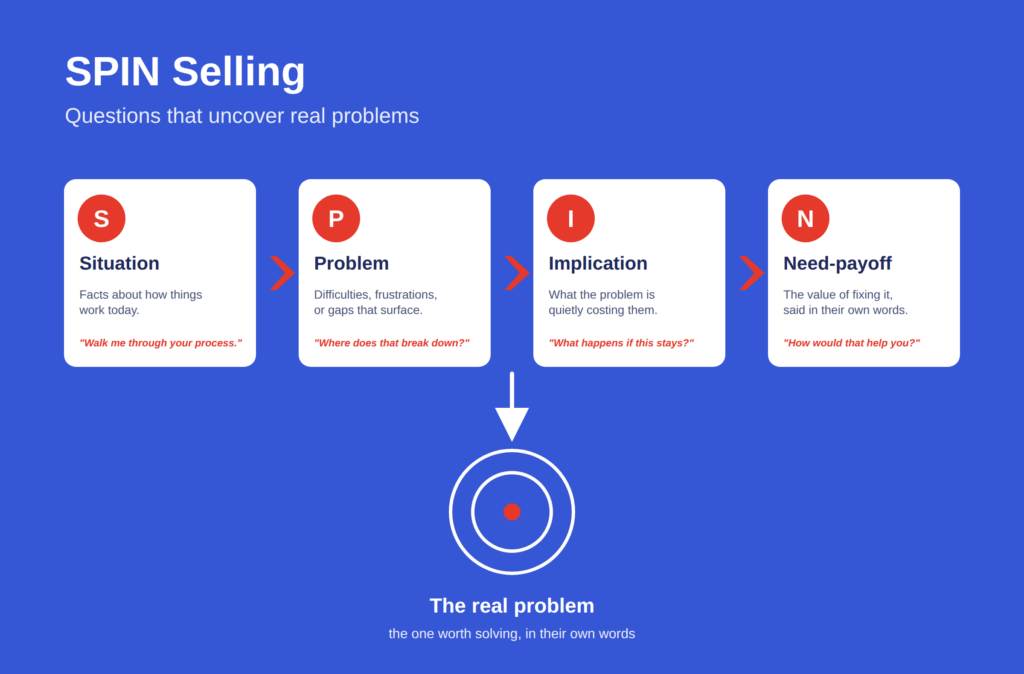
SPIN (Situation, Problem, Implication, Need-payoff) is old school but still gold. The premise is simple: ask better questions to uncover deeper problems.
What’s changed is how you deliver it. With AI conversation intelligence tools like Gong, you can analyze thousands of calls to identify which SPIN questions correlate with closed deals. The framework becomes data-driven rather than intuition-based.
Most reps skip the Implication questions, which is a mistake. That’s where you help prospects understand the cost of inaction. In 2026’s validation-driven buying environment, Need-payoff questions that explicitly tie outcomes to measurable ROI and risk reduction are particularly effective. Buyers want quantified proof, not abstract promises.
Account-Based Selling: How to Do ABM Without the Bloat
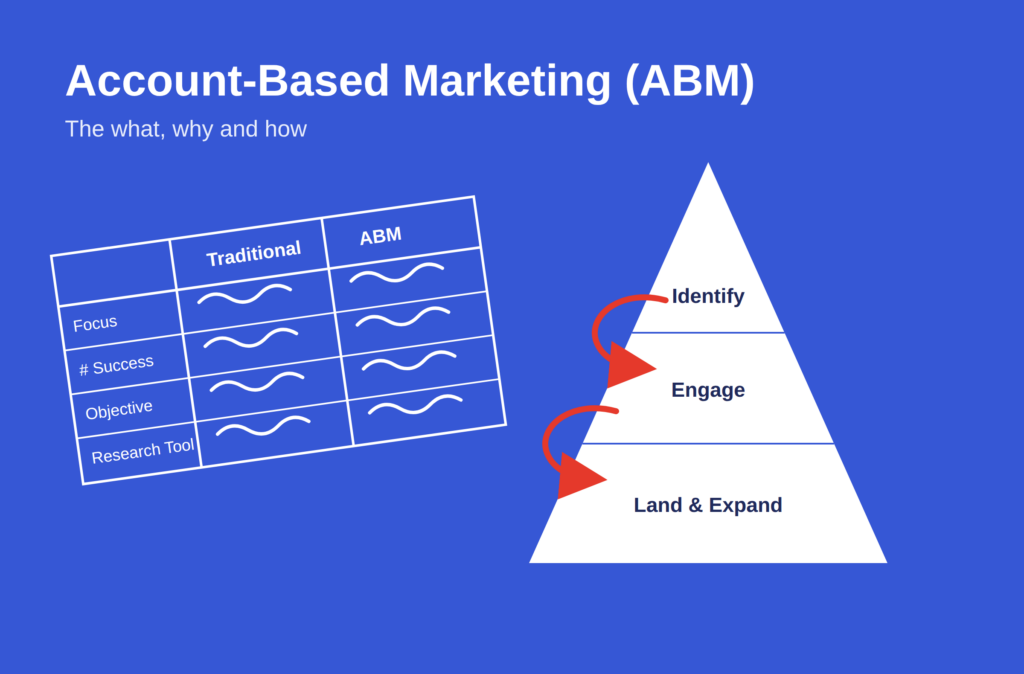
Account-based selling sounds fancy but the core idea is straightforward. Instead of spraying messages at thousands of leads, you concentrate resources on a smaller list of high-value accounts that actually fit your ideal customer profile.
Here’s where most teams mess this up. They treat ABM as a marketing program instead of a sales strategy. They buy expensive intent data, create fancy account dashboards, and then wonder why pipeline doesn’t move.
Real account-based selling requires tight alignment between sales, marketing, and even customer success. Everyone needs to agree on which accounts matter and coordinate their efforts around those specific companies. Leading organizations now treat ABM as Account-Based Everything, a company-level operating model where all customer-facing functions orient around defined target accounts.
Building Your Target Account List
Start with your best current customers. Not your biggest, your best. The ones who renew fastest, expand most, and refer others. Analyze what they have in common: industry, company size, tech stack, growth stage, whatever patterns emerge.
Then build a list of lookalike companies. Tools like LinkedIn Sales Navigator make this easier, though you still need human judgment. I’ve seen teams over-rely on firmographic data and miss crucial fit signals that only show up in conversations.
A good target account list for most B2B companies is somewhere between 100-500 accounts. Less than 100 and you don’t have enough at-bats. More than 500 and you can’t give each account the attention ABM requires.
Many high-performing teams now maintain a tiered structure: a Tier 1 list of 50-150 strategic accounts with deep personalization, and a Tier 2 list of several hundred accounts with lighter but still tailored outreach. AI continuously scans news, hiring signals, tech-stack changes, and content consumption to refine account fit in real time.
Multi-Threading: The Secret to Enterprise Deals
Single-threaded deals die. If your champion leaves, gets promoted, or just loses internal influence, your deal evaporates. Multi-threading means building relationships with multiple stakeholders in each target account.
With typical B2B purchases now involving around 13 internal stakeholders and 9 external participants on average, multi-threading isn’t optional. It’s a structural requirement. AI-related purchases often double these numbers to 20+ participants.
In 2026, multi-threading has become easier and harder simultaneously. Easier because LinkedIn automation tools let you connect with multiple people at scale. Harder because everyone’s inbox is noisier than ever.
The solution is genuine personalization at scale. Not “Hi {FirstName}, I noticed your company is in {Industry}” nonsense. Real personalization based on their content, their projects, their stated priorities. This is where AI actually helps, if you use it to research rather than just blast messages.
Leading organizations use org-mapping tools inside CRM, LinkedIn and email intelligence to track stakeholder engagement, and rules to flag single-threaded deals as high risk, triggering playbooks to expand contact coverage.
Omnichannel ABM Sequences That Convert
The days of single-channel outreach are over. Your target accounts are on LinkedIn, they check email, they browse industry forums, they attend virtual events. Your sequence needs to show up everywhere without being creepy.
A solid ABM sequence might look like:
- LinkedIn connection request with a genuine, non-salesy note
- Share relevant content if they accept
- Email with a specific insight about their business
- LinkedIn voice note with a quick personalized message
- Follow-up email with a case study from a similar company
- Phone call if you’ve built enough warmth
The key is varying the channel and the value you provide at each touchpoint. If every message is “can we hop on a call,” you’ll get ignored. If you’re consistently adding value, you become memorable.
For teams looking to implement multi-channel outreach at scale, the challenge is maintaining personalization as volume increases. That’s where AI chat automation becomes genuinely useful because it can handle replies intelligently rather than just sending canned responses.
Buyer Personas: Why Yours Are Probably Wrong
Most buyer personas are fiction. Marketing teams create idealized characters based on assumptions and outdated interviews. They give them cute names like “Enterprise Emily” and include meaningless details about their hobbies.
Real buyer personas come from actual conversations with actual buyers. Not just the ones who bought, but especially the ones who didn’t. Those lost deal interviews contain gold if you’re willing to dig.
The Three Personas That Actually Matter
For most B2B sales, you need to understand three distinct personas:
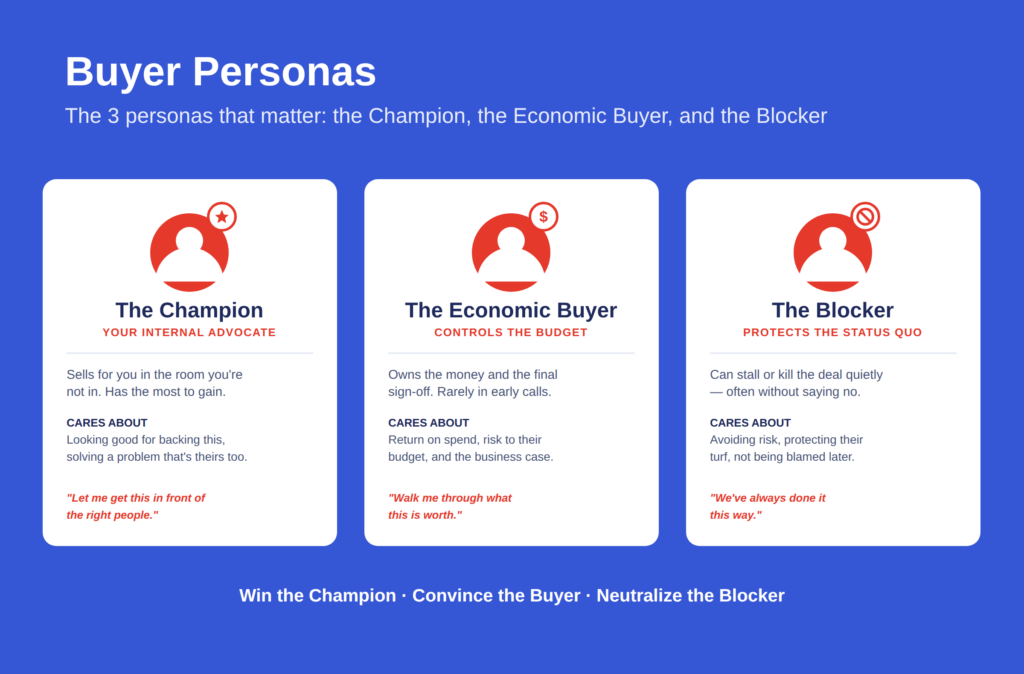
The Champion: This is the person inside the target account who will advocate for your solution. They have a problem you solve and enough organizational influence to push a purchase through. Your job is to give them ammunition for internal conversations you’ll never be part of.
The Economic Buyer: This person controls budget. They may not care about features or technical details. They care about ROI, risk, and strategic alignment. Your messaging to this persona should focus on business outcomes and competitive advantage.
The Blocker: Every deal has someone who could kill it. Maybe it’s IT concerned about security. Maybe it’s procurement focused on cost. Maybe it’s an incumbent vendor’s champion. Understanding blockers lets you preemptively address their objections.
How to Update Personas With AI Intent Data
Static personas don’t cut it anymore. Buyers’ priorities shift based on market conditions, competitive moves, and internal company changes. In 2026, smart sales teams use intent data to understand what their personas are actively researching.
If your target accounts are suddenly consuming content about a specific problem you solve, that’s a trigger for immediate outreach. Tools like 6sense and Bombora surface these signals, though you need discipline to act on them quickly.
Effective 2026 personas are dynamic segments, updated continuously based on what topics an account’s contacts are reading, which comparison sets they explore, and which competitors they appear to evaluate. When an account’s behavior fits a “buyer in motion” pattern, outreach is accelerated and personalized with issue-specific messaging.
The teams getting this right use AI for prospecting and qualification to identify which accounts are in active buying cycles. Then they concentrate human effort where it matters most rather than spreading attention thin across cold accounts.
Sales Enablement: Arming Your Team to Win
Your reps are only as good as the tools and content you give them. Sales enablement isn’t a nice-to-have in 2026. It’s the difference between teams that hit quota and teams that churn through reps every six months.
Content That Actually Gets Used
Most sales content sits unused in some folder nobody checks. The “proof-seeking” nature of 2026 buyers means all materials must be credible, specific, and easily cross-referenced by both humans and AI. The content that actually moves deals includes:
- Case studies with specific metrics from similar companies
- Competitive battlecards that address common objections
- ROI calculators buyers can use independently
- Short video testimonials from happy customers
- Industry-specific one-pagers that speak to vertical pain points
The key is making this content findable and contextual. Your reps shouldn’t hunt through Notion or Google Drive mid-conversation. Modern enablement platforms surface the right content based on deal stage, persona, and competitive situation. These platforms increasingly integrate directly with CRM and call-analysis tools to serve the right content at the right moment.
Training That Sticks
One-time onboarding isn’t enough. Markets change, products evolve, competitors shift. Your enablement program needs ongoing training that reinforces core frameworks and updates tactical knowledge.
The best training I’ve seen combines role-play with real call recordings. Reps practice scenarios, then review actual conversations to see how top performers handle similar situations. AI conversation intelligence makes this scalable because you can flag specific coaching moments across thousands of calls.
For SDR and BDR teams, regular calibration sessions on qualification criteria prevent pipeline bloat. If reps aren’t aligned on what makes a qualified opportunity, you end up with a forecast full of garbage.
Go-to-Market Strategy: Tying It All Together
Your B2B sales strategy doesn’t exist in isolation. It’s one piece of your broader go-to-market approach that includes marketing, product, and customer success. The companies winning in 2026 have tight alignment across all these functions.
Product-Led Meets Sales-Assisted
Pure PLG or pure sales-led motions are increasingly rare. Most successful B2B companies use a hybrid approach. Product creates engagement and usage. Sales converts high-value accounts and expands existing relationships. Roughly 60% of buyers now use a trial or pilot before human contact.
The handoff between product usage and sales engagement is where many teams struggle. You need clear signals that indicate when an account is ready for human contact. Too early and you seem pushy. Too late and a competitor already closed them.
Aligning MQLs and SQLs
The eternal tension between marketing and sales often comes down to lead definitions. Marketing claims they’re generating tons of leads. Sales complains the leads are garbage. Everyone’s frustrated.
The fix is agreeing on specific, measurable criteria for what constitutes a qualified opportunity. Not vague descriptions like “shows interest” but concrete behaviors and firmographic requirements. Understanding the difference between MQLs and SQLs and how to align definitions dramatically improves pipeline health.
Regular feedback loops matter too. If sales consistently rejects certain lead types, marketing needs to know so they can adjust targeting. If sales is cherry-picking only perfect leads, they need accountability for working the full funnel. Misalignment remains one of the top causes of pipeline bloat and weak conversion.
Scaling Your B2B Sales Strategy Without Breaking It
What works at $1M ARR often breaks at $10M. Scaling requires deliberate evolution of your processes, tools, and team structure.
When to Add Sales Capacity
The classic mistake is hiring reps before you have repeatable pipeline generation. You end up with expensive people sitting around waiting for leads. The flip side is waiting too long and burning out your existing team.
A rough rule: add SDR capacity when your current team is consistently at 90%+ activity utilization. Add AEs when your existing closers have more qualified pipeline than they can effectively work.
For smaller teams, sales automation tools can extend capacity without headcount. You get more at-bats per rep while maintaining quality, assuming you choose tools that actually help rather than just blast generic messages.
Building Predictable Pipeline
Predictability comes from understanding your conversion rates at each funnel stage and your average deal cycle. With those numbers, you can work backwards from revenue targets to required activity levels.
If you need $500K in new ARR this quarter and your average deal is $50K with a 20% close rate and 60-day cycle, you need 50 qualified opportunities in pipeline right now. If your meeting-to-opportunity rate is 30%, you need about 170 meetings. Work backwards to outreach volume from there.
This math only works if your funnel is clean. Stale opportunities and deals stuck in limbo destroy forecast accuracy. Regular pipeline hygiene, ruthlessly killing deals that aren’t progressing, keeps your numbers honest. Close reasons should be captured and fed back into targeting and messaging.
Real Examples: What Actually Works in 2026
Theory is nice but you probably want to know what’s actually working for real companies right now.
The Vertical Focus Play
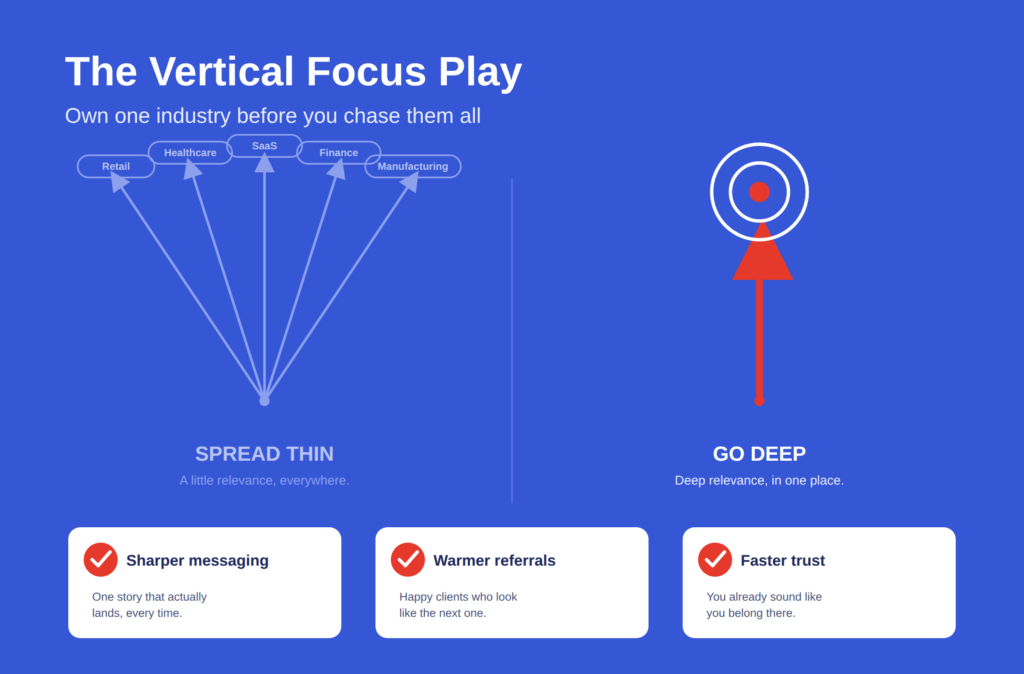
A B2B software company I know went from generic horizontal positioning to hyper-specific vertical focus. Instead of selling to “mid-market companies,” they became the solution for healthcare operations teams at organizations with 500-2000 employees.
Their pipeline tripled in six months. Not because their product changed but because their messaging resonated so specifically. Their case studies featured exact peers. Their content addressed regulatory concerns unique to healthcare. Buyers felt understood instead of pitched.
The trade-off was walking away from opportunities outside their target vertical. That discipline was hard but essential. Every distraction deal pulled resources from their core motion.
The LinkedIn-First Approach
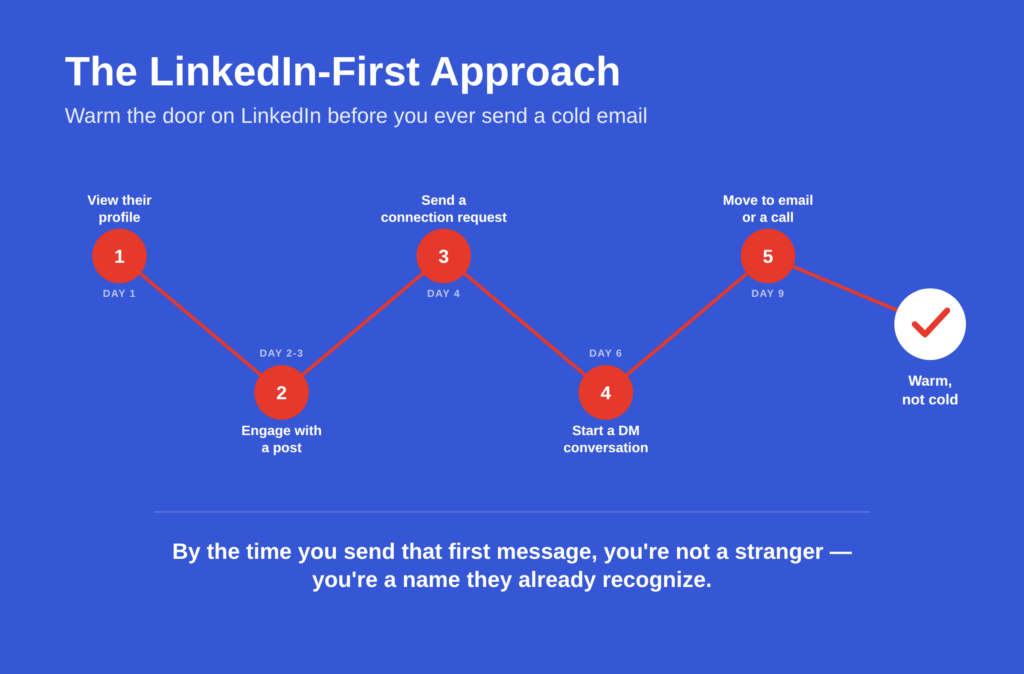
Another team rebuilt their entire outbound strategy around LinkedIn rather than cold email. They reasoned that their target buyers (marketing leaders at mid-sized companies) lived on LinkedIn and had trained themselves to ignore cold email.
They invested in personal brands for their AEs. Each rep posted valuable content, engaged thoughtfully with prospects’ posts, and built genuine networks before ever pitching. When they did reach out, response rates were 3x higher than their previous cold email campaigns.
The catch? It took 3-4 months to build momentum. LinkedIn organic growth is slow. But once the flywheel started spinning, their cost per meeting dropped significantly compared to paid channels. This approach taps into what buyers look for in 2026: proof of presence, meaning real people, real content, and credible human signals rather than faceless brand messaging.
For teams interested in this approach, understanding LinkedIn automation for B2B sales helps scale what works without losing the human touch.
The ABM Micro-Campaign Strategy
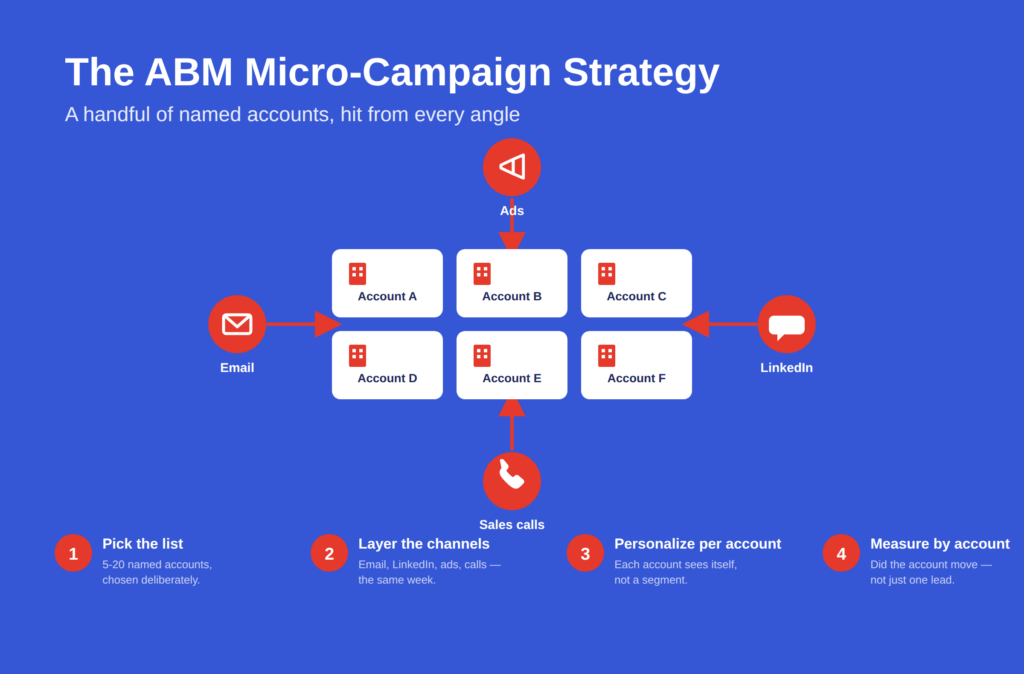
Rather than running one big ABM program, a team I worked with experimented with micro-campaigns: small bursts of hyper-targeted outreach to 10-20 accounts at a time.
Each micro-campaign had a specific hook tied to a trigger event (funding round, new executive hire, competitor news). They created custom landing pages and even short personalized videos for target accounts.
Conversion rates were insane compared to generic outreach. The downside was operational complexity. Coordinating micro-campaigns requires more planning overhead than spray-and-pray approaches. But for high-ACV deals, the ROI made sense.
How AI Fits Into Your B2B Sales Strategy
AI isn’t just something buyers use. It’s reshaping how winning sales teams operate. Generative AI is now the single most-cited meaningful interaction type in B2B purchase research, used to summarize vendor comparisons, create requirements documents, and test sales claims.
Smart teams use AI to:
- Research and personalize at scale: AI helps draft personalized messages based on prospect content, company news, and behavioral signals
- Qualify and forecast: AI models trained on historical deal data predict close probability and flag missing stakeholder coverage
- Analyze conversations: Call intelligence platforms identify winning patterns and coaching opportunities across thousands of calls
- Surface content: Enablement platforms use AI to serve relevant case studies and battlecards based on deal context
The consensus is clear: use AI to augment human judgment, not replace it. Buyers in 2026 are skeptical and validation-driven. They’ll cross-reference your claims with AI tools and peer sources. Messaging must remain truthful, specific, and backed by proof.
For teams exploring AI-powered outreach, AI SDR tools can handle research, sequencing, and initial qualification while humans focus on relationship building and complex conversations.
What Most People Get Wrong About B2B Sales Strategy
Let me hit some common mistakes I see teams make repeatedly.
Copying enterprise playbooks when you’re SMB-focused. Enterprise sales requires consensus-building across many stakeholders. SMB sales needs speed and simplicity. Using MEDDPICC religiously for a $500/month product is overkill that slows you down.
Over-investing in top-of-funnel without fixing conversion. If your meeting-to-opportunity rate is 10%, throwing more leads at the problem just creates more waste. Fix the middle of funnel before scaling the top.
Ignoring expansion revenue. For SaaS especially, expansion from existing customers often has better economics than new logo acquisition. Your sales strategy should include deliberate plays for upselling and cross-selling, not just net new business.
Treating sales strategy as set-it-and-forget-it. Markets change. What worked six months ago might not work today. Build regular strategy reviews into your operating rhythm. Quarterly is usually right for most B2B companies.
Adding complexity when buyers want clarity. Buyers are time-constrained and abandon deals when evaluation feels burdensome. Simple pricing, clear value narratives, and frictionless trials win over elaborate processes.
Building Your B2B Sales Strategy From Scratch
If you’re starting fresh or rebuilding from broken foundations, here’s a practical sequence:
Step 1: Interview your 10 best customers. Understand why they bought, what alternatives they considered, and what would make them churn. This grounds everything in reality.
Step 2: Define your ideal customer profile tightly. Be willing to say no to segments that don’t fit perfectly. Focused positioning beats broad reach every time.
Step 3: Choose one primary sales motion and get it working before adding complexity. For most early-stage B2B, that’s founder-led or outbound-led sales.
Step 4: Build minimum viable enablement. One solid case study, one competitive battlecard, one demo flow. Add more as you learn what reps actually need.
Step 5: Instrument everything so you can measure. You can’t improve what you don’t track. CRM hygiene matters from day one.
Step 6: Iterate based on data, not opinions. Test messaging variations. A/B your outreach sequences. Let results guide strategy evolution.
Frequently Asked Questions
How has B2B buying behavior changed with AI in 2026?
Buyers use AI as a primary research tool, with 51% of software buyers starting vendor research in chatbots. They prefer rep-free journeys and rely on validation from multiple sources before contacting sales. Your content needs to be structured so AI tools can find and recommend it.
How big are buying committees now?
Typical B2B purchases involve around 13 internal stakeholders and 9 external participants. AI-related purchases often surpass 20 stakeholders. Multi-threading and systematic buying-group mapping are essential for complex deals.
What content do B2B buyers trust most?
Quantified case studies, ROI calculators, detailed comparisons, authentic video testimonials, and clear vertical-specific narratives. Buyers want proof and specificity, not abstract brand promises.
Should we use AI in our sales process?
Yes, but thoughtfully. Use AI for research, personalization, qualification scoring, and conversation analysis. The key is augmenting human judgment rather than automating lazy outreach. Buyers will test your claims against AI and external benchmarks, so messaging must remain honest and specific.
The Bottom Line on B2B Sales Strategy in 2026
Building a winning B2B sales strategy isn’t about finding some magic tactic. It’s about assembling the right pieces: clear positioning, proven frameworks, tight account targeting, compelling enablement, and disciplined execution.
The companies thriving right now have figured out how to be genuinely helpful to buyers while still moving deals forward. They use AI to scale personalization rather than automate laziness. They focus resources on accounts that actually fit rather than chasing every possible opportunity. They build proof and credibility that both humans and AI can verify.
Your strategy will evolve as you learn more about your market and your buyers. That’s healthy. The worst thing you can do is cling to a plan that’s not working because you spent a lot of time making slides about it.
Start with fundamentals. Get your frameworks right. Build real buyer personas from actual conversations. Align your team around clear definitions and metrics. Then iterate relentlessly based on what the numbers tell you.
That’s how you build a B2B sales strategy that actually wins. Not glamorous. Not complicated. Just disciplined execution of proven principles adapted to how buyers actually buy in 2026.