If you’ve been using SuperAGI and found yourself frustrated by expiring credits, voice call costs eating your budget, or the feeling that you’re still doing most of the work yourself, you’re not alone. I spent the better part of 2025 testing every major AI agent platform for sales automation, and let me tell you, the gap between what these tools promise and what they actually deliver is sometimes massive.
This guide covers the 10 best SuperAGI alternatives for sales automation in 2026. Not a generic listicle. Actual tools I’ve used, tested with real campaigns, and compared against each other. Some of these you’ve heard of. A few will surprise you.
Why People Are Looking for SuperAGI Alternatives
SuperAGI started as an open-source autonomous agent framework, basically AutoGPT’s cooler cousin. Then it pivoted hard into the “AI sales agent” space with CRM, prospecting, email sequences, and voice dialer all bundled together.
The problem? Their credit-based pricing model. Credits expire monthly. No rollover. And if you’re using voice agents, you’re burning through roughly 15 credits per minute. For teams doing serious outbound, that adds up fast.
Beyond pricing, there are three main reasons people search for alternatives:
- Deliverability concerns: SuperAGI bundles everything but doesn’t specialize in email infrastructure. Teams running high-volume cold email need warm-up, domain rotation, and sender reputation tools that dedicated platforms handle better.
- Data quality gaps: The built-in prospecting is decent but not at the level of Apollo, ZoomInfo, or Prospeo for contact accuracy.
- Control and customization: Some teams want more granular sequence control, A/B testing, and analytics than what SuperAGI offers out of the box.
1. SBL.so: The AI SDR That Actually Handles Chat
I’m putting SBL.so first because it solves a problem most tools completely ignore: what happens after someone replies?
Most “AI SDRs” send messages. That’s it. Connection request, follow-up sequence, maybe some smart delays. But when your prospect responds with “Sure, tell me more about pricing” or “Not interested right now”, you’re back to manually handling everything.
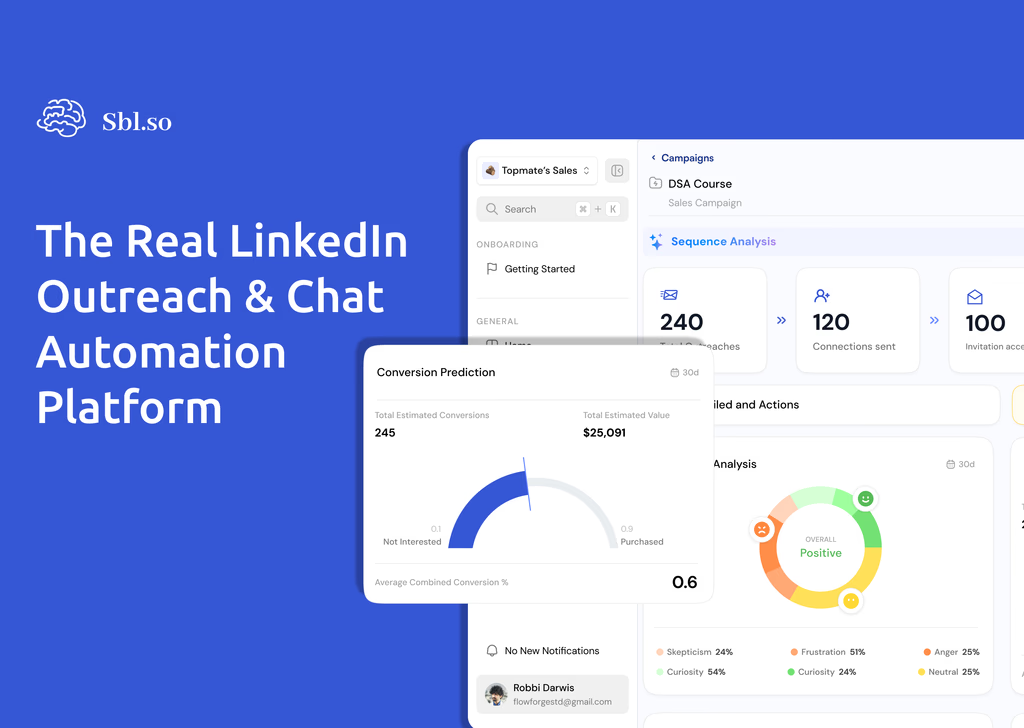
SBL built their entire system around chat automation. Not just sending messages, but actually having conversations. Their AI handles objections, asks qualifying questions, and pushes toward your goal, whether that’s booking a call, getting a demo scheduled, or qualifying out bad-fit leads.
What makes it different from SuperAGI:
- Conversation intelligence: The system was trained on persuasion principles and real sales conversations, not just GPT prompts.
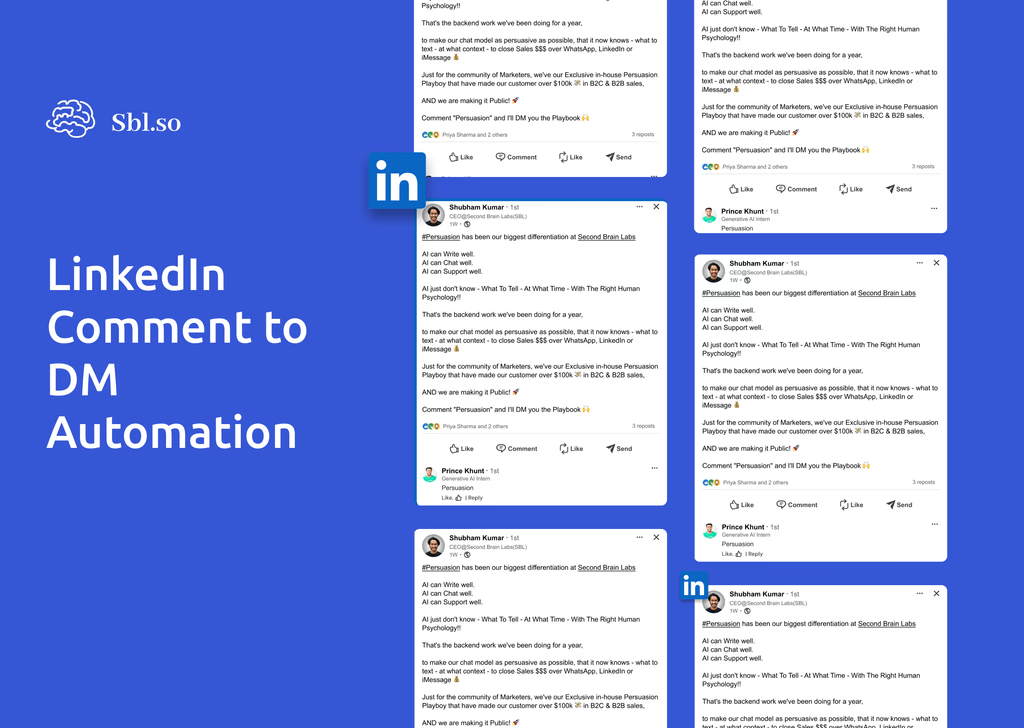
- Multi-channel: LinkedIn and WhatsApp now, with email coming. You can follow the same lead across channels without losing context.
- Unified inbox for unlimited accounts: Connect 50 LinkedIn profiles, get 40,000+ reach-outs per month, all chats in one dashboard.
- Fractional SDR network: If you need more sender profiles, you can rent LinkedIn profiles starting at $35/month from their verified community.
The pricing starts at $99/month with a 7-day free trial. No credit-based system where your budget evaporates on voice calls.
For teams doing serious AI sales automation on LinkedIn, this is the closest thing to having an actual AI sales rep that talks like a human and sells like your best performer.
2. Salesforge.ai: Best for Cold Email at Scale
Salesforge positions itself as the “better all-in-one AI SDR” specifically for pipeline generation. Their AI agent is named Frank, which I find weirdly endearing.
What they nail:
- Email infrastructure: Inbox warm-up, lead scraping, deliverability monitoring all built in.
- Granular control: Scheduling, throttling, testing, more control than SuperAGI offers.
- AI writing: Frank handles prospecting and email drafting, but you maintain oversight.
Where it falls short: It’s email-focused. If you need multi-channel including LinkedIn automation or voice, you’ll need additional tools.
Best for: Teams scaling cold email who want AI-driven SDR plus serious deliverability infrastructure.
3. Apollo.io: Best for Contact Data + Engagement
Apollo combines a massive B2B contact database with engagement features. It’s like having ZoomInfo and a basic sales engagement platform in one.
The database is genuinely huge. Enrichment features are solid. You can run sequences directly from the platform, though the automation is more rule-based than truly autonomous.
Compared to SuperAGI, Apollo wins on data quality but loses on agent-style autonomy. You’re still building sequences manually and the “AI” is mostly auto-personalization rather than actual decision-making.
Best for: Teams that need contact discovery and basic outreach in one system. Often paired with AI writing tools for the actual messaging.
4. Instantly: Best for High-Volume Cold Email
Instantly is the cold email specialist. If you’re sending thousands of emails per day and deliverability is your main concern, this is where you go.
Features that matter:
- Warm-up and deliverability features that actually work
- Large verified lead database
- Infrastructure for volume that would get you banned on other platforms
The AI component is lighter than SuperAGI. Think of it as the best cold email sending machine you can buy, not an autonomous agent. You bring the strategy, Instantly handles the delivery.
Best for: Agencies and outbound teams sending high volumes. Layer AI via external tools for the messaging strategy.
5. Outreach: Enterprise-Grade SDR Orchestration
Outreach is the enterprise standard for sales engagement. Email sequences, LinkedIn automation, call logging, task management, and analytics all in one platform.
It’s not trying to replace your SDR team. It’s trying to make them more efficient. Rich analytics, coaching tools, and workflow automation for large sales organizations.
Compared to SuperAGI, Outreach is less autonomous but more mature. You get enterprise-grade reliability and integrations, plus team management features that SuperAGI doesn’t match.
Best for: SDR/BDR teams wanting structured sequences, task management, and performance analytics. Not for solo founders wanting full automation.
6. Reply.io: Best for Multi-Channel Sequences
Reply handles email, calls, SMS, and LinkedIn in one platform. The sequences are straightforward to build and the inbox management is solid.
It’s positioned between the simplicity of Instantly and the enterprise complexity of Outreach. Good middle ground for teams that want multi-channel without the learning curve.
The AI features are more supportive than autonomous. Think smart suggestions and auto-personalization rather than a full AI agent running campaigns.
Best for: Teams wanting multi-channel sequences with some AI assistance at lower complexity than enterprise tools.
7. Conversica: Best for Conversational AI
Conversica specializes in AI conversations that feel genuinely human. Their agents engage leads through email and other channels, asking questions, answering questions, and qualifying prospects.
This is different from the “send sequence and wait” approach. Conversica agents have actual back-and-forth conversations. They were doing conversational AI before GPT made it trendy.
Where it excels: Post-inbound lead follow-up, qualification, and re-engagement. Less focused on cold outreach, more on working leads that already expressed interest.
Best for: Lead follow-up and qualification with AI agents that behave like human reps. Complements rather than replaces cold outreach tools.
8. ZoomInfo SalesOS: Best for Data and Intent
ZoomInfo is the data king. Extensive contact and company database plus buyer intent signals that help you prioritize who to reach out to.
It’s not an AI SDR. It’s the intelligence layer that feeds your AI SDRs or human team. Territory planning, prospecting, and integrations with CRMs and engagement platforms.
If you’re comparing to SuperAGI, think of ZoomInfo as the data source you wish SuperAGI had built-in. You can use it alongside any engagement platform.
Best for: Sales orgs that rely on high-quality data and intent signals to power their own sequences or agents.
9. Stamina: AI SDR + CRM Combined
Stamina is building what they call an AI sales platform with AI SDR and CRM in one system. The AI agent writes and sends personalized outreach emails, and everything logs into their built-in CRM.
Key focus areas:
- Performance and scalability for outbound operations
- Email setup, warm-up, and outreach tools integrated
- Deliverability emphasis over just agent autonomy
Compared to SuperAGI, Stamina is more focused on cold email infrastructure. No credit-based voice model, just email execution done well.
Best for: B2B outbound teams wanting an AI SDR tightly integrated with CRM and email infrastructure.
10. Clari: Best for Revenue Intelligence
Clari is less about autonomous outreach and more about understanding your pipeline. AI-driven forecasting, deal inspection, and revenue analytics.
It aggregates CRM and activity data to predict deal outcomes and identify risk. CROs love it for forecasting accuracy.
Not a SuperAGI alternative in the SDR sense. But if your problem is pipeline visibility rather than top-of-funnel outreach, Clari solves that problem better than any agent platform.
Best for: Revenue leaders wanting AI-assisted forecasting and pipeline visibility.
How to Choose the Right SuperAGI Alternative
The right choice depends on what problem you’re actually solving:
If your main channel is LinkedIn: Look at SBL.so for chat automation or LinkedIn automation tools that handle the volume safely.
If cold email is your focus: Salesforge, Instantly, or Stamina depending on whether you prioritize AI writing, raw volume, or integrated CRM.
If you need better data first: Apollo, ZoomInfo, or Prospeo before worrying about the automation layer.
If you want enterprise-grade sequences: Outreach or Salesloft for the structure and analytics.
If you need conversational AI for lead qualification: Conversica or Exceed.ai for post-inbound work.
What About Building Custom AI Agents?
SuperAGI started as an open-source framework, and some teams still use it that way. If you want to build custom autonomous agents for research, operations, or development, you can deploy SuperAGI locally with Docker and vector databases.
But for sales automation specifically, the commercial platforms I’ve listed are more turnkey. You don’t need to configure agent frameworks when you can get working AI sales agents out of the box.
The Credit-Based Pricing Problem
I keep coming back to this because it matters for budget planning. SuperAGI’s credit model means:
- Credits expire monthly, no rollover
- Voice agents consume roughly 15 credits per minute
- Heavy usage gets expensive fast
Most alternatives use subscription pricing or usage-based billing that doesn’t expire. For predictable budgeting, that’s usually better.
Final Thoughts
SuperAGI had the right vision: an AI sales agent that works 24/7 finding and engaging prospects. The execution, especially the credit-based model and missing deliverability features, created room for alternatives.
For LinkedIn-focused teams, SBL.so’s approach to chat automation solves the biggest gap in most SDR tools. The AI actually talks to your leads instead of just sending messages and hoping.
For email teams, Salesforge and Instantly handle infrastructure better. For data, Apollo and ZoomInfo win. For enterprise orchestration, Outreach and Salesloft remain the standards.
Pick based on your primary channel, your volume needs, and whether you want full autonomy or human-assisted sequences. The AI SDR market is maturing fast, and 2026 is actually delivering on promises that sounded like hype two years ago.