Most founders I talk to are still hiring SDRs, paying them $4,000 to $6,000 a month, and watching them burn out after 3 months. Meanwhile, AI SDR tools have gotten so good in 2026 that they’re booking meetings while you sleep. Not kidding. I’ve seen agencies go from zero pipeline to 40+ qualified calls a month without a single human rep doing cold outreach.
But here’s the thing. Not all AI SDR tools are created equal. Some are glorified email schedulers with an “AI” label slapped on. Others actually understand conversations, handle objections, and push prospects toward a call. The difference in results? Night and day.
So I spent the last few weeks digging into the best AI SDR tools on the market. This isn’t some fluffy listicle. I’m going to break down what each tool actually does, where it shines, where it falls flat, and who should use it. Let’s get into it.
What Even Is an AI SDR Tool in 2026?
Before we dive in, let me clarify what we’re talking about here. An AI SDR tool is software that automates some or all of the sales development rep function. That means prospecting, outreach, follow-ups, and sometimes even handling conversations with leads.
The best ones do more than send templated messages. They enrich data, score leads, route hot prospects to your team, and run multichannel cadences across LinkedIn, email, and even WhatsApp. The metrics that matter? Reply rates, meeting rates, and cost per opportunity. If a tool can’t move those numbers, it’s just expensive noise.
Now, there’s a spectrum here. Some tools focus purely on email. Others are built specifically for LinkedIn prospecting. A few try to do everything. The trick is matching the tool to your go-to-market motion. Selling to enterprise? You probably need something that plays nice with Sales Navigator and your CRM. Running a lean startup? You might want something that gets you leads and books calls with minimal setup.
Why LinkedIn Matters More Than Ever for B2B Lead Generation
I’ve written about this before, but it’s worth repeating. Cold email isn’t dead, but it’s definitely on life support. Spam filters are brutal. Inboxes are overflowing. The average response rate on cold email has dropped below 2% for most teams I talk to.
LinkedIn? Different story. Decision-makers actually check their LinkedIn. They respond to connection requests. And when someone engages them in a real conversation, not a pitch slap, they’re way more likely to take a meeting.
The problem is LinkedIn has strict limits. You can’t just blast 1,000 connections a day without getting your account restricted. That’s why the smartest teams are using LinkedIn automation tools that respect platform limits while maximizing reach. Some are even running multiple sender profiles to hit email-level scale on LinkedIn. More on that in a sec.
The 11 Best AI SDR Tools for B2B Lead Generation
Alright, let’s get to the list. I’m ranking these based on features, ease of use, pricing, and most importantly, actual results I’ve seen or heard about from founders and sales leaders.
1. SBL.so
If you’re focused on LinkedIn outreach and want something that actually handles conversations, not just sends messages, this is the one to look at. I’ll be honest, I’ve been tracking SBL since 2023 and what they’ve built is different from everything else out there.
What it does: SBL.so is a full AI SDR for LinkedIn. It finds leads based on your ICP, sends personalized connection requests and messages, and here’s the kicker, it actually responds to your prospects when they reply. Not with canned responses. Real conversational AI that handles objections, answers questions, and pushes toward booking a call. They call it their “Persuasion Chat Model” and honestly, it works.
Key features:
- Lead generation agent that finds high-quality prospects based on your criteria
- AI-powered chat automation that handles replies and follow-ups
- Unified inbox for managing multiple LinkedIn accounts in one place
- Ability to send PDFs, images, and even AI-cloned voice messages
- Fractional SDR network for scaling with real profiles, not bots
- Account rotation to stay within LinkedIn limits safely
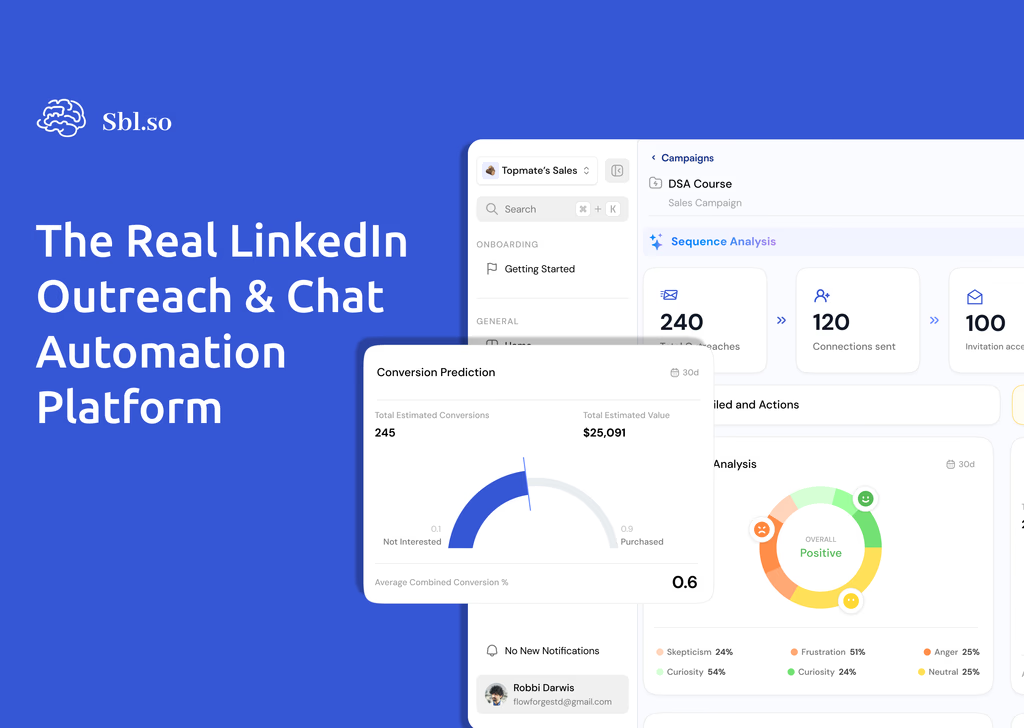
- Deep campaign analytics including sentiment analysis and conversion tracking
- Sales Navigator integration for pulling filtered lead lists
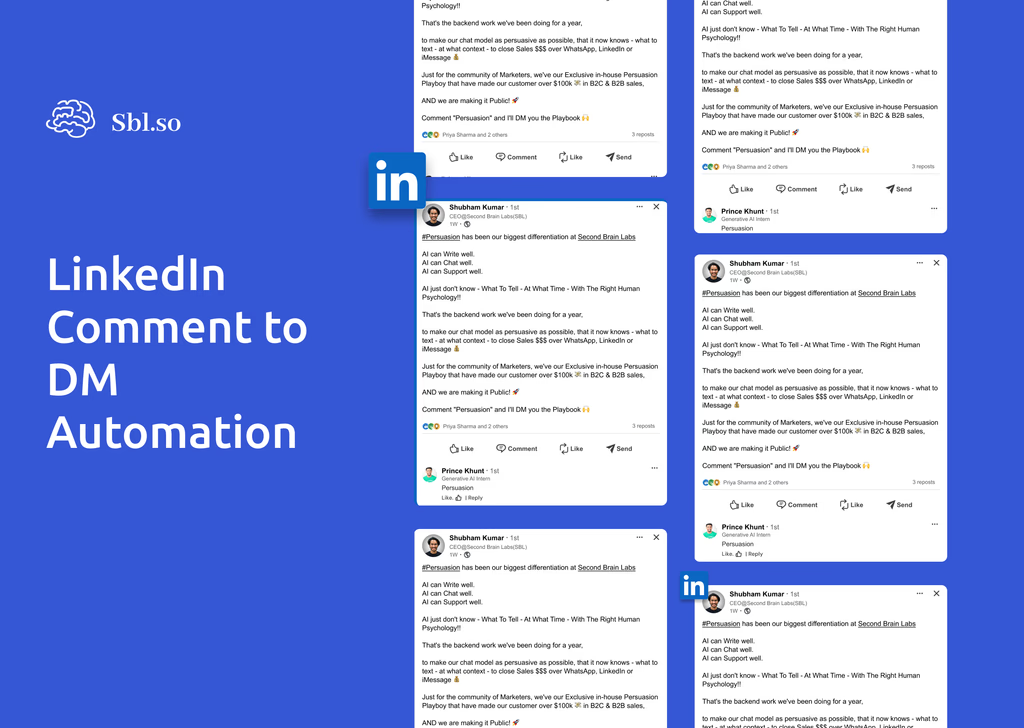
- Comment to DM automation for capturing leads from LinkedIn posts
Pros:
- The only tool I’ve seen that truly automates LinkedIn conversations, not just sequences
- Can scale to 40,000+ outreaches per month by connecting multiple sender profiles
- The AI learns from your interventions, so it gets smarter over time
- Works on LinkedIn and WhatsApp, with email coming soon
- Pricing starts at just $99/month after a 7-day free trial
Cons:
- If you’re purely focused on email outreach, this isn’t your tool
- Takes some time to train the AI on your specific use case and objections
- Not as well-known as some competitors, so fewer community resources
Best for: Founders, agencies, and sales teams who want to turn LinkedIn into a real pipeline machine without hiring SDRs. If your ICP lives on LinkedIn and you’re tired of managing inboxes manually, SBL’s approach to LinkedIn scalability is worth a serious look.
2. Artisan AI
Artisan has been making noise with their “AI employees” concept. Their main product, Ava, is positioned as an AI BDR that handles outbound from start to finish.
What it does: Artisan gives you an AI-powered BDR that researches prospects, writes personalized emails, and manages outreach campaigns. They have a big database of contacts and use intent signals to prioritize who to reach out to. The UI is slick and they’ve positioned themselves as the premium option in this space.
Key features:
- Ava, their AI BDR, handles research, writing, and sending
- Access to a large B2B contact database
- Intent data integration for lead scoring
- Email warmup and deliverability tools built in
- CRM integrations with Salesforce, HubSpot, and others
Pros:
- Beautiful interface and easy to get started
- The AI writing is genuinely good for email
- Strong on the data enrichment side
Cons:
- Expensive. Like, really expensive for smaller teams
- Primarily email-focused, LinkedIn capabilities are limited
- Still requires human intervention for complex conversations
Best for: Well-funded startups or mid-market companies with budget who want a polished email outbound solution. Not ideal if LinkedIn is your primary channel.
3. AiSDR
AiSDR is another player that’s gained traction in the AI-powered email outreach space. They focus heavily on personalization and automation.
What it does: The platform automates cold email campaigns with AI-generated personalization. It can pull data from various sources to customize each message and handles the sending and follow-up sequences automatically. They also have some basic LinkedIn features but email is clearly their focus.
Key features:
- AI-powered email personalization using prospect data
- Automated follow-up sequences
- Basic data enrichment capabilities
- LinkedIn connection requests (limited compared to dedicated tools)
- Response handling with suggested replies
Pros:
- Decent personalization quality for email
- More affordable than Artisan
- Good for teams just starting with AI outreach
Cons:
- LinkedIn features feel bolted on, not native
- Doesn’t actually handle conversations, just suggests replies
- Data quality can be hit or miss
Best for: Teams who are primarily doing email outreach and want AI to help with personalization without breaking the bank.
4. Salesforge
Salesforge has been around for a bit and they’ve built a solid reputation for email deliverability and AI-powered messaging.
What it does: The platform combines email infrastructure with AI writing. They’re big on deliverability, offering email warmup, domain monitoring, and spam testing. The AI writes emails based on prospect research and you can run multi-step sequences.
Key features:
- Advanced email deliverability infrastructure
- AI email writing with multiple templates and styles
- Email warmup and inbox placement monitoring
- Multi-mailbox management for scaling outbound
- Basic analytics and A/B testing
Pros:
- Excellent deliverability tools, probably best in class
- AI writing is solid for cold email
- Good for teams scaling email volume
Cons:
- No LinkedIn automation at all
- Still requires you to build sequences manually
- Doesn’t handle replies, just sends
Best for: Teams that have deliverability issues with their current email setup or want to scale email volume while maintaining inbox placement. Check out our cold email outreach guide if this is your focus.
5. 11x.ai
11x positions themselves as building AI workers for go-to-market teams. Their SDR product, Alice, is meant to function like an actual employee.
What it does: Alice handles prospecting, research, and outreach across email primarily. They use AI to research each prospect and write personalized messages. The idea is you “hire” Alice like you would a human SDR, except she works 24/7.
Key features:
- AI-driven prospect research from multiple data sources
- Personalized email generation at scale
- Automated campaign management
- Integration with major CRMs
- Some phone outreach capabilities
Pros:
- Deep research capabilities for personalization
- The “AI employee” framing makes adoption easier for teams
- Good enterprise integrations
Cons:
- Very expensive, positioned for enterprise
- LinkedIn features are minimal
- Learning curve to get the AI calibrated right
Best for: Enterprise sales teams with budget who want to augment their human SDRs with AI support on the research and writing side.
6. Reply.io
Reply.io has been in the sales engagement space for years and they’ve added AI features to stay competitive.
What it does: It’s a multichannel sales engagement platform that now includes AI for email writing and sequence optimization. You can run campaigns across email, LinkedIn, calls, and SMS from one place.
Key features:
- Multichannel sequences spanning email, LinkedIn, calls, SMS
- AI email assistant for writing and improving messages
- A/B testing built into sequences
- Decent CRM integrations
- Chrome extension for LinkedIn prospecting
Pros:
- True multichannel capability in one platform
- Been around long enough to have worked out most bugs
- Reasonable pricing for what you get
Cons:
- AI feels like an add-on, not native to the product
- LinkedIn automation is basic compared to dedicated tools
- Doesn’t handle conversations, just sends and tracks
Best for: Teams who want one platform for multichannel outreach and don’t need the most sophisticated AI.
7. Outreach
Outreach is one of the big players in sales engagement. They’ve added AI features over the years but it’s still primarily a sequence and workflow tool.
What it does: Enterprise sales engagement platform with email sequences, call logging, and now some AI-assisted features for writing and prioritization. It’s the tool a lot of bigger sales teams use to manage their outbound motion.
Key features:
- Robust email sequencing and automation
- Call and meeting scheduling integration
- AI-powered email suggestions and optimization
- Deep CRM integration, especially Salesforce
- Analytics and reporting dashboards
Pros:
- Enterprise-grade reliability and security
- Great for managing large sales teams
- Strong analytics for sales leadership
Cons:
- Expensive, really only makes sense for larger orgs
- Not really an “AI SDR,” more like AI-assisted sales engagement
- LinkedIn features are minimal
- Steep learning curve
Best for: Enterprise sales organizations that need a platform to manage their SDR team’s activities, not replace them.
8. Apollo.io
Apollo has become incredibly popular for B2B prospecting and outreach. They have a massive database and have added AI features recently.
What it does: Primarily a B2B data provider with built-in outreach capabilities. You can find prospects, get their contact info, and run email sequences all in one place. They’ve added AI writing and some automation features.
Key features:
- Huge database of B2B contacts with emails and phone numbers
- Email sequencing and automation
- AI email writing assistance
- Chrome extension for prospecting on LinkedIn
- Basic intent signals
Pros:
- Great value for the data you get
- Easy to find prospects and start outreach quickly
- Generous free tier for testing
Cons:
- Data quality varies, especially for smaller companies
- AI features feel basic compared to dedicated AI SDR tools
- LinkedIn automation is very limited
- Doesn’t handle conversations
Best for: Teams who need a good B2B data enrichment tool with basic outreach built in. Not a replacement for a dedicated AI SDR.
9. Instantly.ai
Instantly has grown fast by focusing on email infrastructure and volume. They let you scale email outreach significantly.
What it does: Email outreach platform focused on deliverability and scale. You can connect unlimited email accounts, warm them up, and run high-volume campaigns. They’ve added AI writing features to help personalize at scale.
Key features:
- Unlimited email account connections
- Built-in email warmup
- AI email writer for personalization
- Lead database add-on available
- Unibox for managing replies across accounts
Pros:
- Great for scaling email volume safely
- Affordable compared to most alternatives
- The warmup features actually work
Cons:
- Email only, no LinkedIn or other channels
- AI is basic, mostly for writing not conversations
- Doesn’t replace an SDR, just helps with sending
Best for: Teams doing high-volume email outreach who need good deliverability infrastructure. Often used alongside a LinkedIn tool.
10. Lemlist
Lemlist made a name for itself with personalized images and videos in cold email. They’ve since expanded to multichannel.
What it does: Cold outreach platform with a focus on personalization. Known for letting you add personalized images, GIFs, and videos to emails. Now supports LinkedIn steps in sequences too.
Key features:
- Personalized images and videos at scale
- Email and LinkedIn sequences
- Email warmup built in
- AI writing assistance
- Chrome extension for prospecting
Pros:
- The personalized visuals genuinely improve response rates
- Good balance of features and price
- LinkedIn integration is decent
Cons:
- LinkedIn automation is limited compared to dedicated tools
- Still sequence-based, doesn’t handle conversations
- Can get complex to manage at scale
Best for: Teams who want to stand out with creative personalization in email and don’t mind LinkedIn being secondary. If you’re interested in visual outreach, check out our piece on video outreach personalization.
11. Salesloft
Another enterprise sales engagement platform that competes with Outreach. Similar positioning but different feature set.
What it does: Enterprise sales engagement with email sequences, call tracking, and now AI features. Designed to help sales teams execute their outbound process consistently.
Key features:
- Email and call sequences
- AI-powered coaching and suggestions
- Strong CRM integrations
- Pipeline management features
- Analytics for sales managers
Pros:
- Solid enterprise option
- Good for managing SDR teams
- Reliable and well-supported
Cons:
- Expensive
- Not really AI SDR, more like AI-assisted tools
- Limited LinkedIn capabilities
Best for: Enterprise sales orgs comparing against Outreach. Not for small teams or those focused on LinkedIn.
How Do AI SDR Tools Actually Work?
Alright, let’s dig into the mechanics here because I think a lot of people don’t really understand what’s happening under the hood.
Most AI SDR tools work in layers:
Layer 1: Data and targeting. The tool either has its own database or integrates with one. You define your ICP and it finds matching prospects. The better tools use multiple data sources and enrich profiles with things like technographics, intent signals, and recent activity.
Layer 2: Message generation. This is where AI comes in for most tools. It writes personalized messages based on the prospect data. Some tools are better at this than others. The best ones actually sound human. The worst ones write stuff that’s obviously AI-generated.
Layer 3: Sequence execution. The tool sends messages according to a schedule. If someone doesn’t reply, it follows up. If they do reply, most tools just notify you. This is where the traditional “AI SDR” stops.
Layer 4: Conversation handling. This is the rare layer. Only a few tools actually respond to prospects automatically. And even fewer do it well. This is where SBL.so really stands out, their chat automation actually holds conversations and pushes toward meetings.
When you’re evaluating tools, ask yourself which layers you actually need automated. If you just want help finding leads and writing first messages, lots of tools can do that. If you want something that handles the back-and-forth that actually books meetings, your options narrow significantly.
What Metrics Should You Track for AI SDR Tools?
This is crucial and I see a lot of teams getting it wrong. They look at vanity metrics instead of what actually matters.
Here are the metrics that actually tell you if your AI SDR is working:
Reply rate: What percentage of people you reach out to actually respond? For email, good is 3 to 5%. For LinkedIn, you should be seeing 15 to 25% with the right tool and targeting.
Positive reply rate: Not all replies are good. “Please stop emailing me” is a reply but not a win. Track what percentage of replies are actually interested.
Meeting rate: This is the big one. What percentage of your outreach turns into actual meetings? This is where AI that handles conversations makes a massive difference.
Cost per opportunity: Take your total spend on the tool, data, and any associated costs. Divide by the number of qualified opportunities generated. Compare this to what you’d pay for human SDRs or other channels.
Time to first meeting: How long from starting a campaign to getting that first meeting? Good tools should get you results in weeks, not months.
If you want to understand how these metrics fit into your broader pipeline, our guide on MQLs vs SQLs breaks down how to think about lead quality.
Data Enrichment, Scoring, and Routing in AI SDR Tools
Let me spend a minute on this because it’s often overlooked but really important.
Data enrichment is how the tool fills in missing information about prospects. Got an email but no company size? Enrichment adds that. Got a LinkedIn URL but no phone number? Enrichment finds it. The quality of enrichment directly impacts your personalization quality.
Lead scoring is how the tool prioritizes who to reach out to first. The best tools use intent signals, engagement data, and fit criteria to rank prospects. You want your AI spending time on people most likely to buy, not randomly working through a list.
Lead routing is what happens when someone shows interest. Does the tool notify you? Does it create a task in your CRM? Does it book directly on your calendar? The faster hot leads get to a human, the better your conversion.
Some tools do all three well. Others focus on one area. Know what matters most for your motion and evaluate accordingly.
Can AI SDR Tools Really Replace Human SDRs?
Here’s my honest take. It depends on what you’re selling and who you’re selling to.
For transactional sales with a clear value prop and shorter sales cycles? Yes, AI can handle a lot of the work. Especially on LinkedIn where conversations are shorter and more casual.
For complex enterprise sales with multiple stakeholders and long evaluation periods? AI is better as an augment than a replacement. You still need humans for the strategic conversations.
The sweet spot I’m seeing is using AI SDR tools to:
- Find and qualify leads at scale
- Handle initial outreach and follow-up
- Manage conversations until someone shows real interest
- Hand off warm, qualified prospects to human reps for closing
This is why the SDR vs BDR distinction matters. You might automate the SDR function while keeping BDRs for strategic accounts.
Setting Up Multichannel Cadences With AI SDR Tools
The best results come from hitting prospects across multiple channels. Someone might ignore your email but respond to a LinkedIn message. Or vice versa.
Here’s a basic multichannel cadence framework that works:
Day 1: LinkedIn connection request with personalized note
Day 3: If no connection, send email introducing yourself
Day 5: Follow up on LinkedIn if connected, or second email if not
Day 8: Engage with their content if possible, send value-add message
Day 12: Final follow-up with a clear call to action
The key is making each touch add value, not just repeat your pitch. And if you’re using a tool that handles conversations like SBL, your follow-ups can actually reference what they said before.
For teams doing this across channels, the AI sales funnel automation approach helps you think about how all the pieces fit together.
Common Questions About AI SDR Tools
How much do AI SDR tools cost?
Pricing varies wildly. You can find tools starting at $99/month like SBL.so, going up to $1,000+ per month for enterprise platforms like Outreach or Salesloft. Most charge based on number of contacts, emails sent, or seats.
Will AI SDR tools get my LinkedIn account banned?
This is a real risk with poorly built tools. The best ones rotate accounts, respect daily limits, and use human-like behavior patterns. SBL specifically built their system to stay within LinkedIn’s policies. Cheaper tools that promise unlimited actions often lead to restricted accounts.
How long does it take to see results from AI SDR tools?
With proper setup and targeting, you should see meetings booked within 2 to 4 weeks. If you’re not seeing anything after a month, either your targeting is off, your messaging doesn’t resonate, or your tool isn’t good enough.
Can AI SDR tools integrate with my CRM?
Most do. The enterprise tools have deep Salesforce and HubSpot integrations. Smaller tools usually connect via Zapier or native integrations. Check this before buying since bad CRM sync kills your workflow.
What’s the difference between AI SDR and sales engagement platforms?
Sales engagement platforms like Outreach and Salesloft help humans execute outreach more efficiently. AI SDR tools try to automate the actual work of prospecting and initial conversations. There’s overlap but the positioning is different.
How to Choose the Right AI SDR Tool for Your Team
Let me give you a simple framework:
If LinkedIn is your primary channel: Look at SBL.so first. The conversation automation is genuinely different from anything else out there. If you’re a small team trying to scale LinkedIn outreach, this is built for you.
If email is your primary channel: Consider Artisan, AiSDR, or Instantly depending on your budget. Focus on deliverability and personalization quality.
If you need true multichannel: Reply.io gives you the most flexibility without enterprise pricing. Or combine a LinkedIn tool with an email tool.
If you’re enterprise: Outreach or Salesloft are the safe bets, but know you’re paying a premium for features you might not use.
My personal advice? Start with your highest-converting channel and get one tool working really well before adding complexity. For most B2B companies in 2026, that channel is LinkedIn.
The Bottom Line on AI SDR Tools
We’re at an interesting point where AI SDR tools can genuinely do work that used to require humans. Not all of it, but enough to meaningfully change how you build pipeline.
The tools that just send messages and call it AI? Those are table stakes now. The real differentiation is in tools that actually hold conversations, understand objections, and know how to guide a prospect toward a meeting.
I’ve seen what’s possible when the technology actually works. Teams going from manual prospecting to automated pipeline in weeks. Founders booking calls while they sleep. Agencies scaling client work without proportionally scaling headcount.
If you’re still doing all your outreach manually or using basic sequence tools, you’re leaving money on the table. The AI sales automation wave is here and the early adopters are already seeing results.
Pick a tool, test it properly, and measure what matters. Reply rate, meeting rate, cost per opportunity. Let the numbers tell you what’s working.
Good luck out there.