Let me tell you something that took me way too long to figure out. The number of messages you send has almost nothing to do with the number of meetings you book. I know, I know. Every outreach tool out there shows you this big dashboard with “messages sent” and “connection requests” like those numbers mean something. They don’t. What matters is one thing: meetings on your calendar. If your sales tool to get more meetings isn’t actually getting you more meetings, it’s just expensive busywork.
This post breaks down what actually books meetings versus what just sends messages. We’ll look at the tools ranked by meeting rate, not by how many emails they can blast. And I’ll show you exactly where most sales teams get stuck in that gap between “they replied” and “they booked.”
Why Most Outbound Tools Fail at Booking Meetings
Here’s the uncomfortable truth. Most tools in the market are built to send. Send connections. Send emails. Send follow-ups. But sending is the easy part.
The hard part? What happens after someone replies.
I’ve watched teams run campaigns with 10,000 messages sent and maybe 15 meetings booked. That’s a 0.15% meeting rate. Meanwhile, smaller teams running smarter workflows are pulling 3 to 5% meeting rates from half the volume. The difference isn’t the tool’s sending capacity. It’s what happens in the conversation window.
Most AI SDR tools stop the moment a prospect replies. They hand you a notification and say “good luck.” But that reply is where the real selling starts. Objections come up. Questions get asked. Timing gets discussed. And if you’re not responding fast, with the right message, you lose the meeting.
Sending Messages vs. Actually Booking Meetings
Let me draw this out clearly because it’s where most people get confused.
Message-sending tools do this:
- Automate connection requests
- Send templated sequences
- Track opens and replies
- Stop when someone responds
Meeting-booking tools do this:
- Automate outreach AND handle replies
- Qualify leads through conversation
- Route interested prospects to booking
- Reduce time between interest and meeting
See the gap? Message-sending gets you to the starting line. Meeting-booking gets you across the finish line. And the distance between those two points is where 80% of potential meetings die.
When someone replies “sounds interesting, tell me more” that’s not a meeting. That’s the beginning of a conversation that could become a meeting if you handle it right. Most teams take hours or days to respond. By then, the prospect has moved on or gone cold.
What Actually Books Meetings in 2026
Based on what’s working right now, the tools that actually improve meeting rates share a few characteristics.
Speed to response. The faster you reply to an interested prospect, the higher your booking rate. This isn’t opinion. It’s data. Responding within 5 minutes versus 30 minutes can double your conversion. Tools that automate reply handling or route leads instantly to booking pages win here.
Conversation quality. Generic follow-ups kill momentum. The tools pulling the best meeting rates are the ones that personalize responses, handle objections, and keep the conversation moving toward a specific outcome.
Friction removal. Every extra step between “I’m interested” and “I’m booked” is a leak in your funnel. The best meeting generation software eliminates those steps. One-click booking. Auto-routing to the right rep. Calendar sync that just works.
Reply prioritization. Not every reply is equal. Someone saying “not interested” is different from someone saying “can you send more info?” Tools that help you prioritize high-intent replies and respond to them first get more meetings from the same volume.
Outbound Tools Ranked by Meeting Rate
Let’s look at the categories and where they actually sit on the meeting-booking spectrum.
Scheduling and Routing Tools
Tools like Calendly and Chili Piper sit at the booking end of the funnel. They’re great for converting interested prospects into actual calendar slots. Chili Piper in particular has become the standard for inbound lead routing. Someone fills out a form, they get routed to the right rep, and they can book immediately.
But here’s the thing. These tools assume you already have interested prospects. They don’t generate interest. They capture it. If your problem is “nobody is replying to my outreach,” a better scheduling tool won’t fix that.
Sales Engagement Platforms
Salesloft and Outreach are the big names here. They handle sequencing across email and sometimes LinkedIn. They track engagement. They help you manage your cadences.
These platforms are solid for organized outreach at scale. But again, they stop when someone replies. You’re still handling the actual conversation manually. For enterprise teams with dedicated SDRs, that’s fine. For smaller teams or founders doing their own outreach, it’s a bottleneck.
Prospecting and Sequencing Combos
Apollo has positioned itself as the all-in-one option. You find leads, build sequences, send outreach, and track responses in one place. It’s convenient. The AI features help with prioritization and message suggestions.
The meeting rate depends heavily on your targeting and messaging. Apollo gives you the infrastructure but the output quality is still on you.
AI Sales Assistants
This is where things get interesting. Tools in this category are trying to handle the conversation itself, not just the sending.
B2B Rocket and similar platforms use AI agents to automate outreach and handle initial qualification. The idea is that the AI does the back-and-forth until the prospect is ready for a human.
The challenge with most of these is that the AI still feels like a bot. Prospects can tell. And when they can tell, trust drops and meetings don’t happen.
Full-Funnel AI Conversation Handling
This is the gap that’s hardest to close. Most tools either do outreach or do scheduling. Very few handle the entire path from first message to booked meeting including the conversation in between.
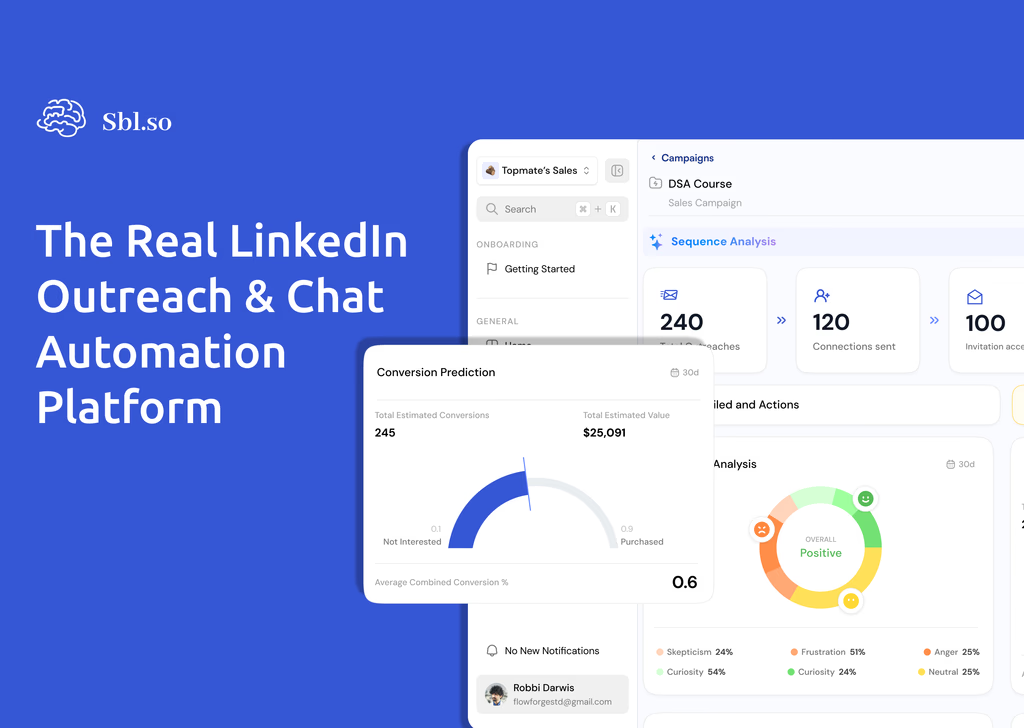
SBL.so is built specifically for this. It doesn’t just send messages and wait for you to handle replies. The AI actually continues the conversation. It responds to questions. It handles objections. It qualifies the prospect. And it pushes toward booking a call.
I’ve seen campaigns where the AI handles 40, 50, even 100 conversations simultaneously and books meetings without human intervention. When the AI hits something it can’t handle, it flags it for human review. You step in when needed. Otherwise, it runs.
That’s the difference between a tool that sends and a tool that books.
The Meeting Rate Calculation Most Teams Get Wrong
Quick sidebar on metrics because this matters.
Most teams calculate success like this: Meetings booked divided by messages sent.
That’s not wrong, but it hides the real problem. A better breakdown:
- Messages sent → Replies received (reply rate)
- Replies received → Conversations started (engagement rate)
- Conversations started → Meetings booked (conversion rate)
If your reply rate is fine but your conversion rate is terrible, your problem isn’t outreach. It’s what happens after outreach. You’re losing meetings in the conversation stage.
Most tools only optimize the first step. They help you send more messages. Maybe they help you get more replies. But they don’t touch the conversion step. That’s where human effort or AI conversation handling has to fill the gap.
What to Look for in a Meeting Booking Sales Tool
If you’re evaluating tools right now, here’s what I’d prioritize based on what’s actually moving the needle in 2026.
Does it handle replies? Not just notify you. Actually handle them. Whether through AI or routing, the tool should reduce the time between reply and booked meeting.
Does it integrate scheduling? You shouldn’t need three tools to go from outreach to booking. The best meeting generation software connects the whole workflow.
Does it prioritize high-intent signals? Tools like job change signals or funding alerts help you reach prospects when they’re most likely to book. Timing matters more than volume.
Does it work across channels? LinkedIn, email, and WhatsApp are all part of the B2B conversation now. Tools that only work on one channel leave gaps. Multi-channel outreach systems book more meetings because they follow prospects where they respond.
Does it show meeting-level analytics? Not just sent and opened. Meetings booked. Conversation quality. Booking rate by message variation. If the tool doesn’t track what matters, you can’t improve it.
Why Volume Without Conversion is Wasted Effort
I talk to founders all the time who are proud of their outreach numbers. “We’re sending 5,000 LinkedIn messages a month.” Cool. How many meetings are you booking? “Like… 8.”
That’s a 0.16% meeting rate. And honestly, you could probably get the same 8 meetings from 500 messages if you targeted better and handled conversations faster.
The market has shifted. More outreach doesn’t mean more meetings anymore. Everyone’s inbox is full. Everyone’s LinkedIn is crowded. The teams winning are the ones who:
- Target tighter
- Respond faster
- Converse better
- Book smoother
Volume is a multiplier on quality. If your quality is zero, volume times zero is still zero.
How AI Changes the Meeting Booking Game
Real talk on AI because everyone claims to have it.
Most “AI” in sales tools is just better templates or smart sequencing. It’s rules-based automation with a fancy label. “If they reply with X, send Y.” That’s not intelligence. That’s a flowchart.
Actual AI conversation handling is different. The system reads what the prospect says, understands intent, considers context, and generates an appropriate response. It handles edge cases. It learns from past conversations. It doesn’t just follow scripts.
This is what makes the difference between a tool that sends and a tool that books. When your AI can actually hold a conversation, you don’t need humans managing every reply. You can scale conversations the way you scale sends.
SBL.so spent years building exactly this. The AI doesn’t just send your first message. It responds to replies. It qualifies. It handles objections like “we’re not looking right now” or “what’s the pricing?” It pushes toward booking. And when it encounters something genuinely complex, it flags it and you step in.
That’s the future of AI sales automation. Not replacing the human, but handling the repetitive conversation work so the human can focus on the meetings that actually happen.
The Tools That Actually Book Meetings
Let me give you a quick rundown based on use case.
For inbound lead conversion: Chili Piper and RevenueHero are strong. They route leads fast and let prospects book immediately. If your problem is that inbound leads fill out forms but don’t convert to calls, this is your fix.
For outbound sequencing: Apollo, Outreach, and Salesloft handle the sending side well. They’re infrastructure tools. Your meeting rate will depend on your targeting and messaging quality.
For calendar efficiency: Calendly is the baseline. It’s easy, it works, everyone knows it. For more advanced routing and team scheduling, look at HubSpot Meetings if you’re already in that ecosystem.
For full-funnel AI handling: SBL.so is built for this specific problem. Outreach plus conversation plus booking in one workflow. The AI handles replies so you’re not stuck responding to every message manually. It’s particularly strong for LinkedIn Sales Navigator automation and scales to thousands of messages monthly without getting banned.
Quick Wins to Improve Your Meeting Rate Today
While you’re evaluating tools, here are things you can do immediately.
Respond to replies within an hour. Set up notifications. Check your inbox more frequently. Speed matters more than perfect messaging.
Ask for the meeting directly. Stop sending “let me know if you’d like to chat sometime.” Propose a specific time. “Are you free Thursday at 2pm?” converts better than vague availability.
Remove friction from booking. Use a scheduling link. Make it one click. Don’t make prospects email back and forth to find a time.
Prioritize warm replies. Someone who asks a question is more valuable than someone who just says “thanks.” Handle high-intent replies first.
Track meeting rate, not reply rate. Change what you measure and you’ll change your behavior. Focus on the outcome that matters.
The Real Difference Between Sending and Booking
I’ve probably said this five different ways now but it’s the core point so I’ll say it again.
Most sales tools help you send messages. Few sales tools help you book meetings. The gap between those two things is where deals die.
If you want a sales tool to get more meetings, don’t evaluate tools on sending capacity. Evaluate them on what happens after the send. How do they help you handle replies? How do they reduce time to booking? How do they qualify interest and move it toward your calendar?
The teams booking the most meetings in 2026 aren’t the ones sending the most outreach. They’re the ones converting the highest percentage of that outreach into actual conversations and actual calendar slots.
That’s the difference. And if your current stack isn’t optimized for that, it’s time to fix it.