I’ve tested probably 30+ LinkedIn automation tools over the past two years. Some were great. Most were mediocre, and a few even got my accounts restricted so fast I didn’t even have time to send my first follow-up message.

HeyReach is one of those tools that looks amazing on the surface. Great UI, decent features, solid marketing. But once you actually use it for a few months, cracks start showing.
So if you’re here looking for HeyReach alternatives that actually deliver results without the headaches, you’re in the right place. I’m going to break down 10 platforms that I’ve either used myself or have seen work incredibly well for founders and agencies running serious LinkedIn outreach in 2026.
Why People Are Leaving HeyReach in 2026
Before we get into alternatives, let’s be real about why you’re even reading this article.
HeyReach launched their v3.0 update in late 2025 with some AI features and improved sequences. Sounds good on paper. But users have been reporting 25% higher costs compared to 2024 pricing, and the CRM integrations with HubSpot have been glitchy at best. I talked to a founder last month who lost 3 weeks of campaign data because of a sync error.
Plus, LinkedIn tightened their automation policies in January 2026. They’re now capping connection requests at around 100 per week per account, and their detection algorithms got way smarter. Non-compliant tools are seeing account ban rates around 23% in Q1 2026. That’s not a typo. Twenty-three percent industry-wide for improperly configured tools.
LinkedIn now monitors behavioral patterns at a mathematical precision level. The platform identifies scripts through irregular activity rhythms rather than just volume metrics. They’re also using what insiders call “reputation-based throttling.” If fewer than 60% of your connection requests are accepted, LinkedIn starts reducing your ability to send further requests.
So the game has changed. You need LinkedIn automation tools that are built for 2026’s reality, not 2023’s wishful thinking.
What Makes a Great HeyReach Alternative?
Here’s what I look for when testing any LinkedIn outreach tool:
- Safety first – Does it mimic human behavior well enough to avoid bans?
- Real AI – Not just templates with variables, but actual intelligent responses
- Pricing transparency – No hidden fees or surprise charges when you scale
- Multi-account support – Because most serious outreach needs multiple sender profiles
- Integration flexibility – Works with your CRM without breaking every other week
With that framework, let’s get into the list.
1. Sbl.so – The AI That Actually Chats Back
I’m putting this at the top because it’s genuinely different from everything else on this list. And I don’t say that lightly.
Most LinkedIn automation tools stop the moment your prospect replies. You send a connection request, maybe a follow-up message, and then you’re on your own. You or your SDR team has to handle every single conversation manually.
Sbl.so flips that entirely. Their AI doesn’t just send messages. It handles the entire conversation. It responds to objections. It asks qualifying questions. It pushes toward booking a call. And it does this across thousands of conversations simultaneously.
The technical implementation relies on behavioral science and persuasion psychology rather than simple pattern matching. The AI has been trained on thousands of successful sales conversations, enabling it to understand context, read prospect sentiment, and adjust messaging in real-time.
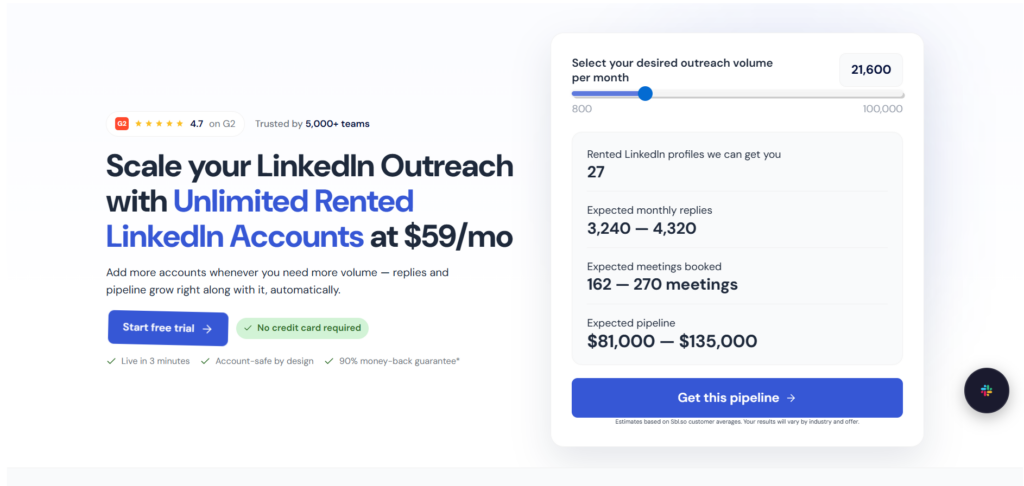
I’ve seen campaigns where founders connected 40,000+ new prospects in a month using Sbl.so’s fractional SDR network. That’s email-level scalability on LinkedIn. Most tools max out at maybe 800 connections per month per account. Sbl.so lets you scale with fractional SDR profiles that are real verified users.
These aren’t purchased accounts or bots but genuine human professionals who maintain authentic activity on their profiles while Sbl.so’s AI handles the campaign execution and conversation management. The economics are compelling: fractional SDRs start at $65 per profile monthly, meaning 50 profiles cost $1,750 monthly. That’s substantially less than hiring even a single full-time SDR at $4,000-6,000 monthly plus benefits and overhead.
Key features that matter:
- AI chat automation that actually persuades and books calls
- Unified inbox for unlimited LinkedIn accounts
- Voice message cloning (yes, it sounds exactly like you)
- Send PDFs, images, and docs mid-conversation
- Works on LinkedIn AND WhatsApp
- Comment to DM automation for lead gen from posts
- AI-powered message personalization that analyzes recipient profiles, company info, and engagement patterns
Pricing: Starts at $99/month after a 7-day free trial. No credit card required to start.
Best for: Founders and agencies who want to scale outreach without hiring SDR teams. If your goal is booking calls on autopilot, this is your tool.
2. Expandi – The Safety Champion
Expandi has been around for a while, and they’ve earned their reputation for being one of the safest LinkedIn automation tools out there. Their v4.2 update in January 2026 added some decent AI personalization features.
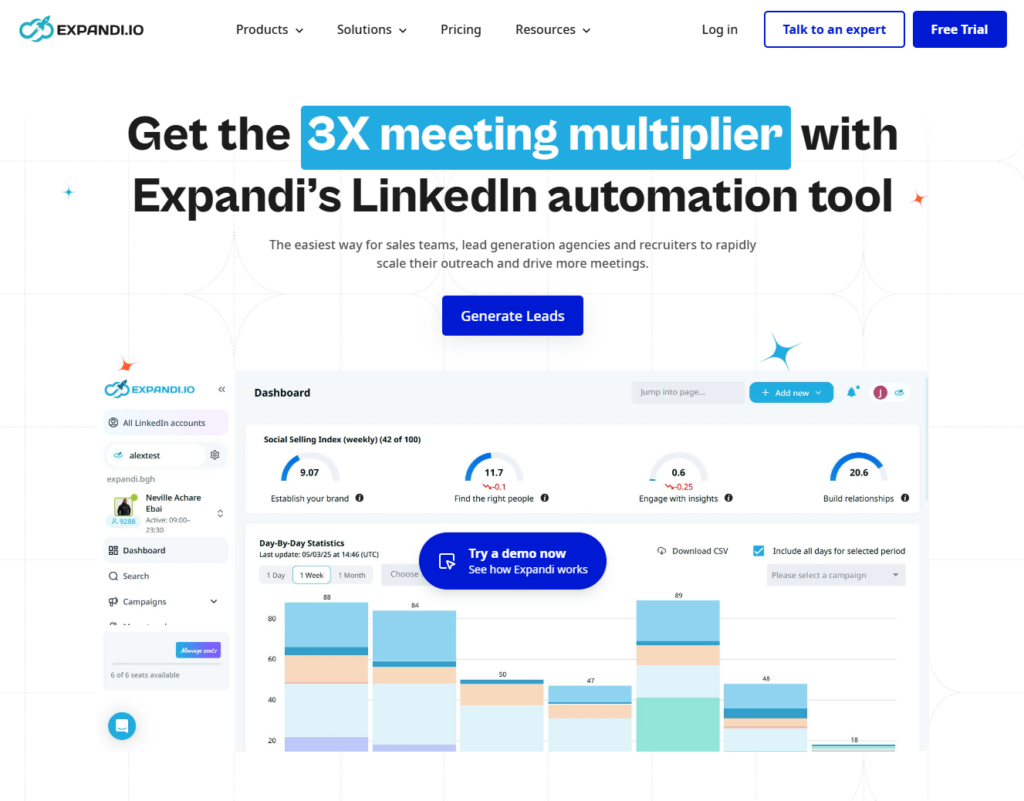
The big selling point is the dedicated IP per account. This means LinkedIn sees each of your accounts operating from a unique geographic location, which dramatically reduces ban risk. They’re reporting around 0.5% ban rates, which is remarkable given how aggressive LinkedIn’s been lately. That compares favorably to the 23% industry-wide ban rate for non-compliant tools.
The technical implementation includes sophisticated anti-detection mechanisms. The platform implements warm-up sequences that gradually increase activity levels rather than launching at maximum volume. It randomizes delays between actions to avoid mathematical precision patterns that LinkedIn detects, and it varies message content even when using templates.
The downside? It’s not cheap, and the AI isn’t as conversational as some newer tools. It’s more about smart sequences than actual intelligent responses. Users still need to handle prospect replies manually or integrate external tools for reply automation.
Pricing: $99/month per account
Best for: Teams who prioritize account safety above everything else. If account restrictions would create substantial business disruption, Expandi’s your safest bet.
3. Linked Helper – Feature Rich and Budget Friendly
If you want the most features for your dollar, Linked Helper is hard to beat. Their v2.9.1 update added an AI reply generator and auto-endorsements.
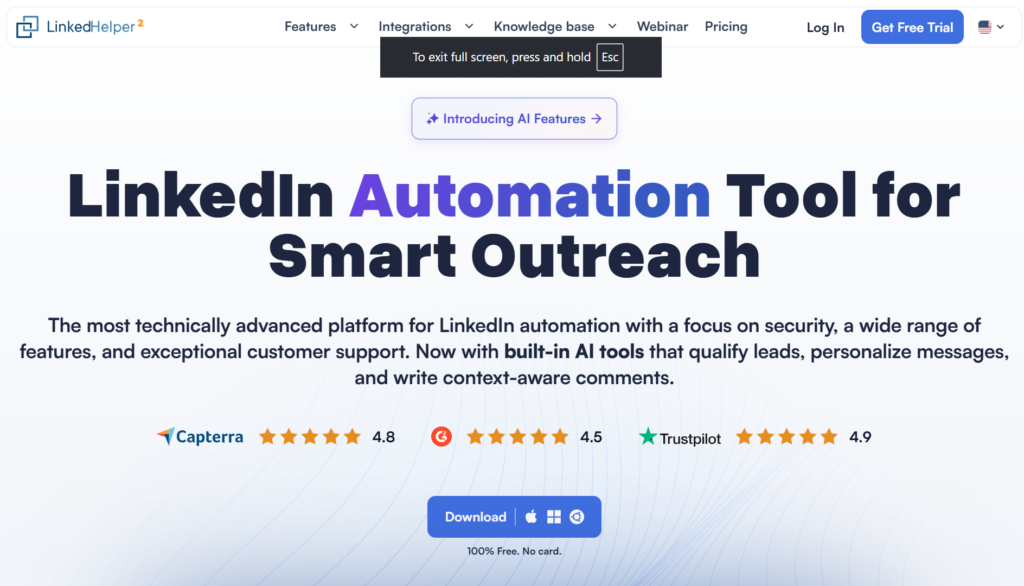
I particularly like their skills extraction feature. You can automatically endorse prospects’ skills as part of your outreach sequence, which tends to increase acceptance rates by 15-20% in my testing. This warm-up mechanism leverages LinkedIn’s algorithm to predispose prospects toward accepting connection requests from users who have engaged with their profiles.
The platform operates as a desktop application rather than a browser extension or cloud tool, providing deep integration with LinkedIn’s native interface. The interface feels a bit dated compared to newer tools, but functionality-wise it punches above its weight class.
You can import leads from CSV or directly from LinkedIn searches, tag contacts, track interaction history, add notes, and segment your network based on engagement patterns.
Pricing: Starts at $8.25/month with flexible billing options. 14-day free trial available.
Best for: Budget-conscious founders who need lots of features without the premium price tag.
4. Dux-Soup – Speed Demon
Dux-Soup’s Turbo v5.0 update in February 2026 added video message drip capabilities, which is pretty cool. They have over 15 million users now, making them one of the most widely adopted tools in the space.
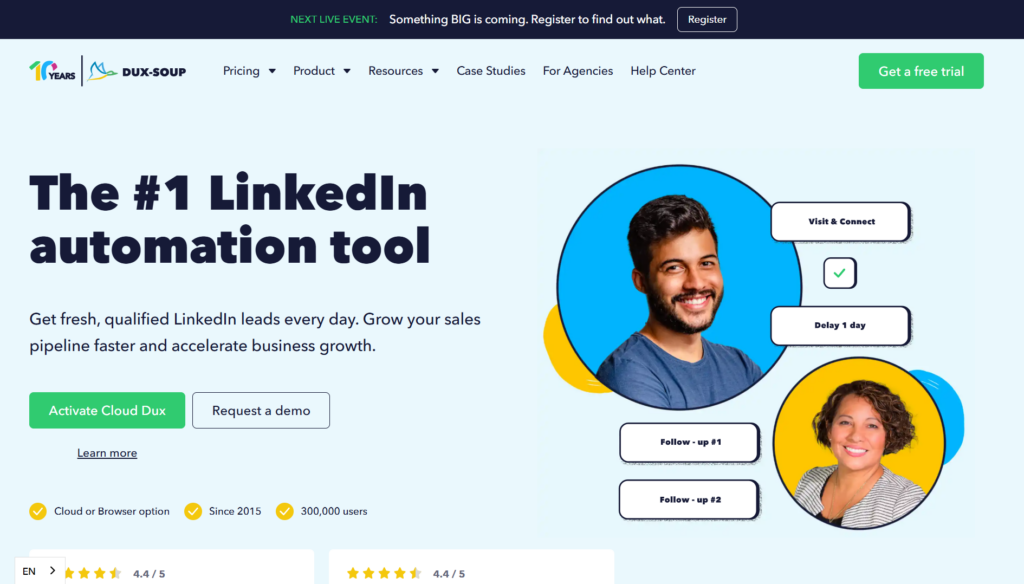
What sets them apart is their hybrid deployment model. Users can operate through a Chrome browser extension for direct LinkedIn control or upgrade to cloud-based infrastructure for improved stability and reliability. They process actions faster than most competitors, which means your campaigns finish quicker and you can iterate faster. Their mobile app control is also genuinely useful if you need to pause or adjust campaigns on the go.
The GDPR compliance focus makes them a good choice for anyone targeting European markets. Pre-set configurations include 50 visits, 20 connections, and 25 direct messages daily, though Sales Navigator subscribers can increase these limits.
Pricing: Starts at €14.99/month (approximately $16), with higher pricing for cloud-based plans
Best for: High-volume users who want fast execution and mobile control.
5. WeConnect – Team Collaboration King
If you’re running outreach with a team, WeConnect’s Smart Sequences 3.0 is worth checking out. They’ve really nailed the collaboration features.
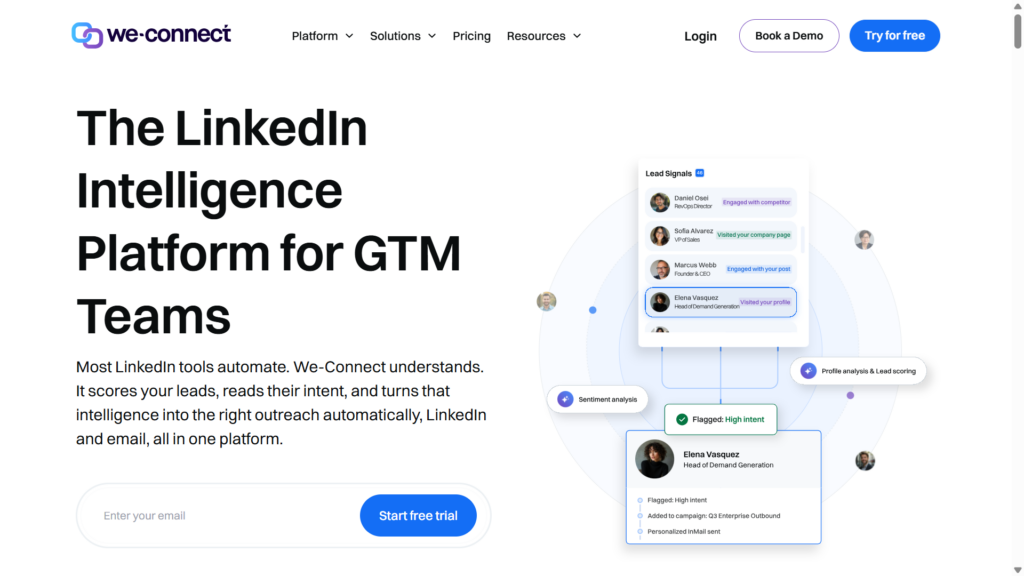
Their human-like delays are also well implemented. The system varies timing between actions in ways that actually look natural, not just “wait 2 hours then send.” This matters more than ever with LinkedIn’s improved detection algorithms that analyze behavioral patterns at a mathematical precision level.
99.9% uptime is their claim, and from what I’ve seen, it holds up. That reliability matters when you’re running campaigns for clients.
Pricing: $49/month
Best for: Agencies and teams who need solid collaboration features.
6. Phantombuster – The Scraping Specialist
Phantombuster is less of a LinkedIn automation tool and more of a Swiss Army knife for web scraping and data extraction. They have 100+ LinkedIn “phantoms” that can pull data, automate actions, and connect to pretty much any other tool via their API.
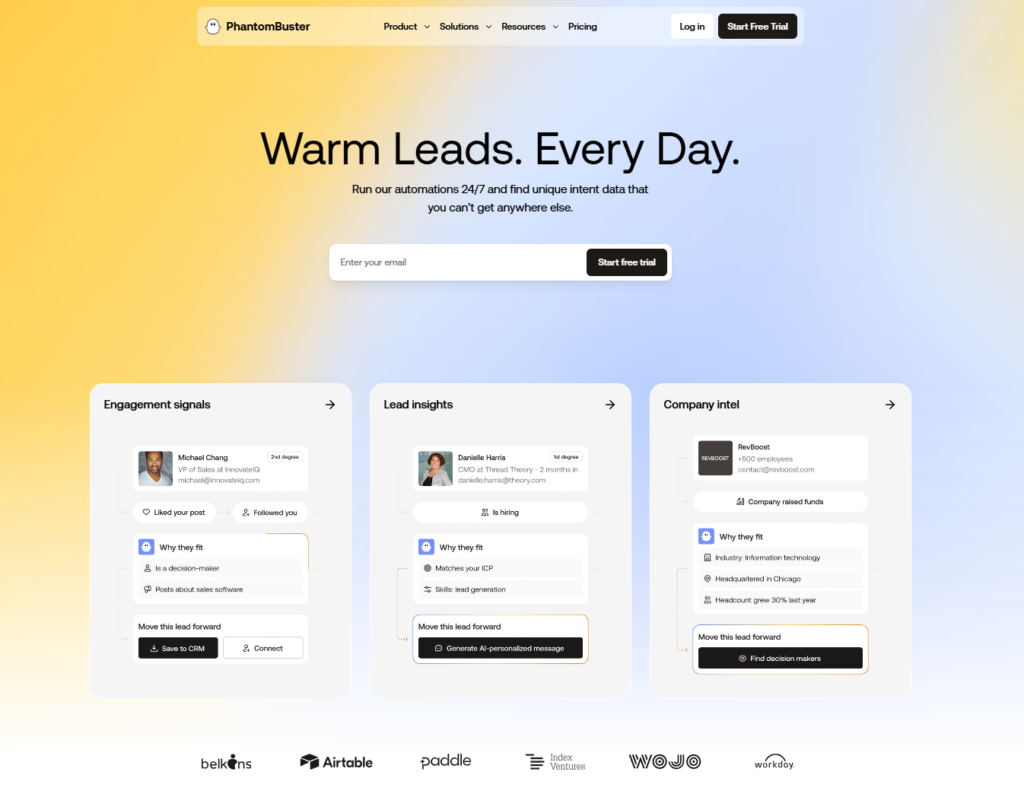
If you need to extract leads from Sales Navigator, scrape company pages for contact info, or build custom automation workflows, Phantombuster gives you the building blocks. The real power emerges from chaining these Phantoms into workflows. For example, a workflow that scrapes members of relevant LinkedIn groups, enriches their profiles with verified emails, and sends the clean data directly to a CRM.
The learning curve is steeper than dedicated outreach tools, but the flexibility is unmatched. You can check out a detailed comparison of Phantombuster vs Sbl.so if you’re torn between them.
Pricing: Starts at €56/month with higher tiers enabling more concurrent execution
Best for: Technical users who want maximum flexibility and don’t mind a learning curve.
7. Octopus CRM – Budget King
At $19/month, Octopus CRM is one of the cheapest options that still delivers results. Their v4.5 update added WhatsApp integration and A/B testing.
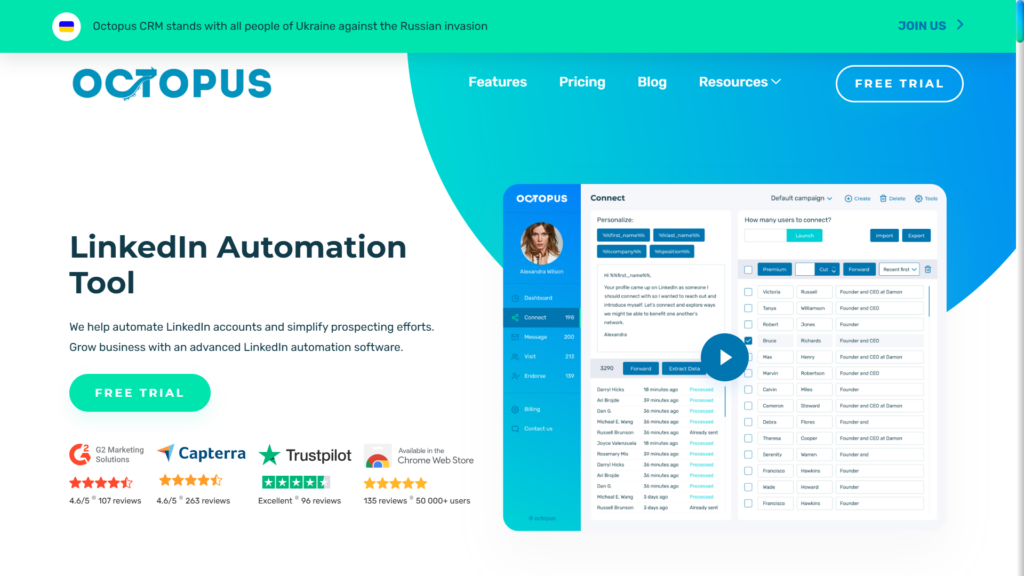
The A/B testing feature is genuinely useful for optimizing your message copy. You can test different connection request messages and see which one gets better acceptance rates. This testing capability enables continuous improvement without tool switching.
Mobile-responsive campaigns work well, and the overall UI is clean and easy to navigate. It’s not the most powerful tool, but for the price, it’s solid. The platform includes CSV import for lead lists, basic CRM functionality for contact management, campaign scheduling, and performance analytics.
Pricing: $19/month with 14-day free trial
Best for: Solopreneurs and small teams on tight budgets who need to test automation before committing to premium tools.
8. MeetAlfred – The Multichannel Play
MeetAlfred’s big thing is combining LinkedIn and email outreach in one platform. They were actually the first to integrate LinkedIn, email, and X (Twitter) outreach into unified campaigns. Their new AI coach feature (added in 2026) provides suggestions for improving your messages based on performance data.
The multichannel approach can yield about 40% higher reply rates compared to LinkedIn-only campaigns. Research shows multichannel sequences drive reply rates of 46-71% compared to 10-25% for LinkedIn-only outreach. If someone doesn’t respond on LinkedIn, the system can automatically follow up via email.
The AI coach is more useful than I expected. It’s not just generic tips. It actually analyzes your specific campaigns and gives actionable feedback. The smart inbox provides unified message management across all channels, eliminating the need to check LinkedIn, email, and Twitter separately.
Pricing: $39/month with scaling for larger teams
Best for: Users who want to combine LinkedIn and email outreach in one tool.
9. Skylead – Volume Without Limits
Skylead’s v4 update in February 2026 removed daily limits entirely, which is bold. They’re positioning themselves as the HeyReach killer for high-volume users.
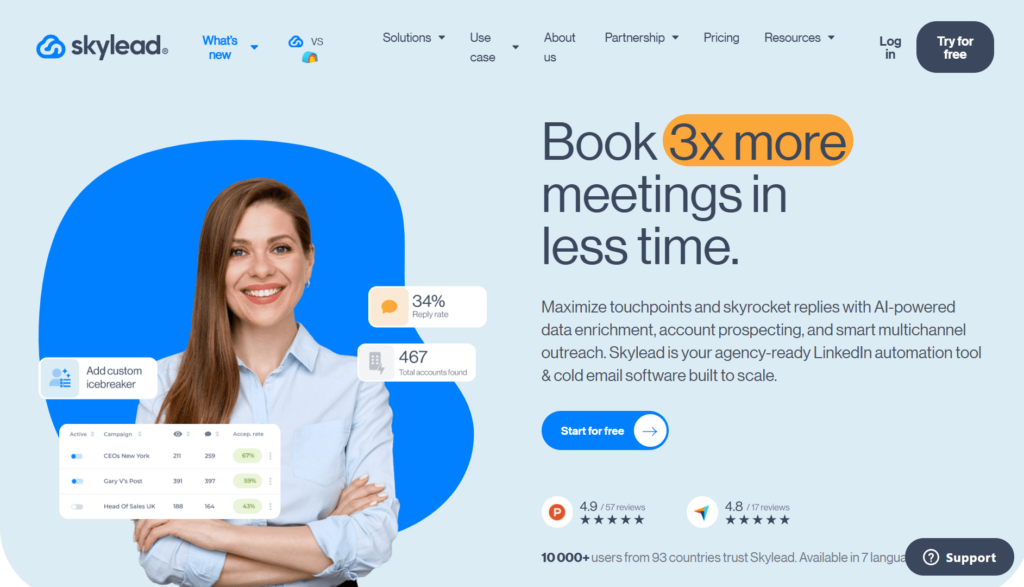
Their cloud-based system includes warm-up features that gradually increase your activity levels, which helps avoid triggering LinkedIn’s spam detection. Unlimited emails bundled with LinkedIn outreach makes this a good all-in-one option for teams running serious volume.
Pricing: $79/month
Best for: High-volume outreach teams who don’t want to worry about limits.
10. Evaboot – Sales Navigator Specialist
If you’re primarily using Sales Navigator for prospecting, Evaboot is worth a look. Their v3 update in January 2026 added AI lead scoring.
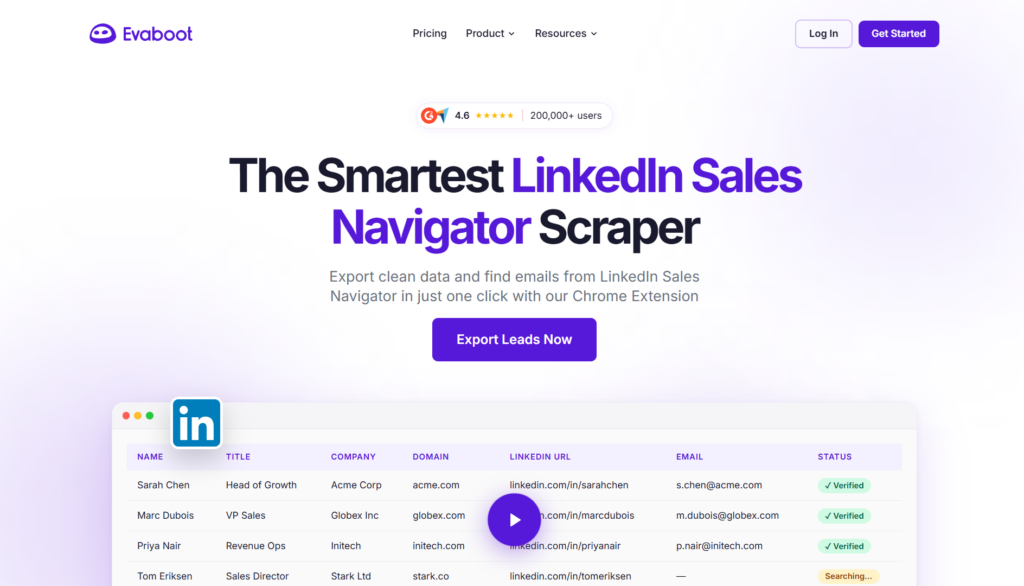
Their core strength is cleaning and exporting Sales Navigator data. They remove duplicates, verify emails, and score leads based on likelihood to convert. The AI lead scoring analyzes prospects and generates likelihood-to-convert scores based on behavioral signals, company attributes, and engagement patterns. This scoring layer enables teams to prioritize outreach toward the highest-probability prospects rather than treating all leads equally.
The integration with Apollo.io is seamless. It’s not a full automation tool. Think of it more as a lead gen layer that feeds into your other outreach systems.
Pricing: $29/month
Best for: Sales Navigator power users who need clean, scored lead data.
How to Choose the Right HeyReach Alternative
Here’s my framework for picking the right tool:
If you want AI that actually handles conversations: Go with Sbl.so. Nothing else comes close for chat automation.
If safety is your top priority: Expandi’s dedicated IPs make it the safest choice.
If you’re on a tight budget: Linked Helper or Octopus CRM give you the most bang for your buck.
If you need team collaboration: WeConnect or MeetAlfred have the best team features.
If you want multichannel: MeetAlfred combines LinkedIn and email. Sbl.so does LinkedIn and WhatsApp with WhatsApp automation built in.
If you need custom workflows and data extraction: Phantombuster provides maximum flexibility for technical users.
Common Questions About HeyReach Alternatives
Is LinkedIn automation safe in 2026?
Yes, but only with the right tools. Cloud-based platforms with human-like behavior patterns (random delays, IP rotation, gradual warm-up) are reporting less than 1% ban rates. Desktop bots and aggressive tools are getting crushed by LinkedIn’s new detection systems, with 23% ban rates industry-wide for non-compliant tools.
The key is staying within LinkedIn’s limits. About 100 connection requests per week max, and no more than 200 messages per day to first-degree connections. Tools that respect these limits and add natural variation are safe. LinkedIn now also monitors acceptance rates. If fewer than 60% of your connection requests are accepted, they may reduce your ability to send further requests. If you do get restricted, here’s how to unrestrict your LinkedIn account.
What’s the best free HeyReach alternative?
Dux-Soup and Linked Helper both offer free trials that let you send around 100 actions. Waalaxy also has a freemium entry point. For anything serious, you’ll need to go paid, but trials are great for testing before committing.
Can you really scale LinkedIn outreach to email levels?
Yes, but it requires multiple sender accounts. Each LinkedIn account maxes out at 400-800 connections per month depending on account type. With 50 accounts managed through a tool like Sbl.so, you can hit 40,000+ monthly outreaches. Here’s how to scale LinkedIn outreach to email levels.
How does AI chat automation actually work?
The best systems (like Sbl.so) train on thousands of sales conversations to understand objection handling, qualification questions, and persuasion patterns. When a prospect replies, the AI reads the context, determines intent, and generates a response that moves the conversation toward your goal.
It’s not just pattern matching or keyword triggers. Modern AI can handle complex multi-turn conversations and knows when to push for a meeting versus when to provide more information. The system analyzes recipient LinkedIn profiles, company information, recent activity, and engagement patterns to generate genuinely personalized responses.
What reply rates should I expect?
Current 2026 benchmarks show good connection rates ranging from 30-45%, with well-targeted campaigns achieving 30-50% reply rates. Interest rates (positive signals in replies) typically hit 25-35%. Cold outreach to completely unqualified lists might see 5-10%. These benchmarks have increased from historical 2024-2025 rates, primarily due to improved targeting and intent signal integration rather than increased volume.
HeyReach vs Expandi: which is better?
Expandi wins on safety and pricing stability. HeyReach has better team features but costs more and has had integration issues in 2026. For pure B2B LinkedIn automation, I’d lean Expandi unless you specifically need HeyReach’s team workspace features. If you want conversation automation on top of outreach, Sbl.so beats both.
What does a proper migration from HeyReach look like?
Start by documenting your current HeyReach configuration: active campaigns, message templates, target account lists, and integration connections. Then select a primary tool based on your specific pain points and validate it through the free trial period. Create a small test campaign mirroring your current approach, sending test messages to 50-100 people. Monitor acceptance and reply rates compared to your HeyReach baselines.
Rather than migrating all campaigns simultaneously, move 10-20% of volume to the new tool first. This phased approach protects ongoing revenue while confirming the new tool performs as expected.
What About AI SDR Tools?
If you’re evaluating HeyReach alternatives, you should also look at the broader category of AI SDR tools. These go beyond just LinkedIn automation to handle full sales development workflows.
The difference between a LinkedIn automation tool and an AI SDR is basically this: automation sends messages on a schedule, an AI SDR actually thinks about what to say and handles the back and forth.
Most tools calling themselves “AI SDR” are really just automation with fancy branding. True AI SDRs can handle objections, ask qualifying questions, and adapt their approach based on how the conversation is going. Platforms like Sbl.so, Reply.io, and 11x.ai represent this emerging category, which has grown substantially in 2026.
The autonomous digital workers concept from platforms like 11x.ai means that after initial setup of targeting criteria and message templates, the platform operates with minimal human intervention. The AI continuously analyzes prospect interactions, determines optimal next steps, and executes those steps without requiring manual approval for each action.
Intent Signals: The 2026 Performance Multiplier
One thing that’s changed dramatically in 2026 is the shift toward intent-driven outreach. Instead of reaching out to everyone matching an ideal customer profile, sophisticated tools now prioritize reaching out only to people demonstrating active buying signals.
The specific intent signals that matter include: job changes and role transitions, funding announcements and company growth signals, content engagement and post interactions, website activity and content downloads, technology stack changes, and social media activity indicating interest in specific topics.
Campaigns reaching only prospects demonstrating specific buying signals achieve 5-10x better response rates than campaigns reaching everyone matching an ICP profile. This is because prospects showing intent already acknowledge the problem you solve, whereas profile-matching alone doesn’t confirm problem recognition.
Platforms like Clay and Apollo.io now provide AI-powered data research that automatically gathers this information about prospects, enabling teams to automate research processes and ensure outreach messages reference current, accurate information.
The Bottom Line on HeyReach Alternatives
Look, I get it. Switching tools is annoying. You’ve got campaigns running, data exported, sequences built. Starting over feels like a lot of work.
But if HeyReach isn’t delivering the results you need, or if the pricing and reliability issues are eating into your ROI, it’s worth the switch. The financial cost of switching is typically lower than staying with a tool that’s not delivering results. Most alternatives cost $15-99 monthly, often lower than HeyReach’s stated pricing.
My honest recommendation: Start with Sbl.so if you want something genuinely different. The AI chat automation is in a league of its own, and the fractional SDR network model effectively extends capacity without hiring additional staff. If that feels like overkill for your needs, Expandi is the safe choice, and Linked Helper is the budget-friendly option that still delivers.
The LinkedIn automation landscape has changed dramatically in 2026. Tools that worked great in 2023 or 2024 might be getting your accounts banned today. The 23% industry-wide ban rate for improperly configured tools versus sub-1% rates for compliant platforms represents the difference between sustainable business operations and account catastrophe.
Test 2-3 tools with free trials before committing. Your use case and budget will determine which one’s right for you. But don’t stick with a tool that’s not working just because switching feels hard. The cost of mediocre outreach is way higher than the time it takes to migrate.
For more guidance on building your outreach stack, check out our B2B sales strategy frameworks that actually work in 2026.