If you are running LinkedIn outbound in 2026 and your stack looks like a Frankenstein monster of 12 different tools, you are not alone. I’ve talked to hundreds of founders and sales leaders this year, and almost every one of them has the same complaint: too many tools, too much manual work, and not enough pipeline to show for it. The good news is that the ideal LinkedIn automation stack is actually simpler than you think. This post will give you a framework for deciding what belongs in your stack, what you should cut, and how to collapse multiple layers into fewer systems that actually produce results.
Why Most SDR Tech Stacks Are a Mess in 2026
Let me tell you what I see over and over again. A team starts with a CRM. Then they add a data provider. Then a separate enrichment tool. Then a LinkedIn automation tool. Then an email sequencer. Then a conversation intelligence platform. Then a calendar scheduler. Then some kind of AI assistant. Before they know it, they are paying for 10 to 15 subscriptions, and none of them talk to each other properly.
The result? SDRs spend more time moving data between tools than actually talking to prospects. Pipeline suffers. Costs balloon. And nobody can figure out which tool is actually driving results coz the attribution is a nightmare.
Here is the thing: the market has changed. In 2026, the best performing teams are running 4 to 6 core tools, not 15. The shift is toward consolidation. Fewer tools. More integration. And systems that actually produce pipeline, not just activity.
The 5-Layer Framework for Your LinkedIn Outbound Stack
Instead of thinking about your stack as a pile of disconnected apps, think about it as five functional layers. Every layer needs to be covered, but you do not need a separate tool for each one. In fact, the best stacks in 2026 collapse multiple layers into single platforms.
Layer 1: Discovery (Finding Your ICP)
This is where you identify accounts and contacts that match your ideal customer profile. Most teams use Sales Navigator here, sometimes combined with a prospecting database like Apollo, ZoomInfo, or Cognism. The mistake I see constantly is paying for expensive intent platforms that the team barely uses. If you are not actually acting on the intent signals, you are wasting money.
What you actually need: a way to define your ICP and pull a list of people who match it. Sales Navigator does this well for LinkedIn. If you need broader data, a prospecting database fills the gap. But you do not need both unless your outreach volume justifies it.
Layer 2: Enrichment (Completing and Verifying Data)
Once you have a list, you need to make sure the data is accurate. Emails need to be verified. Phone numbers need to be real. Company info needs to be current. This is where teams often over-invest in expensive enrichment tools that duplicate what their prospecting database already does.
The 2026 reality is that most modern prospecting platforms bundle enrichment. Apollo, Cognism, Lusha, and others already verify and complete data. If your primary tool does enrichment, you probably do not need a separate B2B data enrichment layer. Check what you are already paying for before adding another subscription.
Layer 3: Engagement (Sequences and Outreach)
This is the execution layer. Sending connection requests, messages, follow-ups, emails, whatever channels you use. For LinkedIn, you need a cloud-based automation tool that can handle sending safely without getting your accounts restricted. For email, you need a sequencer.
The problem is that most teams treat these as completely separate systems. They run LinkedIn outreach in one tool and email in another, with no connection between them. The better approach in 2026 is to look for platforms that handle both, or at least sync cleanly with each other so you are not duplicating work.
For LinkedIn specifically, the market has split into a few categories:
- Safe cloud-based senders like Expandi for scalable outreach
- Agency and multi-account tools like Heyreach for teams managing many profiles
- AI-assisted platforms that handle replies and personalization, not just sending
If you are just sending messages and stopping there, you are missing the most important part: what happens after someone replies.
Layer 4: Conversation Handling (Where Most Teams Under-Invest)
This is the layer that separates good stacks from great ones. Most LinkedIn automation tools stop at sending. They fire off connection requests and messages, then leave you to manage every reply manually. That is fine if you are doing 50 outreach per month. It is a disaster if you are doing 500 or 5000.
The 2026 shift is toward tools that can actually handle conversations, not just start them. That means AI-assisted reply management, follow-up automation, and systems that can push a conversation toward a booked meeting without you manually typing every message.
This is where I see the biggest under-investment. Teams will spend thousands on prospecting data and fancy intent signals, then have one overwhelmed SDR trying to manually reply to hundreds of LinkedIn threads. The economics do not work. If you are scaling outreach, you need to scale conversation handling too.
Some platforms now offer LinkedIn outreach chat automation that can manage replies, handle objections, and book calls autonomously. This is not science fiction anymore. It is table stakes for teams doing serious volume.
Layer 5: CRM Sync (Your System of Record)
Everything needs to flow back into your CRM. HubSpot and Salesforce still dominate here. The key is making sure your outreach tools actually sync properly. If your SDRs are manually logging activities, you are burning hours every week on data entry instead of selling.
The ideal setup is automatic. Every connection, every message, every reply should flow into your CRM without manual intervention. Most modern tools offer this, but the quality of the sync varies wildly. Test it before you commit.
Where Teams Over-Invest (And Where They Under-Invest)
Based on what I have seen this year, here is the pattern:
Over-investment:
- Expensive intent data platforms that never get used properly
- Multiple overlapping prospecting databases
- Separate enrichment tools when the main platform already enriches
- Fancy dashboards and analytics tools that nobody looks at
Under-investment:
- Conversation handling after the initial outreach
- Reply management and AI-assisted follow-up
- Multi-channel coordination between LinkedIn and email
- Actual sales enablement and coaching
The fix is simple in theory: cut the tools you are not using, and invest more in the execution and conversation layers. But I know that is easier said than done when you have contracts and integrations already in place.
What the Ideal SDR Stack Looks Like in 2026
If I were building a LinkedIn-heavy outbound stack from scratch today, here is what I would use:
CRM: HubSpot or Salesforce. Pick one. Do not overthink it.
Prospecting/Data: Sales Navigator for LinkedIn, plus one prospecting database if you need broader coverage. Apollo is a solid choice for teams that want data and sequencing in one place.
Enrichment: Whatever your prospecting tool already offers. Do not add a separate enrichment subscription unless you have a specific gap.
LinkedIn Outreach Engine: A cloud-based tool that handles connection requests, messages, follow-ups, and ideally reply management. If you are running multiple accounts or agency workflows, you need something built for that.
Email Sequencer: If email is part of your motion, you need a sequencer. Again, look for something that syncs with your CRM and ideally coordinates with your LinkedIn outreach.
AI Layer: For personalization, research, and reply assistance. This can be built into your outreach tool or a separate system, but you need something here if you are doing volume.
That is 4 to 6 tools, not 12. And the key is making sure they actually work together instead of creating more manual work.
How to Collapse 3-4 Layers Into One Platform
The smartest teams in 2026 are not just simplifying their stack. They are collapsing layers. Instead of separate tools for sourcing, outreach, and conversation handling, they are using platforms that do all three.
This is where the newer generation of LinkedIn tools has an edge. Traditional automation tools like Dripify or Phantonbuster are great for sending, but they stop there. You still need humans managing every inbox and manually following up.
The 2026 shift is toward platforms that combine:
- Lead sourcing and ICP targeting
- Automated outreach sequences
- AI-powered reply handling and conversation management
- Unified inbox for all connected accounts
- CRM sync
When you find a platform that does all of this, you are not just saving money on subscriptions. You are saving hours of manual work every week. And you are getting more consistent results because the whole workflow is integrated instead of stitched together with duct tape and Zapier.
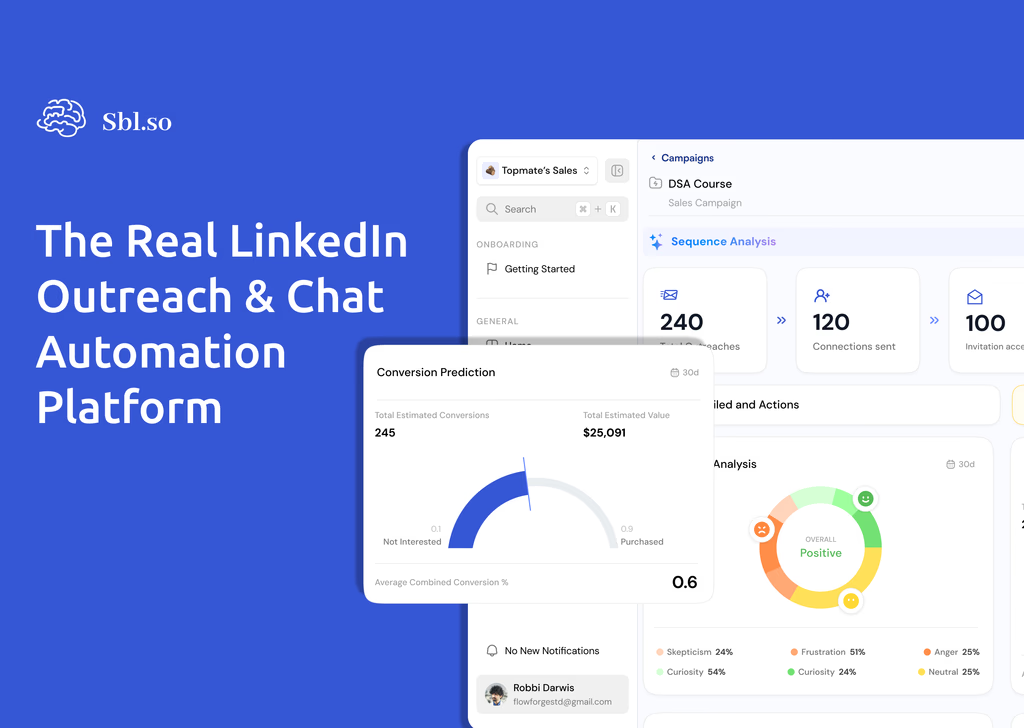
SBL.so is one example of this approach. It combines lead generation, LinkedIn outreach, AI chat handling, unified inbox, and CRM sync into one platform. You can connect multiple LinkedIn accounts, run campaigns at scale, and let the AI handle conversations while you focus on taking calls. It also works on WhatsApp, so you can follow the same lead across channels without starting from scratch.
Common Questions About Simplifying Your SDR Stack
How many tools should an SDR stack have in 2026?
Most current stack guides point to 4 to 6 core tools if you want simplicity and adoption. One system each for CRM, data, enrichment, engagement, and optional coaching. If you are over 10 tools, you almost certainly have overlap and waste.
Is LinkedIn still part of the ideal SDR stack?
Yes. LinkedIn remains a core outbound channel for B2B prospecting, especially for high-value accounts and agency workflows. The difference in 2026 is that teams are expecting more from their LinkedIn tools: not just sending, but conversation handling and AI assistance.
What is the best LinkedIn automation style in 2026?
Cloud-based automation with personalization and reply handling. Browser-based tools that run on your local machine are riskier and less scalable. Cloud tools that can automate LinkedIn outreach safely are the current preference.
Are AI SDR tools replacing human SDRs?
Not fully. AI SDRs automate prospecting, research, sequencing, and some meeting-booking work. But strategy, relationship building, and high-stakes conversations still require humans. Think of AI SDRs as force multipliers, not replacements.
What is the biggest mistake in SDR stack design?
Too many disconnected tools with no clean operating model. The stack should serve the workflow, not the other way around. If your SDRs spend more time moving data between tools than talking to prospects, your stack is broken.
Should I use separate tools for LinkedIn and email outreach?
It depends on your volume and workflow. If you are doing serious multi-channel outreach, look for platforms that coordinate both. Running completely separate systems creates more manual work and makes attribution harder.
How do I know if my stack has too much overlap?
Audit your subscriptions. For each tool, write down exactly what it does that no other tool in your stack does. If you cannot answer that clearly, you probably have overlap. Also check: are you actually using the features you are paying for?
Practical Steps to Simplify Your Stack This Quarter
If you are reading this and realizing your stack is a mess, here is what I would do:
Step 1: List every tool you are paying for. Include the monthly cost, what layer it covers, and whether it syncs with your CRM.
Step 2: Identify overlap. If you have two tools doing the same thing, pick one and cancel the other.
Step 3: Find the gaps. Is conversation handling covered? Is CRM sync actually working? Are your SDRs doing manual data entry that could be automated?
Step 4: Look for consolidation opportunities. Can you replace 2 or 3 tools with one platform that does all of it? The upfront migration work is painful, but the long-term simplicity is worth it.
Step 5: Measure what matters. After you simplify, track pipeline output, not activity metrics. The goal is booked meetings and closed deals, not messages sent.
The Real Barrier to Simplification
I will be honest: the hardest part is not choosing the right tools. It is getting buy-in to change. Teams get attached to their workflows. Contracts lock you in. Migration is painful. And there is always fear that changing tools will break something.
But here is what I have learned: sales automation for small teams and large teams alike works best when it is simple. Every extra tool is another point of failure, another login to manage, another integration to maintain. The teams that simplify their stack almost always report higher SDR productivity and lower costs within a few months.
The market in 2026 is moving toward consolidation for a reason. The tools are better. The integrations are tighter. And the teams that embrace simplicity are winning.
What This Means for Your LinkedIn Outbound in 2026
If you take one thing from this post, let it be this: your LinkedIn outbound stack should be a system, not a pile of disconnected apps. Map your stack to the five layers. Cut the tools you are not using. Invest more in conversation handling. And look for platforms that collapse multiple layers into one.
The ideal AI SDR stack in 2026 is not the one with the most tools. It is the one that produces the most pipeline with the least friction. That is the framework. Now go simplify.