If you’re reading this, you’re probably tired of the marketing fluff and just want to know if Artisan AI is actually worth your money. Fair enough. I spent the last few weeks pulling patterns from G2, Capterra, Trustpilot, and Reddit threads to give you the real picture of what paid users think about this tool. Not what their sales team wants you to believe.
By the end of this Artisan AI review, you’ll know exactly who this platform works for, who should stay away, and whether there are better alternatives for your specific situation.
What Is Artisan AI and What Does It Actually Do?
Artisan AI positions itself as an AI SDR platform. The core product is an AI agent called Ava that’s supposed to handle your entire top-of-funnel outbound process. We’re talking prospecting, data enrichment, email sequencing, and even reply handling.
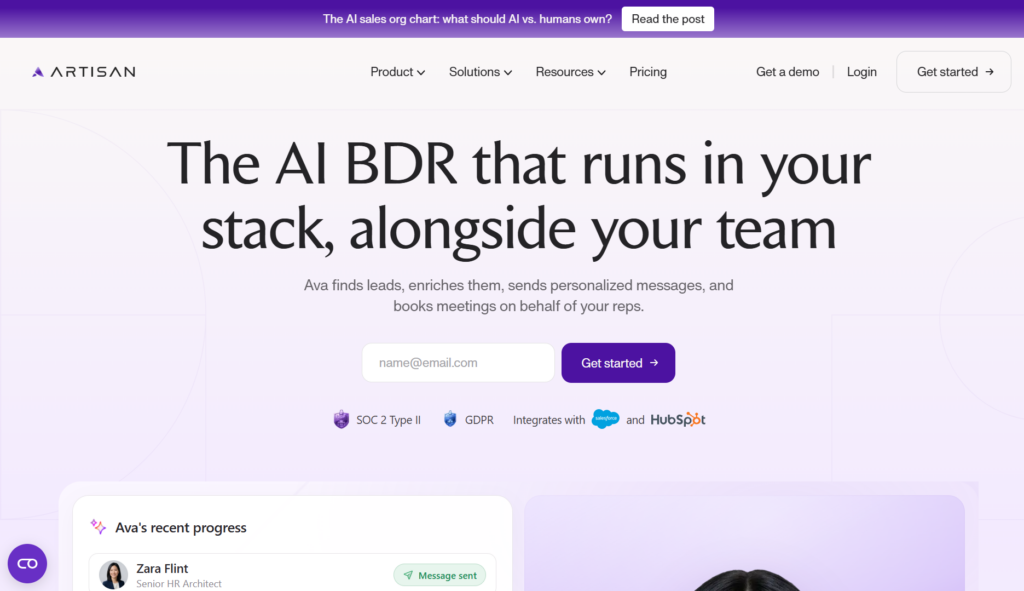
The pitch is simple: replace your SDR team with AI. Bold claim. And based on 500+ reviews across multiple platforms, the reality is a bit more nuanced than that marketing headline suggests.
Here’s what Ava actually does in practice:
- Searches a database of 300M+ B2B contacts based on your ICP
- Enriches leads with firmographic, technographic, and intent data
- Generates and sends email sequences automatically
- Adjusts send times based on engagement patterns
- Responds to replies and attempts to book meetings
On paper, it sounds like a complete outbound machine. But let’s dig into what real users are saying.
Artisan AI Pricing: The Number Everyone Wants to Know
Here’s where things get frustrating. Artisan doesn’t publish clear pricing on their website. You have to talk to sales, which already tells you something about their market positioning.
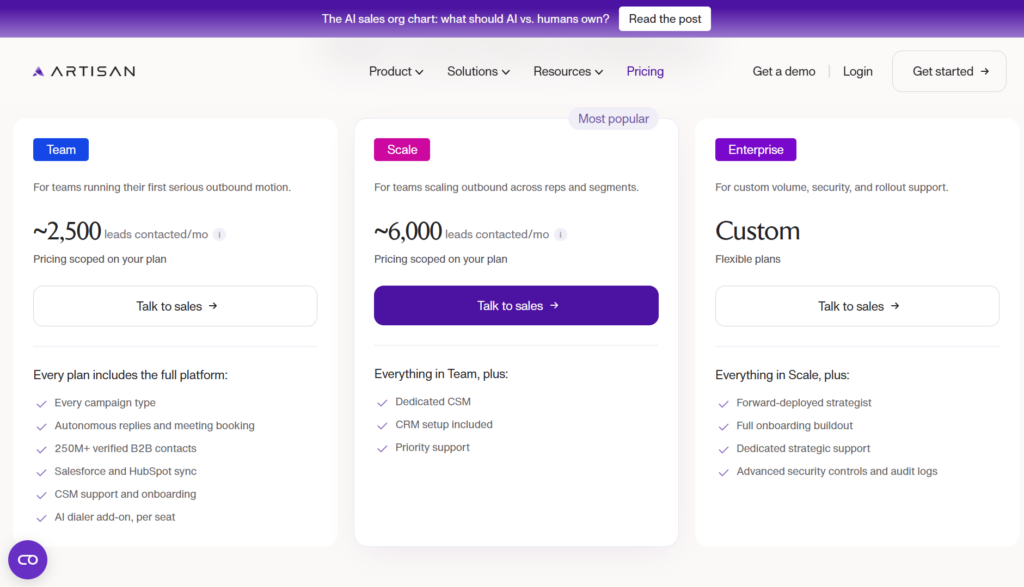
But based on aggregated data from reviews and comparison sites, here’s what we’ve pieced together about Artisan AI pricing in 2026:
- Entry level: Around $495/month for very limited configurations
- Standard tier: Typically $2,000-$3,000/month
- Annual contracts: Usually required, landing around $24,000-$36,000/year
- Custom enterprise: Higher volumes push beyond these ranges
The lack of transparent pricing is one of the most common complaints in reviews. Users on G2 repeatedly mention feeling caught off guard by the actual costs once they got on a sales call.
One Reddit user put it bluntly: “Great demo, but when they told me the price, I literally laughed. For that budget I could hire a part-time SDR.”
What Paid Users Actually Like About Artisan AI
Let’s be fair here. The tool does have genuine strengths, and many users report positive experiences. Based on the review data:
Massive database coverage
The 300M+ contact database consistently gets praised. Users appreciate not having to cobble together multiple data sources. For companies with broad ICPs, this is genuinely valuable.
Time savings on repetitive tasks
If your SDR team spends hours on prospect research and initial outreach drafting, Ava does compress that significantly. Several users reported cutting lead research time by 60-70%.
Support quality stands out
This one surprised me. Trustpilot shows a 4.6/5 rating with specific praise for account managers and implementation help. Multiple G2 reviews mention responsive support teams that actually solve problems quickly.
All-in-one convenience
Instead of juggling separate tools for prospecting, enrichment, sequencing, and analytics, everything lives in one interface. For lean teams, this simplification has real value.
The Real Complaints: Artisan AI Pros and Cons from Actual Users
Now for the part you probably came here for. What are people actually complaining about?
Generic Personalization at Scale
This is the biggest recurring theme across platforms. While Ava can personalize emails using data points, users consistently report that the output feels… templated. One G2 reviewer wrote:
“The emails look personalized if you squint, but my prospects can tell it’s automated. Response rates dropped after the first few weeks.”
The technology can pull in company names, roles, and basic context. But the nuanced relevance that makes cold outreach actually convert? That’s still missing according to many paid users.
Lead Quality Inconsistency
Several reviews mention needing to manually clean lists before launching campaigns. The database is large, but “large” doesn’t always mean “accurate for your specific ICP.” Outdated job titles, wrong company associations, and irrelevant contacts show up regularly enough to be a pattern.
Deliverability Control Limitations
For teams serious about email deliverability, Artisan’s infrastructure feels limiting. Compared to dedicated tools that offer granular warm-up, inbox rotation, and domain health monitoring, users report less control over these critical factors.
The Autonomy Gap
Here’s the thing that bothers me most. The marketing says “replace your SDR team.” But every honest review I found says you still need significant human oversight. You’re not handing Ava the keys and walking away. You’re supervising, adjusting, and cleaning up after it.
That’s not necessarily bad, but it creates an expectations mismatch that leads to frustrated customers.
G2 and Trustpilot Review Breakdown
Let’s look at the actual numbers from the major review platforms:
G2 Rating: Approximately 3.8-4.0/5 across 40-50 reviews
The distribution is interesting here. According to aggregated data, roughly 72% of reviews are 5-star, but about 13% are 1-star. Almost nothing in between. That polarization tells you something important: when Artisan works for someone, they love it. When it doesn’t fit, they really don’t.
Trustpilot Rating: Around 4.6/5
The higher Trustpilot score seems driven primarily by praise for customer support rather than the product itself. Users who had issues but got them resolved quickly tend to leave positive reviews there.
Common 5-star themes:
- Excellent onboarding and support
- Significant time savings vs manual prospecting
- Good fit for companies with broad target markets
Common 1-star themes:
- Pricing didn’t match expectations from sales calls
- Personalization quality below what was demonstrated
- ROI didn’t materialize as promised
Artisan AI vs Alternatives: How Does It Stack Up?
Based on comparison content across multiple 2026 reviews, here’s how Artisan positions against the main alternative categories:
vs Lower-Cost Outbound Tools
Tools like Salesforge, MarketBetter, and similar platforms offer more transparent pricing and modular approaches. You get less hand-holding but more control and flexibility. If you’re budget-conscious and comfortable assembling your own stack, these often make more sense.
vs LinkedIn Automation Tools
Artisan focuses heavily on email. If your outreach strategy centers on LinkedIn, you’re looking at a different category entirely. Tools like Heyreach, Expandi, or Dripify handle LinkedIn-specific actions that Artisan simply doesn’t prioritize.
The key comparison angle across sources is “high-automation premium suite vs modular self-serve stack.” Artisan is the former. If you want someone to guide you through implementation and have budget to spare, that’s their lane. If you want control, transparency, and lower costs, look elsewhere.
Who Should Actually Use Artisan AI?
Based on the review patterns, here’s my honest assessment of who this tool fits best:
Good fit:
- Well-funded B2B companies with at least $25K+ annual budget for outbound tooling
- Teams with broad ICPs where the large database provides real coverage
- Organizations wanting guided implementation rather than DIY setup
- Companies okay with paying premium for convenience and support
Not a good fit:
- Early-stage startups watching every dollar
- Niche markets where Artisan’s database coverage is weak
- Brands requiring very tight control over messaging tone and compliance
- Teams that prefer transparent, self-serve pricing
Can Artisan AI Really Replace Your SDR Team?
Let me be direct here because this question comes up constantly.
No. Based on every credible review I analyzed, Artisan AI is an automation layer, not a replacement. The marketing overpromises on this point.
You’ll still need humans to:
- Define and refine your ICP targeting
- Review and adjust messaging quality
- Monitor deliverability and domain health
- Handle complex replies that Ava can’t manage
- Make strategic decisions about campaign direction
Is it a productivity multiplier for your existing team? Potentially. Is it a replacement for human sales development? Not according to paid users.
How Does Artisan AI Compare to Chat-Based LinkedIn Tools?
This is worth addressing because many buyers are comparing across channels, not just within email.
Artisan is fundamentally an email-centric outbound platform. While they mention multi-channel capabilities, the core product is built around email sequences and the Ava agent handling that workflow.
If you’re looking for tools that handle LinkedIn conversations, reply management, and chat automation, you’re in a different category. Platforms focused on LinkedIn messaging automation offer features Artisan simply doesn’t prioritize: profile visits, connection request sequences, in-platform chat handling, and LinkedIn-specific safety measures.
For teams running serious LinkedIn outreach automation, the comparison isn’t really apples to apples. You’d likely need Artisan plus a dedicated LinkedIn tool, which adds to your total stack cost and complexity.
The Deliverability Question
Several reviews raised concerns about email deliverability control, so this deserves its own section.
When you’re sending outbound email at scale, domain reputation and inbox placement are everything. Tools dedicated to email infrastructure give you granular control over warm-up sequences, sending patterns, inbox rotation, and bounce handling.
Artisan bundles these concerns into their platform, but users report less visibility and control compared to specialist tools. If your deliverability is already fragile or you’re in a highly competitive market where inbox placement matters enormously, this is a legitimate concern.
One Capterra reviewer noted: “We had to bring in a separate deliverability consultant after three months because our domain was getting hammered. Artisan’s built-in tools weren’t enough.”
Setup Complexity and Learning Curve
Reviews are mixed on this one. Some users praise the onboarding process and support team. Others found the initial setup more complex than expected.
The general pattern: if you have a straightforward ICP and standard outbound motion, setup is relatively smooth. If you have a complex, multi-segment go-to-market or need heavy customization, expect more back-and-forth with their team.
Several users mentioned that the “autonomous” nature of Ava required more training and adjustment than anticipated to get messaging right for their specific market.
What About Browser Extension Reliability?
A few reviews mentioned technical issues with Artisan’s browser-based components, though this isn’t as prominent a complaint as pricing or personalization quality. The tool primarily operates cloud-based, so extension reliability isn’t the core issue it might be with other LinkedIn automation tools.
That said, any outbound platform dealing with integrations across email, CRM, and data sources will have occasional technical hiccups. Users generally report that support resolves these quickly when they arise.
Support Responsiveness: A Genuine Strength
I want to give credit where it’s due. Across platforms, Artisan’s support team gets consistently strong marks. This isn’t always the case with SaaS tools in this space.
Users mention:
- Responsive account managers who actually know the product
- Implementation help that goes beyond basic documentation
- Quick turnaround on technical issues
- Proactive check-ins during onboarding
If you’re the type of buyer who values high-touch support and guided implementation, this is a legitimate differentiator for Artisan compared to more self-serve alternatives.
Real ROI Expectations
What kind of results should you actually expect?
Based on review testimonials and complaints, outcomes vary wildly depending on:
- Your ICP specificity and how well Artisan’s database covers it
- Your email copy quality and messaging alignment
- Your existing domain reputation and deliverability setup
- How much human oversight you maintain
Users who report strong results typically mention spending significant time on setup, ICP refinement, and ongoing message optimization. Those who expected “set it and forget it” automation generally report disappointment.
The honest answer: Artisan can accelerate your outbound motion if you have the budget, the right market fit, and the expectation that you’ll still be actively managing campaigns. It won’t magically generate pipeline without effort.
The Verdict: Should You Buy Artisan AI?
Here’s my honest take after analyzing hundreds of user reviews.
Artisan AI is a legitimate platform with real capabilities, but it’s priced for well-funded teams and marketed more aggressively than the product currently delivers. The support is genuinely excellent. The database coverage is broad. The time savings on prospecting and initial outreach are real.
But the personalization quality doesn’t match a skilled human SDR. The pricing isn’t transparent. And the “replace your SDR team” promise oversells what the tool actually does.
Buy Artisan if: You have $24K+ annual budget, a broad ICP, and you want guided implementation with strong support. You understand it’s an automation layer, not a replacement.
Skip Artisan if: You’re budget-constrained, need niche targeting, want transparent pricing, or expect true autonomous operation without human oversight.
For teams focused on LinkedIn automation specifically, or those wanting multi-channel outreach that includes chat handling and reply management, there are tools better suited to that workflow at lower price points.
Frequently Asked Questions About Artisan AI
Is Artisan AI worth the price?
Depends entirely on your situation. For well-funded teams with broad target markets who value support and convenience, users report positive ROI. For budget-conscious startups or niche markets, the cost-to-value ratio often doesn’t work.
How long does it take to see results with Artisan AI?
Most reviews mention 2-4 weeks for initial setup and optimization, with meaningful results appearing in months 2-3. Don’t expect instant pipeline.
Can Ava really handle replies autonomously?
Partially. Ava can respond to simple replies and attempt to book meetings. Complex objections, nuanced questions, or off-script conversations still need human intervention according to users.
Is my data safe with Artisan AI?
Artisan operates as a B2B SaaS platform with standard data handling practices. Reviews don’t flag significant data security concerns, though you should verify their compliance certifications for your specific requirements.
How does Artisan AI compare to hiring an SDR?
At $24K+ annually, you’re approaching the cost of a part-time or offshore SDR. The trade-off is speed (Artisan scales faster) vs quality (humans handle nuance better). Most reviews suggest using both together rather than seeing it as either/or.
What integrations does Artisan AI support?
Standard CRM integrations (Salesforce, HubSpot) are available. Check their current integration list for your specific stack, as this evolves.
The bottom line: Artisan AI is a capable tool in the right context. Just go in with realistic expectations about what “AI SDR” actually means in 2026, and make sure your budget and use case align with what the platform genuinely delivers.